Texas Republicans broke with historic precedent in June 2025 with a proposal to redraw congressional districts mid-decade. In an effort to increase potential Republican seats in the House of Representatives ahead of the 2026 midterm elections, President Donald Trump pushed for the effort in Texas. The decision has garnered significant attention nationwide, drawing backlash and criticism from Democrats and other groups.
Usually, each state redraws its districts every 10 years after U.S. Census results are released, with Texas’s most recent redistricting coming in 2021. Gerrymandering, a practice nearly as old as the United States itself, refers to the redrawing of congressional districts to intentionally favor one political party. The party carrying out the gerrymander usually manipulates the shapes of districts to favor its chances of accumulating additional representation.
Texas’s new map reshapes five of its districts to tilt them in favor of Republicans through two common gerrymandering tactics: “packing” and “cracking.” Through “packing,” the party controlling the redraw will concentrate voters of the opposing party into fewer districts to reduce their influence in other districts. Meanwhile, “cracking” involves dispersing voters of the opposing party across several districts to dilute their voting power in each district, ensuring they remain a minority in each district rather than forming a cohesive majority in one. For a fun and interactive way to understand how these tactics work, The New York Times offers an engaging gerrymandering game in which users can experiment with redrawing fictional districts to advantage a certain party.
Most of the time, determining whether a district is gerrymandered is a complex and relatively contested process. According to Anthony Fowler, a professor at the University of Chicago Harris School of Public Policy, “there’s no clear or widely accepted standard, which is why the courts have been reluctant to adjudicate claims about partisan fairness.” Fowler says the typical approach involves drawing maps based on other elements not related to politics, such as existing town or county borders, communities, and other common ground. Researchers then simulate election outcomes using both the real and non-partisan maps to compare how much the results differ. “As you can imagine, this is not a straightforward exercise, and there are a lot of judgment calls about how to draw the non-partisan maps and how to simulate political outcomes given a map.”
Given that Texas has consistently ranked among the most gerrymandered states, with its congressional maps earning poor grades for partisan fairness from independent analyses like Princeton’s Redistricting Report Card, it’s not too surprising that the state would launch such a publicly partisan redistricting effort. Political fallout in Texas has expanded to a national response, with many warning that the redrawing’s ramifications would undermine the checks and balances that are fundamental to American democracy. Recognizing the severe impact that the Texas effort would have on their efforts to regain control of the House in the 2026 midterms, Democrats sought to find a way to counteract it.
Enter California. Democrats in the state, which has had its congressional maps drawn by an independent commission since 2008, introduced a proposal to voters that would gerrymander California congressional districts to counteract the effort in Texas.
Proposition 50, which Californians overwhelmingly voted to approve on November 4, will enact the new gerrymandered map beginning in 2026. It will increase Democratic representation in California’s congressional delegation by “cracking” districts to make them more competitive and open to electing Democrats. Importantly, the proposition will not make the new map permanent. Rather, following the next census in 2030, California’s independent commission will draw up an un-gerrymandered map once again.
Proponents of Proposition 50 argue the effort is necessary to not only protect the representation of Californians in Congress, but also Americans from other states. Others disagree. Former Republican Gov. Arnold Schwarzenegger, who led the effort to establish California’s independent commission 17 years ago, is among those who opposed the measure, warning it would put voter maps once again in the hands of politicians, who tend to prioritize politics over people.
A recent surprise proposal by Virginia Democrats to redraw their congressional map is the latest addition to the counter-gerrymandering effort, with the possibility of more states joining the so-called “arms race.”
But despite its aim to maximize seat gains by a single party, “cracking” carries certain risks for the party responsible. Because districts drawn to favor one party usually result in slim-majority districts, it leaves those seats vulnerable to potential modest swings in voter turnout. “So if Texas tries too hard to squeeze out a few more seats, and if there is a big wave for Democrats in the coming years, Republicans could lose a lot of seats,” Fowler explains.
Another important limitation regarding gerrymandering is the role of political geography, which naturally tends to advantage Republicans in most map-drawing scenarios. Citing a 2013 study on political geography, Fowler says researchers have found that the high concentration of Democratic votes in urban areas (about 80–90%) means the impact of their votes is “wasted” since they are limited to fewer districts, especially compared to Republicans, who benefit from less concentration but more efficiently spread-out majorities across suburban and rural America (about 60–70%).
This means that even when intentionally partisan maps aren’t the goal in redistricting plans, there tends to be an inherent asymmetric advantage for Republicans. “One potential implication,” Fowler hypothesizes, “is that it’s easier for Republicans to draw maps that look reasonable but favor them.”
However, some research suggests that gerrymandering may not be as big a deal as many Americans perceive it to be. In a 2023 study, Christopher T. Kenny and others at Harvard University found that although gerrymandering is widespread at the state level, any bias it produces cancels out overall when looking at the national picture. In certain states, both Republicans (in Texas, Florida, and Ohio) and Democrats (in Illinois, North Carolina, and Michigan) use their political dominance to aggressively manipulate maps in their favor.
After adding up and accounting for gains and losses in congressional seats, the study found the net difference in seat totals between parties tends to be relatively low. In the latest conventional redistricting cycle after the 2020 census, Republicans held a two-seat national advantage over Democrats, which is far less dramatic than public opinion on gerrymandering suggests.
Yet, while partisan balance may not be too skewed in either party’s favor, the Harvard study found gerrymandering comes at other costs, specifically a reduction in electoral competitiveness, which increases the number of safer seats for both parties and insulates against potential swings in public opinion. With fewer competitive races, incumbents are more likely to easily seek reelection, and the House as a whole becomes less responsive to changes in the broader popular vote.
This research sheds new light on the complexities involving national redistricting battles. Maybe California’s Proposition 50 is part of the national balancing act observed in the study that maintains a fair share of House seats between the two parties. Despite the new California map being highly partisan, its goal is to maintain a rough equilibrium in congressional representation between Democrats and Republicans.
But given the serious long-term ramifications that gerrymandering has on core democratic values such as fair competition and accountable representation, an all-out gerrymandering “arms race” risks further perpetuating entrenched divisions and could reduce the effectiveness of congressional representation. Fowler cautions that “once we’re in an equilibrium of extreme gerrymandering, it’s hard to get out of.”
But supporters of the California measure, including Governor Gavin Newsom, argue urgent action is needed to remedy the harmful effects of redistricting in Texas. In an era of increasing political polarization, they argue, proposals like California’s are intended to ensure the preservation of democratic fairness. In any case, the struggle over redistricting strategies, gerrymandering, and fair congressional representation will continue to be among the most consequential efforts today to shape the future of American democracy.
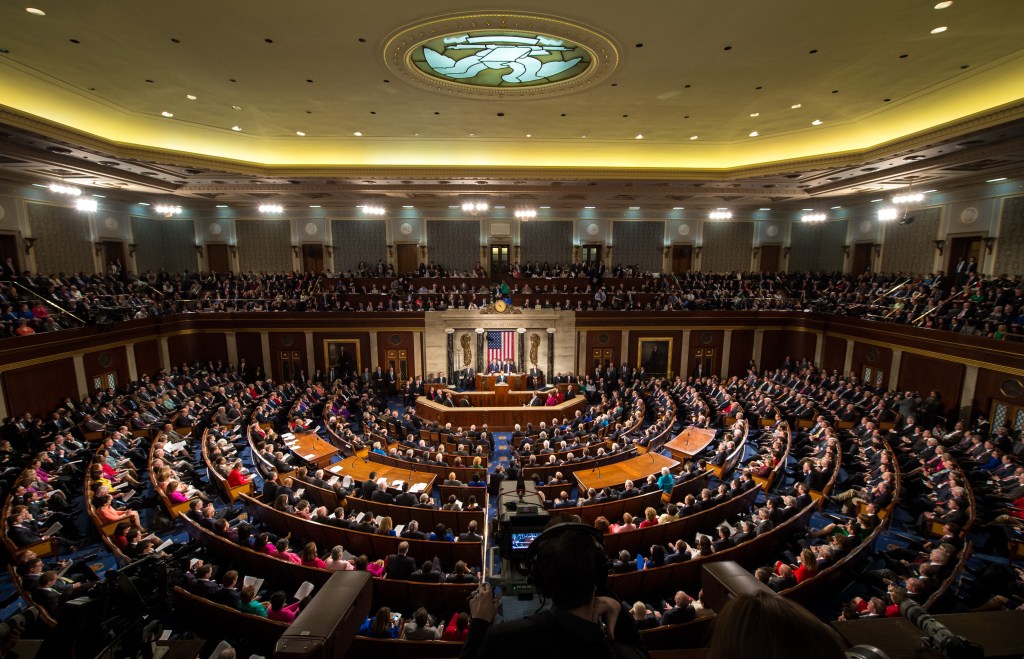
The image featured in this article is licensed for reuse under the Creative Commons Attribution-Share Alike 2.0 Generic license. The photograph was originally taken by Bill Ingalls. No changes were made to the image, which can be found here.
 The Gate
Leave a comment