
Moving Past Trump: How Hyde Park Schools Have Continued to Serve Immigrant Students
Even before his inauguration on January 20, President Trump’s “immigration crackdown” in Chicago was already making headlines. By the end of the week, immigration enforcement operations led by Immigration and Customs Enforcement (ICE) and other federal agencies were targeting the city with top Trump administration officials like “border czar” Tom Homan and the acting deputy general overseeing them. Superseding protections in Chicago and other sanctuary cities that limit cooperation between federal immigration agents and local police, Trump began his second term by following through on his aggressive campaign promises — sending a message of fear to the immigrant community.
The impact was immediately felt by immigrant families in Chicago, as Miguel Manero, a bilingual teacher for Beulah Shoesmith Elementary School here in Hyde Park, told The Gate. His classes are mainly composed of children who recently arrived from Venezuela. After Trump’s inauguration, most of his students did not attend school for two weeks, some even three and a half weeks. “I would say at one point we only had four students out of the 50-something Spanish-speaking students that we have.” Manero, like many teachers in Chicago’s public schools, was expecting these absences.
On January 22, Chicago Public Schools (CPS) issued a statement regarding the policy changes under the Trump Administration, specifically the U.S. Department of Homeland Security’s removal of certain ICE restrictions, which had previously classified schools as ‘sensitive locations,’ off-limits to ICE operations. CPS affirmed that it would maintain its current policies under the Illinois Trust Act and Chicago’s Welcoming City Ordinance to continue protecting students, staff, and parents from federal immigration agents. This means CPS will not coordinate with ICE, share student records with ICE, allow ICE agents access to CPS facilities without a criminal judicial warrant issued by a federal judge nor admit ICE agents into the schools based upon an administrative warrant, an ICE detainer or other documents issued by an agency enforcing civil immigration law.
Despite these protections, many parents were still afraid of taking their kids to school for their own safety. As Manero understood it, “(the) kids would be safe in school, but nothing says that they’re not walking home, and three blocks away… ICE officers stop the parents. So that was really the biggest fear, and I think a lot of the parents understood that too.” Until these fears over Trump’s immigration operation smoothed over, most parents and their kids stayed home.
Manero and the other Shoesmith teachers prepared for these absences by assigning them work they could do on the computer or preparing packets to give them right before the inauguration. They also tried to be lenient with their work, especially with test deadlines, but Manero recognizes that their education was still affected: “they did lose a lot of learning time, and they had a lot of computer time.” He is also concerned that these absences were marked as unexcused because he had students with “really good attendance, and they missed more that whole month than in the last two years.” He’s worried about how this may reflect in their attendance record. Shoesmith’s attendance policy classifies students with frequent unexcused absences as truant and requires them to attend an administrative conference — whether these measures will be applied to these students is unknown.
Beyond this period of absence, though, Manero and other Hyde Park teachers have continued to take initiatives to support their students. The Hyde Park community formed a group chat, including concerned teachers like Manero, to notify each other about any news of immigration officers coming to schools. Fortunately, the group chat was never used for these purposes, as immigration agents haven’t interfered with Chicago’s schools yet — but there were some false alarms. Manero recalled an incident at Kenwood Academy High School a few weeks ago, where a large police presence sparked concerns in the group chat. Though it turned out to be unrelated to immigration, it still raised alarm among parents and teachers, as involving the police is a core part of CPS’s protocol when dealing with ICE agents.
The reason for this is that sightings of immigration agents or ICE vans outside of schools are considered “Code Red” for CPS schools. It’s the same protocol schools use in the case of a school shooting: “they would treat the measure as if a shooter were to come into the school — they would lock everything and then they would just hide as if nobody was there… if they (ICE agents) were to come, they would have definitely treated it like the biggest threat we could have in the school.” After the election, the teachers in Shoesmith went over this protocol and had a code red drill for the students. As Manero described, “we did do one just in case…we didn’t say if ICE comes, but we said we have a code red. So students knew what to do, and, like I said, luckily, we didn’t have to do it, but everybody was prepared.”
Another CPS measure Shoesmith took before the inauguration was to update the children’s emergency contact information. They tried to get all the contact information from not just the parents but any other trusted individual, like an uncle or friend, in case a student’s parent gets deported. This was a responsibility that fell to Manero. “ I had to call the parents, and we had to figure that out, so that’s something else that we did that luckily we didn’t have to go through.” Manero, outside of being the bilingual coordinator for the school, also helps with after-school ESL programs and has developed a close relationship with most of the students’ parents. He formed a WhatsApp group chat with all of them, which was especially helpful during the first weeks of Trump’s second term, as they informed him about the student absences, and he was able to update them on the situation at school.
Thanks to the efforts of teachers like Manero and the policies of CPS, immigrant students in Hyde Park can feel protected in their schools, even though the commencement of Trump’s administration has disrupted their education. Amidst these federal attacks on the immigrant community, it’s crucial that local schools like Shoesmith have taken proactive steps to provide a safe space for immigrant students to continue their education.
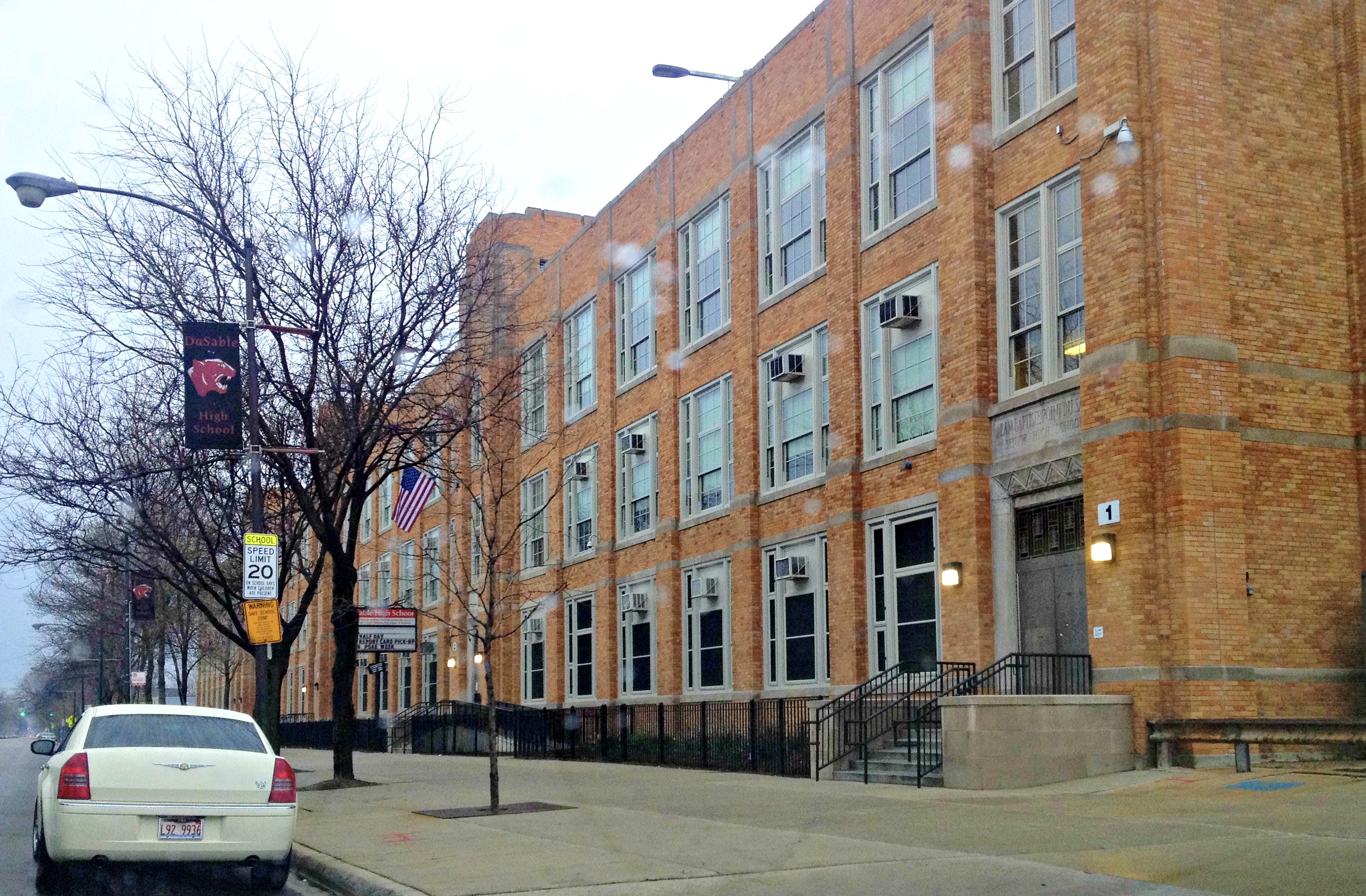
The image featured in this article is licensed for reuse under the Attribution-ShareAlike 2.0 Generic license. No changes were made to the original image, which was taken by T. Klio and can be found here.