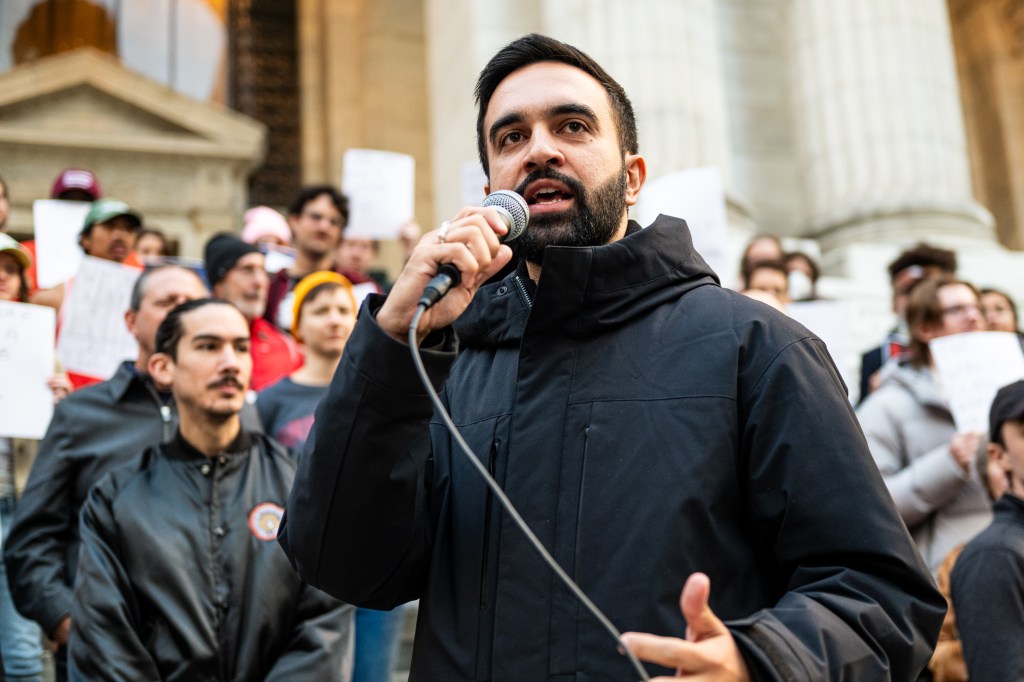
On May 14, the New York City Mayoral Primary was a foregone conclusion. A coronation was in order. Former Gov. Andrew Cuomo’s resurgence was nearly complete. Two months later, a different resurgence was upon us. Since mid-July, Democrats have been in a fit, analyzing how an avowed Democratic Socialist in Zohran Mamdani triumphed over a household name in Cuomo to secure their mayoral nomination.
Some, including my colleague at The Gate, have pointed to his direct and consistent economic messaging complete with marquis slogans (“freeze the rent”); others have touted his grassroots campaigning and tremendous social media presence. Irrespective of how, Mamdani galvanized young people with optimism; and unlike most Democrats, he did not shy away from expressing his views on Israel-Palestine, even if those positions alienated certain voters.
All of these points solve some part of the puzzle. And Democrats should learn from each point, in varying degrees. But while concrete policy platforms carry serious weight at universities and in intellectual bastions, I remain unconvinced that policies actually decide elections. Mamdani’s election helped me reach a simpler and perhaps more disappointing superficial conclusion: people elect people.
As a preface, obviously elections are decided by myriad factors. So my intention is not to whittle down the cause of every electoral result to “people elect people.”
Accordingly, myriad things are true at once about the contest in New York. Mamdani’s most serious opposition, Cuomo, ran a lackluster (I’m being nice) campaign that was both devoid of enthusiasm and overflowing with entitlement. He did a Sue Storm impression on the campaign trail, channeling her powers to make himself invisible across the city while simultaneously accepting millions from corporations and billionaires. He made little effort to distance himself from a scandalous past, instead denying the very allegations with which he reconciled less than five years ago. Taken together, Cuomo’s failure is more concisely distilled down: New Yorkers didn’t like him.
Both Cuomo’s unpopularity and Mamdani’s victory are evidence of this “people elect people” idea in action. While Cuomo self-isolated, Mamdani embraced the city. He walked the entire island of Manhattan, shaking hands and engaging with people; he joked about his foray into SoundCloud rap; he went to churches and mosques. His media schedule was impressive and targeted. Without needing to seek him out, New Yorkers got to know him. Even in marketing, he was Zohran, not Mamdani. And while Zohran’s message helped shape his image, it yielded an equally straightforward result: New Yorkers, broadly, like him.
This kind of affinity is not intricate. “Liking” Zohran doesn’t necessarily entail agreeing with his views, believing in his solutions or trusting his minimal experience in government (just six years as a state assemblyman). What it does mean, however, is that the average New Yorker saw one of their own; Mamdani came across as personable and normal, somebody willing to answer questions and chat with people.
This shouldn’t be all that difficult, but it has proven to be for Democrats for the better part of the 21st century. Perhaps looking to the attributes that propelled Zohran to victory can shed a brighter light on where Democrats have fallen short in the past.
To do so, why not start with everybody’s favorite punching bag: Hillary Clinton’s 2016 campaign. Ascribing blame for Hillary’s defeat has become a national pastime. And while a laundry list of factors contributed, she fell victim to the same broad issue that plagued Cuomo: Americans just didn’t like her.
Despite the media’s portrayal of Benghazi, she had very little legitimate baggage. Cuomo had suitcases worth of it. Either way, Clinton failed to enthrall voters, demonstrated by historically poor turnout and a lack of enthusiasm. She’s a policy wonk and came across that way: a little dull and boring. She reminds me of an aunt who can’t help but find some fault in the temperature of the turkey. Frankly, that trait probably should be present somewhere in government leadership. But it left Americans feeling annoyed, condescended to and uninspired. Even removing Trump from the equation, people elect people—and they didn’t want her at Thanksgiving.
Kamala Harris ran into the exact same issues last year. She too came across dull and boring, nothing more than an amalgamation of talking points selected by the Democratic elite. In doing so, she guaranteed her defeat to America’s most unpopular president ever.
Donald Trump, despite favorability ratings in the low 40s, connected with people; his voters felt heard and validated, their complaints echoed and their anger championed. To his credit, his detractors don’t criticize him for being static or dull. He is extremely dynamic. In fact, his willingness to be dynamic, often reckless in speech and action, is precisely why his critics dislike him. But Trump is compelling and his supporters adore him for it, so much so he’s ascended to the presidency twice.
This same “people elect people” idea encapsulates why Bernie Sanders found so much national success in both 2016 and 2020. Perhaps his likeability and charisma derived from different traits than Zohran’s. Bernie isn’t a master of interpersonal connection and light-hearted energy. But Americans felt he was authentic and real. He came across as somebody you wanted to believe in. And while Bernie came up short in both presidential primaries — for the same reason many in the Democratic establishment are shying away from Zohran (a word starting with “s” and ending with “ocialism”) — Mamdani has employed similar tactics en route to electoral success. Both he and Bernie ran using their first name, and interacted with average constituents with regularity. The November Mayoral election might illuminate whether the strategies employed by Democratic rank-and-file to contain Bernie are still effective nearly a decade later. Either way, Zohran and Bernie connect with voters on a human level in a way that has eluded most Democrats.
I don’t think it can be understated just how integral that simple, often overlooked premise is. In 2000, George W. Bush ran a campaign as an everyday guy with whom Americans might want to share a beer. His opponent, Al Gore, projected as a nerdy, coastal elite. Was Gore qualified? Definitely. Was he bland and uncompelling? Absolutely. Four years later, Bush faced John Kerry, a senator and Vietnam War veteran. Kerry had the credentials, but when his Purple Hearts were called into question, he cowered. The result: people saw Kerry as weak and ineffectual. In short, he wasn’t likeable.
Barack Obama’s election four years later reiterates the extent to which this principle matters. Obama was far less experienced than McCain; but people loved Obama. He resonated with Americans; he made them feel. In fact, he was so likeable that he overcame being Black in a country that entertained segregation less than forty years prior. And in 2012, Obama’s charisma battled the steady personality of Mitt Romney, who came across as detached and uninterested in his voters. Put simply, Romney wasn’t likeable either.
Compelling and charismatic figures win elections. Biden’s victory in 2020 is perhaps indicative of how the inverse is true as well — Trump became so unlikeable and toxic that he lost. But even Biden, a lifelong politician known for gaffes, was relatable. Charismatic? Maybe a stretch. Still, Biden rode an Amtrak train to-and-from Wilmington everyday when he was a senator. Biden’s success, while largely attributed to Trump’s self-sabotage, does reinforce the effectiveness of being approachable, relatable, and normal. In other words, being likeable.
I think Democrats should reflect on Mamdani’s victory by stripping down to the most basic principle. Donald Trump inspired people, twice. Barack Obama inspired people. Many of those people were the same. Accordingly, I’m not sure either’s economic policy matters all that much.
Joe Biden called the 2020 presidential election “a battle for the soul of our nation.” He may have been right. But victory does not mean dominating the battle; it means galvanizing the soul.
People elect people, not promises. And if Zohran Mamdani teaches Democrats anything, it should be the immense power that lies in something as simple as being likeable.
The image featured in this article is licensed for reuse under the Creative Commons Attribution-Share Alike 4.0 International license No changes were made to the original image, which can be found here.
 The Gate

Leave a comment