
Who Lives, Who Dies, Who Tells Your Story: The Landscape of Presidential Rankings
I have been infatuated with the United States Presidency since I was five years old. In fact, there’s a computer game, Presidents v. Aliens, that my grandfather and I used to play for hours when I was younger. The graphics are poor, the questions are fairly redundant; but I love it. I still pay for it. **Note: the game has not been updated and is no longer suited for my iOS (boo)**
All of that is to say: I have spent most of my life trying to learn about the presidents. And that led me, naturally, to ranking them in order. When I wrote my lists on legal pads, there was no exact science. It was a mangling of preference, a little bias, my readings, basic knowledge, and some aggregate of what historians thought. These lists were harmless—useless scrap paper when I was writing them instead of doing my art assignments in high school. However, C-SPAN’s Presidential Rankings Survey, which compiles specific rankings in ten categories from Presidential Historians to come to consensus, carries real weight.
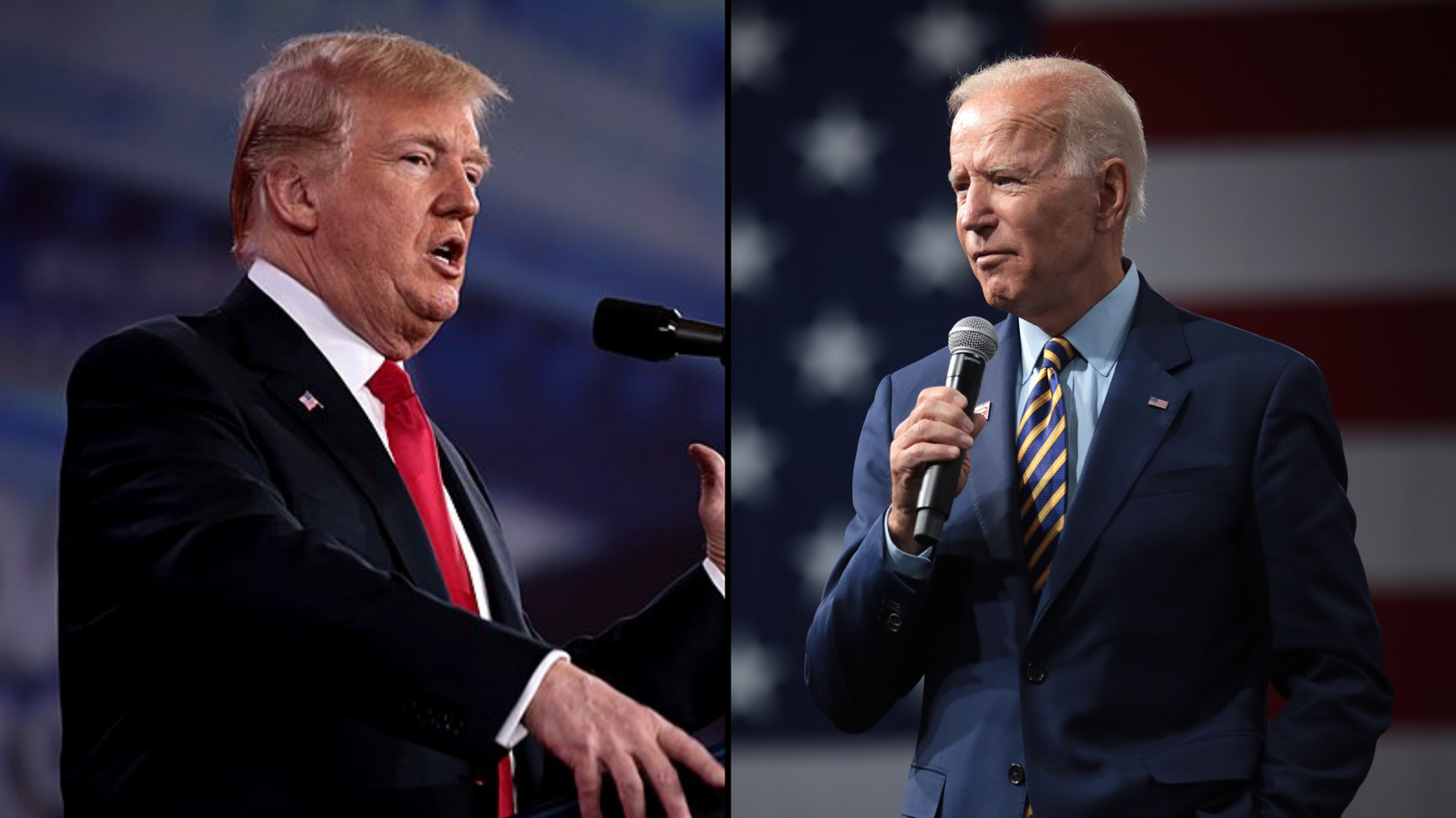
I happen to quite like C-SPAN’s ranking personally, but it can raise some eyebrows. Historians are funny. When President Biden left office, he exited as one of the United States’ least popular presidents in its 250-year history. Biden’s final approval rating of 40% cements his average rating at 42.2%, second only to that of President Donald Trump. C-SPAN’s ranking places Trump fourth from the bottom and does not rank Biden, who was in office for less than a year when C-SPAN released its rankings in 2021. Siena College’s presidential poll, another regularly-conducted ranking, from 2022 put Biden at 19th. Trump finished third-worst. Prominent conservative voices scoff at Biden’s placement on these lists; to them, the finale of Lost was better than his four years in office. There is another, more prominent ranking making its way through the media, though. The Presidential Greatness Project, a study from 154 Political Science Professors, is the newest system designed at scoring the presidents.
I spoke with Coastal Carolina Political Science Professor Justin Vaughn, co-founder of the Presidential Greatness Project, about their widely circulated poll.
The impetus of the project was fairly straightforward: how might political scientists evaluate presidents differently than historians? As Vaughn put it, “the project opened up a conversation on presidential greatness to a new segment of academia.”
The first edition of the Presidential Greatness Project released in 2015, the second in 2018, and the most recent in February 2024. Vaughn and Brandon Rottinghaus, his co-founder, sent out surveys to hundreds of professors asking them to assess each president on a 0 – 100 scale. They also posed open-ended questions, asking their colleagues to evaluate overrated and underrated leaders and what makes an effective president. To ensure accurate trends, Vaughn and company were conscious not to meddle with the process. This manifested itself most crucially in the subjectivity of greatness: “I wish we had defined ‘greatness’ for the participants the first time around, but because we didn’t then, we don’t do it now.” A monumental change in criteria might spur inauthentic massive shifts in results. Instead of reflecting a real change in perception, that type of shift would represent a change in the perception of the survey’s aim.
The Presidential Greatness Project was thrust into the media spotlight not for its procedure, though. Rather its release date played a crucial role: February 2024 — in the heart of a presidential campaign.
The other two editions of this project fell in either non-election years or midterm years, an important distinction to this one, which featured both candidates (at the time) and released early into a national election cycle. Vaughn posited that holding a potential future edition during an election year is a double-edged sword: it facilitated greater media attention (becoming a punchline for Biden in the June debate) while also allowing the results to become scrutinized and appropriated by partisans for a campaign talking point.
And garner media attention it did. During the June debates, then-President Biden used it as a talking point to criticize Trump, who placed last in the ranking. Biden himself came in at 14th, placing him with the likes of Presidents Woodrow Wilson and John Adams. If that seems high, conservative certainly thought so.
Vaughn felt pretty strongly that timing played a role in the rankings, as the election may have prompted the political science community—a predominantly liberal one—to perhaps voice more enthusiasm for Biden than many believe he deserved given the stakes of the moment. It also seems likely that Biden’s placement will fall in the coming years. A botched re-election campaign, a pitiful debate performance, a late withdrawal from the race and the unpopular pardoning of his own son is poised to set him back a bit.
More insightfully, though, Vaughn used these numbers and the controversial Biden placement (14th) as evidence of something else, something us students tend to forget: academics are people. “Scholars get just as focused as the average citizen, if not more, on the politics of an election.” This also complicates the way scholars view contemporary presidents. Vaughn feels strongly about that: “Scholars are too close to the contemporary presidents to view them objectively.” To him, true objectivity only comes with time, and enough of it for primary sources to be out of the industry. “Objectivity comes without emotional resonance,” and this same idea will be true of Obama, Trump, and Biden until we (my generation) are finished studying them.
Beyond the bias problem, Vaughn pointed to a different consequence of the aforementioned multi-layered subjectivity: “Experts are more focused, especially with regards to contemporary presidents, on ‘presidential goodness’ than ‘presidential greatness.’” Vaughn’s interpretation of the metric is centered around consequence. He is under no allusions that view is shared, but his measure of the presidency, as per this definition, coalesces around a president’s importance: durable institutional change, innovative policy and long-lasting legacy. Under this definition, Vaughn referenced President Ronald Reagan, who fell seven slots from ninth in 2018 to 17th, as being too low. “Reagan ushered in a new regime of American politics that has shaped, arguably, the last forty years of governing.”
Another factor that Vaughn felt affected the results of the survey was the orange shadow in the room—President Trump.
He had a wide-sweeping impact on the results. Vaughn observed what he dubbed the “Trump tax” (no, not the tariffs), in which virtually every Republican President since the turn of the 20th century fell in the rankings. Eisenhower dropped two slots; Nixon two; Ford two; Reagan seven; Bush Sr. two—the list goes on. Vaughn attributed this to “general antipathy towards Trump,” especially as there was no new information that would have reasonably facilitated those declines.
In trying to find a good way to wrap this up, I am struggling to wrap my head around the stakes of these rankings. I really love reading these lists and giving my own input, but as a prospective academic, I tend to elevate these perspectives. It’s entirely possible there are no true stakes. Maybe it’s on me for placing any stake in them.
Vaughn and his fellow academics are well-intentioned, and The Presidential Greatness Project is an attempt to reach an academic conclusion. However, it is also fair to see these lists as a fun exercise. As Professor Vaughn made clear: academics are just people with a few extra sheets of paper. Okay, I’m paraphrasing. Either way, not only are political scientists motivated by political opinion and bias like every other citizen, but they also have their own systems for evaluation informed by myriad factors. By not defining a quality like greatness, the survey leaves open the very basis with which to rank these presidents.
I’m a huge sports fan. And I cannot count the hours-long conversations I’ve had with friends, relatives and strangers alike, debating the greatest quarterbacks, tennis players, golfers and hitters ever. These discussions — all predicated on some opinionated and subjective basis — never really end in reconciliation and consensus. I never left a discussion convinced that Federer was less great than Nadal or that Djokovic bested both of them. My personal biases make arguing about Tom Brady hard for anyone; and my dad and I never did decide whether Barry Bonds was better than Ted Williams. Maybe these rankings are the same; maybe they should just be a fun playground for nerds like myself to compare with my color-coded spreadsheet dedicated to my list. Either way, the fact remains: Presidential rankings have made some real national noise. This new popularity might spur some newfound interest. And the desire to learn means something a little more than just knowing that John Adams ranked 13th.
In 2007, the United States Mint conducted a survey that revealed an embarrassing, meager 7% of Americans could name the first four Presidents in order. Mind you — these guys all helped found the country. A civics knowledge study conducted in 2022 at the University of Pennsylvania showed equally unpromising results: 24% of Americans could not name one branch of government.
This is not good.
But Professor Vaughn sees some promise resulting from work like his. He has had high school teachers reach out to him, sharing stories of class debates using the survey. Students weigh in, they argue and, in the process, they get motivated to learn a bit more.
I’m not pleading with people to waste as much time as myself; my ability to name all the presidents has been relegated to a party trick anyway. These surveys might just be intellectual playgrounds, and presidential candidates shouldn’t analyze them profusely or cite them on a debate stage.
However, in a country marred by education problems and a lack of civics training, surveys like Vaughn’s that make these figures accessible have a real capacity to do some good.
Image by Emma Kaden, licensed under Attribution-ShareAlike 2.0 Generic (CC BY-SA 2.0)