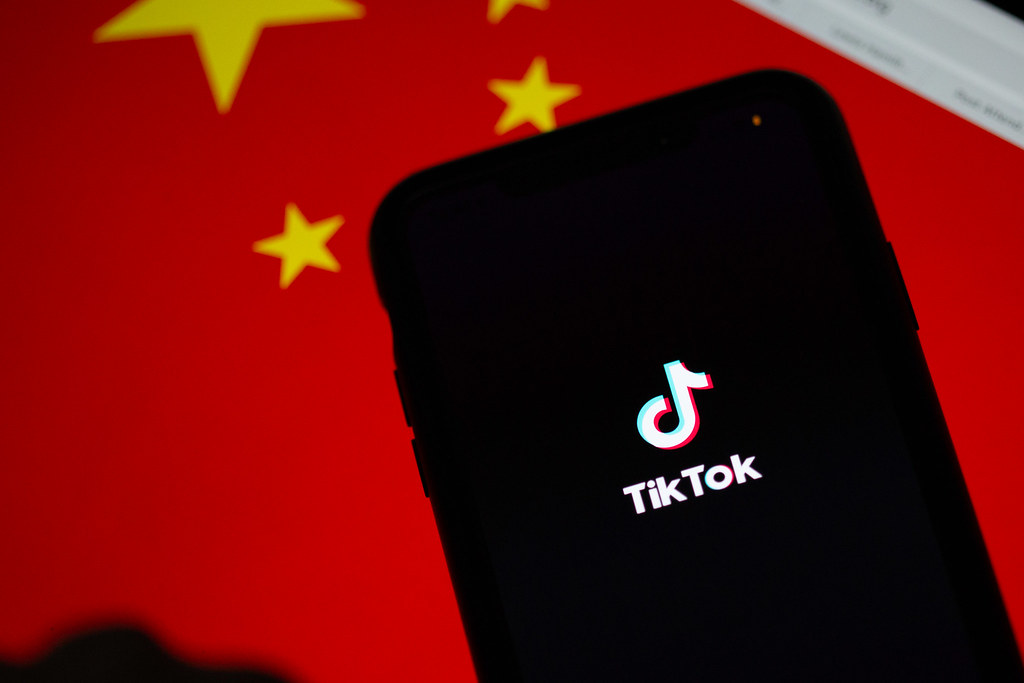
Facing the imminent ban on TikTok in late January, millions of American users scrambled to find new platforms to preserve their digital communities. These so-called “TikTok refugees” found an unlikely haven: the Chinese social media app Xiaohongshu, internationally known as RedNote.
RedNote has unexpectedly become a bridge for grassroots cultural exchange, with American users learning Mandarin and discussing topics from Sinophobia in Western media to comparisons of cost of living and healthcare systems. Both Chinese and American users have reported friendly experiences that contrast with the adversarial images of the two countries emphasized by some political rhetoric. As one Chinese user remarked, “This could be a historic moment. The ordinary people of our two countries have never truly connected… I hope everyone can seize this brief opportunity for meaningful exchanges of ideas.”
Though the app’s humorous and light-hearted cross-cultural exchanges have sparked attention, the TikTok migration represents deeper shifts in digital influence and U.S.-China relations. Soft power—the ability to shape global perceptions through cultural and non-coercive means—has taken a growing role in Beijing’s efforts to exert global influence. Digital presence, cultural diplomacy and educational exchange have become the new frontiers of the geopolitical rivalry.
Shifting Soft Power: How the U.S.-China Rivalry Is Being Redefined
Soft power, a term coined by Harvard University scholar Joseph S. Nye Jr. in 1990, is a crucial means to make other countries “want what it wants.” It has become a crucial battleground in the U.S.-China competition, shaping each nation’s perceived legitimacy, cultural attractiveness and global leadership roles.
For China, the concept has gained increasing importance in foreign policy since the early 2000s, when former President Hu Jintao tied Chinese culture to the country’s rise on the global stage. Hu envisioned a “peaceful rise” and a “harmonious society,” countering Western narratives that cast China’s emergence as a threat to the existing international order. Hu’s successor, Xi Jinping, has since expanded on his approach, calling for a concerted effort to link China’s cultural appeal to its meteoric rise.
Since the early 2000s, the Chinese government has spent an estimated $10 billion a year on its soft power campaign. Positioning itself as the leader of the “Global South,” Beijing has aimed to build influence in regions like Africa, seeking to gain a competitive advantage in less secure political environments. Beyond economic engagement, Beijing has expanded its influence in Africa through expansion of Chinese media agencies and offering scholarships for government officials. These efforts seek not only to reshape China’s global image but also to forge long-term political and economic relationships that advance its strategic goals.
Cultural Diplomacy: Competing Narratives
Chinese officials have also turned to more traditional tools of soft power — language promotion, educational exchanges, media expansion and pop culture icons — to project influence abroad.
Cultural exchange has been a focal point of exporting Chinese values and society. Confucius Institutes, which have been operating since 2004, provides Mandarin language courses, celebrations for Chinese national holidays and more in key diplomatic regions in an effort to build a more positive narrative surrounding the country’s customs and culture. Educational exchange is another touchpoint for foreigners to experience China firsthand. President Xi Jinping announced in 2023 that he was ready to invite 50,000 young Americans on exchange and study programs, attracting talent in key areas such as science and technology.
Beijing has also thrown its weight behind its foreign media outlets to establish greater control over narratives about China. The government’s primary news agency, Xinhua, has grown to 170 foreign bureaus and publishes in 10 different languages. The film industry has been a market for Beijing’s expansion too. Since the Chinese company Wanda bought AMC in the 2010’s, Chinese investment in Hollywood has only expanded. As Beijing has taken a more direct role in shaping the country’s external image, U.S. producers have grown wary of making films that cast China in a negative light in hopes of accessing Chinese distribution markets.
Social, cultural and athletic realms have also become key soft power battlegrounds. Hosting the 2008 Olympic Games in Beijing put the country on display, and the country has since expanded investment into sports to win 91 medals in the 2024 Olympics and produce notable stars like basketball player Yao Ming. Celebrities like actor Jackie Chan, ballet dancer Tan Yuanyuan, and pop singer Jane Zhang have become unofficial cultural ambassadors, reshaping the narrative of China and its people. Pandas, too, have become cultural icons and officials have dubbed zoo exchanges with the animals “panda diplomacy.”
These wide-ranging initiatives highlight China’s ambition to enhance its global standing, but their impact on international perceptions remains a subject of debate.
Is China’s Soft Power Effective?
Soft power by nature is difficult by measure. Public opinion polls that assess global perception of China seem to show some improvement, particularly in Africa and neighboring countries. Beijing has also gained traction with its social and cultural campaigns, increasing outreach in areas of literature, art and sports. However, while publicized cultural exchanges like the TikTok migration seem to prove China’s improving public image, the soft power campaign has not been entirely successful.
China’s ambitious Belt and Road Initiative, a global infrastructure strategy aimed at enhancing investment, trade and diplomatic networks, has been met with caution by many of its neighbors and partners. Although economic wellbeing is a powerful incentive for countries desperate for development, Chinese financing and infrastructure projects have not translated directly into a greater realm of influence for Beijing. In fact, local communities in South and Southeast Asian nations like Sri Lanka and Myanmar have voiced growing discontent over China’s expanding presence. While regional actors often prioritize the short term economic benefits needed to fuel growth, they remain guarded about bending to Beijing’s strategic interests.
Beijing’s soft power efforts are further constrained by the image the country seeks to promote and the reality of its actions. Rising nationalism, aggression over territorial disputes, and political repression have undermined China’s appeal. While Chinese culture and ideas have significant global potential — as demonstrated by the positive interactions on RedNote — their success hinges on their authenticity. Without the free exchange of ideas and the ability for Chinese citizens to engage in open debate, the gap between the government’s portrayal and China’s reality will grow.
Photo by Solen Feyissa, licensed under Attribution-ShareAlike 2.0 Generic (CC BY-SA 2.0). Source: link to original page.
 The Gate
Leave a comment