In early October, all seven members of Chicago’s Board of Education announced their resignation. The mass departure follows rising tensions between Mayor Brandon Johnson and CEO of Chicago Public Schools Pedro Martinez over the school district’s budget for the 2025 school year.
For months, Johnson and Martinez have been on opposing sides of heated contract negotiations with the Chicago Teachers Union. Johnson, who is closely aligned with the union, proposed a $300 million high-interest loan to cover pensions for non-teaching staff and pay increases for union members. Martinez rejected the loan as “exorbitant, short-term borrowing” and refused to include it in the Chicago Public Schools’ (CPS) 2025 budget. In response, Johnson asked Martinez to resign in late September and began pressuring the school board to fire him. The board refused to terminate Martinez’s contract, citing concerns over fiscal responsibility and the district’s stability, and they resigned shortly after in protest of Johnson’s plan.
Johnson has since appointed seven new members, who will continue to serve as the district transitions next year to an expanded board that includes elected members. Many of the newly appointed members have expressed support for Johnson’s proposed loan and pension payment. While the new board has yet to take steps to remove Martinez to get Johnson’s loan passed, their influence will continue to shape the district until it moves to a fully elected board in 2027.
The mass resignations have sparked concern among city officials over the district’s future. Alderman Bill Conway (34th) emphasized the consequences of the change for the school district, telling the New York Times that students deserve “stability, not chaos.”
The school board’s departure adds another layer to the ongoing tensions surrounding CPS’ budget concerns. While the mass resignations mark a sudden shift, they are merely the latest chapter in a long-standing struggle over how to address the district’s persistent financial struggles.
Budget Woes and Resource Inequities
Chicago’s public schools have long been plagued with budget shortfalls, with the current deficit standing at $500 million. There are several reasons for these funding struggles, including state-level funding disparities, pension liabilities and a property tax system that leaves schools in wealthier neighborhoods better resourced than those in low-income areas.
The inequitable distribution of funding has led to a two-tiered system within CPS. Schools in wealthier areas have increased access to Advanced Placement (AP) courses, learning technologies and well-maintained facilities, while underfunded schools struggle to provide basic supplies and retain qualified teachers.
The seven new school board members have acknowledged these disparities and pledged to push for more equitable funding models. At their first meeting, the members discussed the mayor’s loan for pension payments to ensure staff retention at underfunded schools and tax increment financing to cover the district’s deficit in the short term. With educational equity as a top priority for the new board, the members have considered proposals that direct new financing toward investments in technology and staffing at underfunded schools.
CPS’ pension obligations present another financial hurdle. The district is responsible for paying into a separate pension fund for teachers, a burden that no other district in Illinois faces. This has left CPS struggling to balance its budget while also meeting pension commitments, leading to cuts in essential programs and staffing at many schools. These budget cuts often exacerbate the educational disparities already seen in the district, disproportionately affecting Black and brown neighborhoods.
The mayor’s loan proposal, backed by the new school board, prioritizes pension payments but comes with expensive short-term debt. One proposal by advocacy groups to reform Chicago’s teacher pension system is to gradually consolidate the city’s pension fund with the State of Illinois Teachers’ Retirement System. The transfer of responsibility to the state would make pensions more secure and potentially reduce administrative costs. Such a reform could provide long-term stability for Chicago’s schools, but its success would depend on collaboration between the new school board and state officials to overcome significant political and financial hurdles.
Responding to the advocacy of parents and teachers, the new school board is currently considering consolidating the pension fund and other potential budgetary policy revisions. Many CPS stakeholders hope that fiscal reforms will prevent the kind of destabilizing cost-cutting measures the district has undertaken in the past, including school closures.
A Legacy of School Closures
The recent decline in funding has forced the district to cut back on costs by closing schools with low enrollment. In 2013, under the leadership of former Mayor Rahm Emanuel, CPS closed 50 schools, the largest school closure in U.S. history. These closures disproportionately affected Black and Latino communities in neighborhoods with schools that were deemed under-utilized.
Tim Cawley, the Chief Administrative Officer of CPS during Emanuel’s administration, claimed closures were a budgetary necessity to consolidate resources and fix the deficit. However, many parents and educators argue that the closures have had negative effects on student experiences, leaving students in overcrowded classrooms and forcing them to travel longer distances to attend school.
Former CPS teacher Asif Wilson says in an interview with The Triibe that he “worries that society has forgotten the harm school closures have bestowed upon working-class communities of color.”
State law currently prevents school closures until the partially elected board begins its term in 2025, but CPS stakeholders are still worried about the future of school closures. In early September, Martinez commissioned a school closure analysis that aimed to deprioritize investing in under-utilized schools and has planned for massive cuts to the district. The Chicago Teachers’ Union has spoken out in opposition, saying in a statement that future school closures would “deeply destabilize the district and the community which it serves.” The new school board has not commented on potential closures.
Moving Forward: The Role of The New Board
The mass resignation of the school board members is part of a broader shift in Chicago’s public school system. Chicago is currently the only school district in Illinois that does not have an elected school board. A state law signed in 2021 responded to constituents’ calls for representation by establishing the transition away from a mayorally appointed board, with the first set of elected officials to take office in 2025.
Many hope that the election signals a new era in which the school district is more responsive to the parents and children it serves. Reflecting on the significance of the shift, Illinois State Rep. Ann Williams remarked: “This is a historic election, the first time we’re going to be democratically electing voices for our families as to the future of Chicago Public Schools.”
With school board elections and the looming budget deficit, CPS is at a crossroads. The new board appointees and elected members will have the responsibility of finding innovative ways to address the district’s financial challenges while safeguarding the interests of students, particularly those in under-resourced communities. Despite the tumult of the board’s mass resignation, the election is an opportunity to reform the district into one that balances fiscal sustainability and commitment to educational equity.
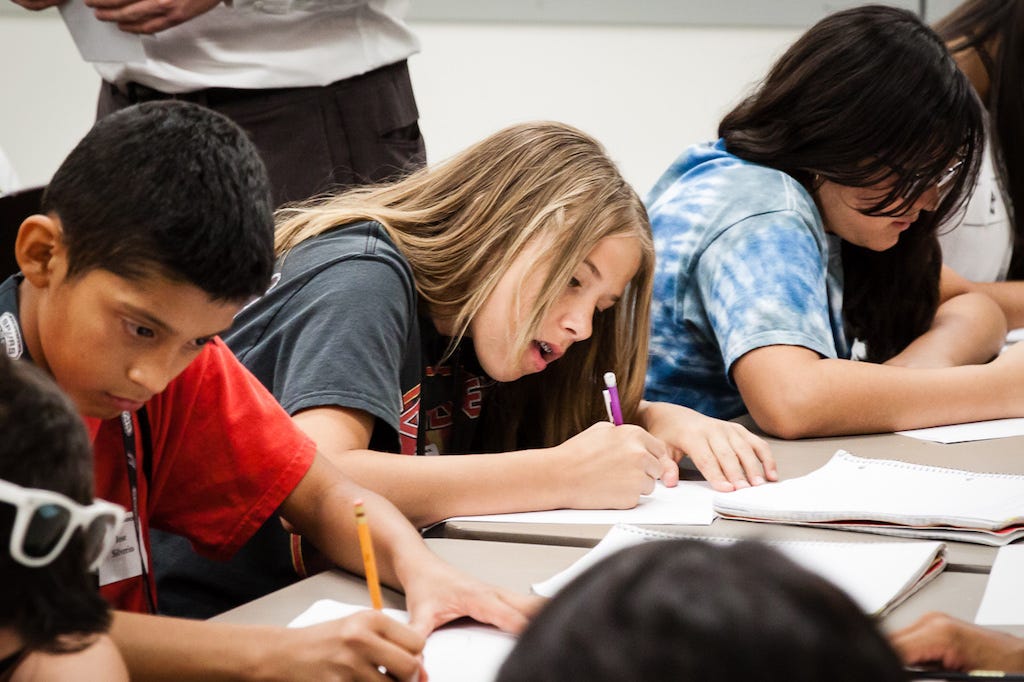
The image featured in this article is licensed for reuse under the Attribution-ShareAlike 2.0 Generic license. No changes were made to the original image, which was taken by Bruce Matsunaga and can be found here.
 The Gate
Leave a comment