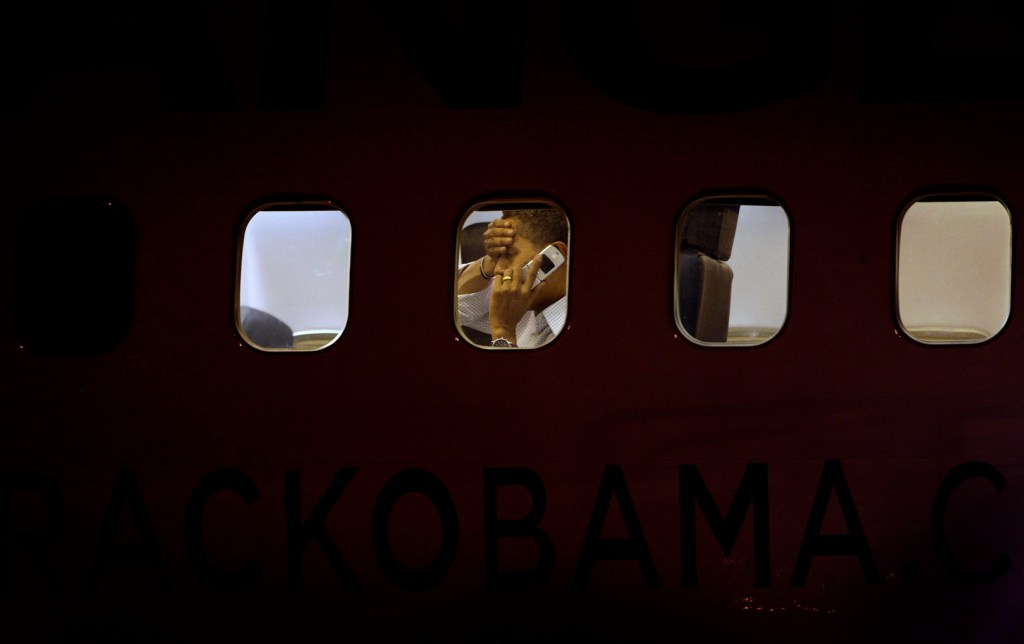
In the chaos following the July 2024 assassination attempt on President Donald Trump, the Secret Service, Federal Bureau of Investigation and Americans across the country struggled to account for what had happened. Doug Mills already knew — his camera had caught it.
Reviewing his footage, Mills spotted something extraordinary: a streak of grey flashing past the president’s left shoulder, and, moments later, a splatter of bright red blood.
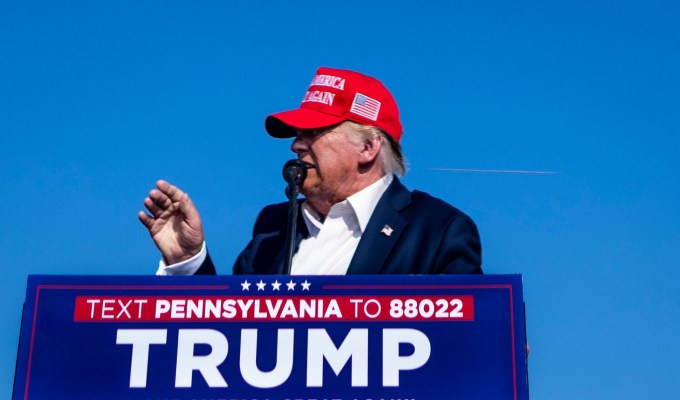
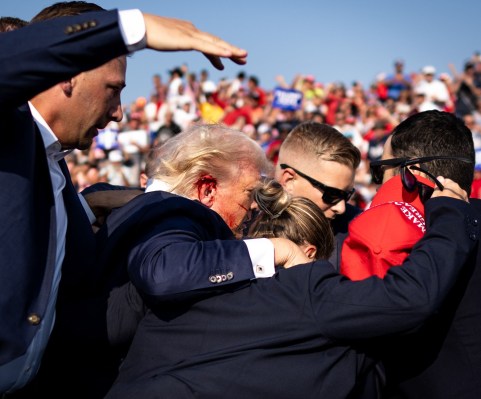
It was the kind of once-in-a-lifetime moment that defines a career. It was also, for Mills, just another day at the office.
For more than four decades, New York Times photographer and three-time Pulitzer Prize winner Doug Mills has witnessed some of the most consequential moments in the American presidency. His photographs have captured what words cannot — raw anguish, all-consuming rage, pure mental and physical exhaustion — and his proximity to power has also given him a front-row seat to the weight the presidency places on the men who hold it.
“They’re just as human as we are,” Mills said. “When you see it up close, it just sticks with you for the rest of your life.”
Mills believes photojournalism provides a window into the presidency that print journalism simply cannot offer. Part of that comes down to access. “We are definitely treated differently than reporters,” he said. “The first thing that any White House staffer thinks about when they think about a reporter is ‘what is their agenda? What are they writing about?’ Instead, we’re considered to be photographing and witnessing with our eyes, but not listening.”
Because White House staffers can trust photojournalists like Mills to report on the presidency without spinning a quote or pursuing a partisan agenda, they often get information about the president’s schedule or private events before news journalists do. This gives Mills time to think about creative ways to shoot before he gets to the White House every morning, which both helps keep the job exciting on his end and also gives the public new angles that provide a fresh perspective on the presidency.
“When I walk through the gates every morning, I’m thinking: what’s open? What can I do? What can I do differently?” said Mills. “The day-to-day starts the night before.”
However, access alone doesn’t explain why photojournalism is so essential to our perception of the presidency. Photography itself carries something words struggle to replicate. “I don’t think there’s any way to really let a reader know exactly what’s happening without seeing a photo,” Mills said. “Photographers have the unique perspective to pick up emotion, and photograph emotion differently than a writer can write about it.”
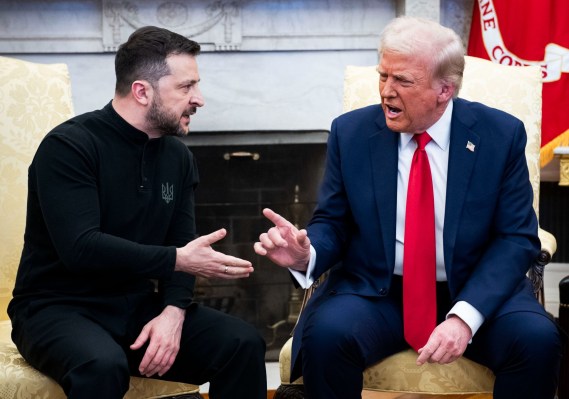
One example is the Oval Office meeting between President Trump and Ukrainian President Volodymyr Zelenskyy last February. “When you write about something like that and say ‘they had a confrontation,’ or ‘it was a shouting match,’ it doesn’t have the same feeling as seeing a photo of them yelling at each other, or pointing at each other’s faces,” said Mills.
That gap between language and reality is exactly what a photograph can bridge. For example, the Associated Press described the meeting as “contentious.” In Mills’ photo of the meeting, however, the viewer can clearly see the furrowed brows and jabbing fingers on both sides. Everything a news article gathers into one word is suddenly, uncomfortably, visible.
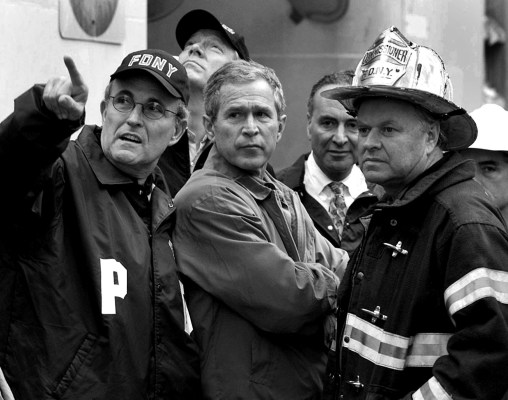
Sadness, too, is an emotion that photography can convey with a depth that print often cannot. In the days after September 11, 2001, Mills was in the Oval Office when President George W. Bush broke down in tears. “He talked about how furious he was, and how he felt so sad for all the people who died, and how he felt responsible,” Mills recalled.
In one image Mills took, Bush stands at Ground Zero alongside former New York City Mayor Rudy Giuliani and former New York City Fire Commissioner Thomas Van Essen, his expression hardened into a devastating amalgamation of fury and grief. Tellingly, as President Bush addressed a shattered nation that evening, he didn’t describe the terror of the event using headlines or wire dispatches. Instead, he described them in photographs. “Pictures of airplanes flying into buildings, fires burning, huge structures collapsing,” he said, had filled the nation with inescapable sorrow and fear.
In revealing the presidency to the public through photographs, Mills has held an even more exceptional perspective throughout his tenure — watching the presidency reveal itself to the men who live through it. No matter who a President is when they first take office, Mills said, the weight of the role transforms them, and they are rarely the same person who was elected.
He watched President Bill Clinton change significantly once the Monica Lewinsky scandal became public. In Mills’ telling, Clinton had been gregarious, “happy-go-lucky,” and “smart as a whip” before the story broke. But, as the pressure mounted, that open, easygoing attitude disappeared. “He became very distant and a bit colder towards the media,” Mills recalled.
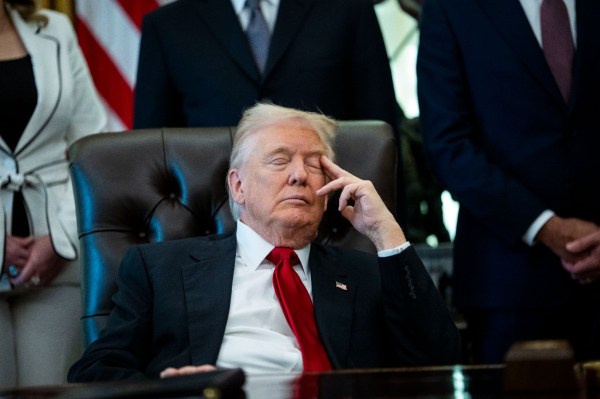
Scandal isn’t necessarily a prerequisite for the job to leave its mark. “I feel like the president, when they get on the job, it’s like warp speed. They age so quickly,” Mills said. “You can see it now with President Trump. He’s not as mobile, but he’s still got a crazy work schedule.” Mills photographed President Trump seemingly falling asleep during an Oval Office meeting in November 2025, which sparked concern on social media about President Trump’s mental acuity.
He saw the same pattern with President Joe Biden. “When Biden came in, he was one of the oldest ever elected. He was a workaholic, and I always felt like he was overscheduled,” Mills recalled. While his access to Biden was more limited compared to other presidents, Mills believed he was capable and mentally alert for his age. That said, he recalls a moment towards the end of President Biden’s term where President Biden asked him for directions to a room in the West Wing he had been to countless times.
Despite the incredible toll the weight of responsibility can have, some aspects of the presidency can change a person for the better. Mills remembered President Barack Obama coming into the office as a junior Senator, one of the youngest presidents ever elected, and emerging after eight years as a party figurehead and preeminent world leader. “As he grew in, just seeing him sit in the Oval Office with a foreign leader and take command…he became presidential so quickly,” Mills said. “I always said that President Obama was like a chameleon — he could fit into any situation.”
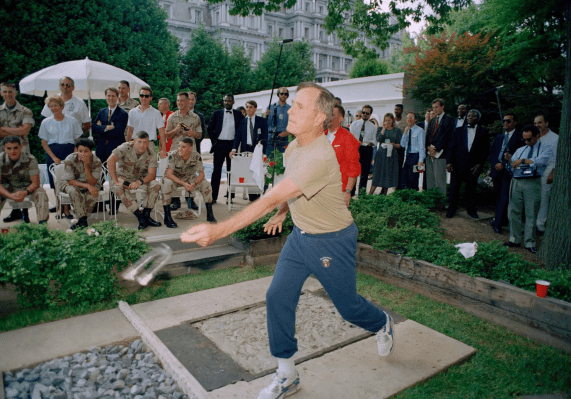
Mills is a rare glimmer of stability in this respect, a permanent fixture in an office that reinvents itself and the people that hold it every four to eight years. He has been able to develop close relationships with presidents from across the political spectrum, from playing horseshoes with President H.W. Bush to giving “bro hugs” to President Obama and being called a “genius” by President Trump.
It’s an incredibly fascinating position to occupy. Trusted by men who distrust each other and welcomed into rooms most will never see, Mills has spent decades capturing moments that might otherwise vanish from the historical record entirely.
Mills’ incredible catalog is a reminder of what photojournalism, at its best, is capable of — where words can be walked back, spun, or forgotten, a photograph cannot. It shows us not just what happened in the news, but more importantly, what it looks and feels like to be the person making those decisions.
“You can’t be there,” Mills said. “I need to be your eyes in the room.”
Cover photo: Doug Mills/The New York Times
 The Gate
Leave a comment