
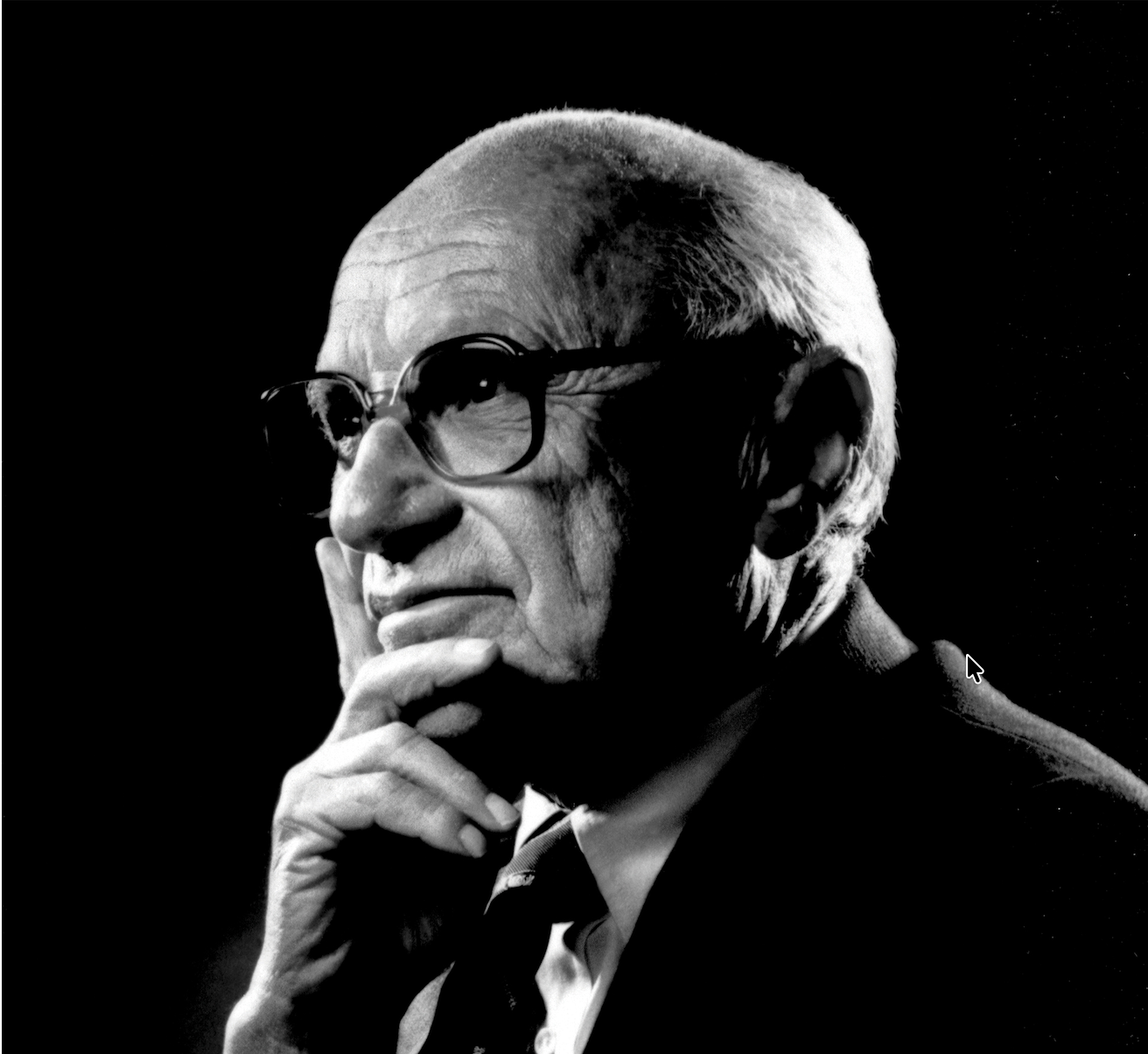
How Would Milton Friedman React to Section 338 (The Smoot-Hawley Act)?
For 95 years, Section 338 of the Smoot-Hawley Act of 1930 sat dormant in the federal code. It was written the same year the stock market crashed, tucked inside the piece of legislation famous for deepening the Great Depression. In the days following February 20, 2026, the Supreme Court’s decision to strike down the administration’s use of the International Emergency Economic Powers Act (IEEPA) as a tariff authority, Section 338 has become the most consequential obscure statute in American trade law. The Court held that the Constitution assigns the power to impose tariffs exclusively to Congress and that IEEPA’s authorization for the president to “regulate importation” does not clearly include the authority to levy duties.
The Trump administration’s path forward is straightforward: if the courts remove one legal vehicle for sweeping executive tariffs, find another. Section 338 of the Smoot-Hawley Act authorizes the president to impose tariffs of up to 50%on any country he determines is “discriminating” against American goods. No investigation required. No expiration date. No meaningful Congressional check. Treasury Secretary Scott Bessent confirmed the intent when he told reporters that Section 338 would authorize the president to set new or additional duties on nations discriminating against U.S. commerce.
The revival of a 1930 statue to justify 2026 trade policy raises questions beyond legal mechanics. It puts pressure on an intellectual tradition supporting free trade that the University of Chicago helped build. Economists here must now analyze a policy environment that looks like the one their predecessors spent their careers dismantling.
To understand Section 338, one has to understand its parent legislation. The Smoot-Hawley Tariff Act of 1930 raised duties on over 20,000 imported goods. Economists and historians regard it as one of the great policy blunders of the 20th century — a cautionary example of protectionism that triggered retaliatory tariffs abroad, collapsed global trade and helped transform a financial crisis into the Great Depression.
Section 338 was one of Smoot-Hawley’s most aggressive provisions. If countries “discriminating” against American goods don’t relent, the president may ban their imports, levy additional tariffs or seize goods at the border. The language is remarkably vague as “discrimination” is not precisely defined. Consequently, the statute was never invoked. For decades, Section 338 sat dormant, a legal artifact of an era the postwar trading system was specifically designed to leave behind.
The Consensus UChicago Helped Build
The postwar trading system was, at its core, a reaction to Smoot-Hawley. When Allied leaders met at Bretton Woods, New Hampshire in 1944, the 1930s were the cautionary tale. They designed institutions — the IMF, the World Bank and eventually the General Agreement on Tariffs and Trade and its successor the World Trade Organization (WTO) — to make competitive tariff spirals structurally difficult to restart. Secretary of State Cordell Hull had long argued that free trade promoted not just prosperity, but peace. Nations bound together by commerce would not go to war.
Milton Friedman, a leader of the UChicago school of economics, was more skeptical of the Bretton Woods monetary architecture than of free trade itself. He argued that fixed exchange rates and Keynesian activist policy, advocating for direct government intervention to stabilize the economy, were more dangerous than the postwar planner admitted. When the Bretton Woods system collapsed in 1973 and floating exchange rates took over, the outcome carried a UChicago imprint.
On trade liberation, Friedman wrote in 1997 that “international free trade is in the best interests of trading countries and of the world.” The broader UChicago tradition, from Friedman through George Stigler through Gary Becker, helped push American policy from the 45% average tariff rates of 1930 toward the sub-3% rates of the 1990s. The WTO, NAFTA and the normalization of trade relations with China were not just policy outcomes, but they also reflected a decades-long intellectual project, and UChicago was near its center.
To understand how economists at this institution are processing the current moment, The Gate spoke with Professor Rodrigo Adao at Chicago Booth. Adao is one of the University’s leading trade economists, and we sought him out for background on both UChicago’s intellectual tradition and how the postwar trading system functioned.
In his recent paper, A World Trading System for Whom? Evidence from Global Tariffs, Adao explained that the postwar trading system rested on two sets of institutions. Formal institutions, like WTO, gave countries common rules for managing tariffs, subsidies and protectionist behavior. But equally important were the informal institutions, chiefly, the fear of retaliation and the reciprocal exchange of trade concessions, which kept countries from exploiting their trading partners even when the formal rules left room to do so.
Countries have always had the ability to use “optimal tariffs”: leveraging market power as a large importer to force trading partners to reduce their prices. “Countries can gain at the expense of their trading partners,” Adao told The Gate. “It depends on the ability to force trading partners to reduce prices by cutting demand, similar to what a monopolist would do, but on the buyer’s side.” The central question his paper asks is why, for most of the postwar period, countries chose not to.
The answer, his data suggests, is that cooperation was genuine, not just rhetorical. Between WWII and 2018, the U.S. and other developed countries valued consumption gains — increases in consumer and producer surplus — for their trading partners at roughly 85-90%of what they valued gains for their own citizens. “Completely selfish behavior would mean valuing your trading partner at zero,” Adao noted. The U.S. behaved cooperatively throughout the 1990s, even as developing countries entered the global trading system in larger numbers. Reciprocal behavior — the exchange of trade concessions to achieve better collective outcomes — functioned as informal glue holding the architecture together. It prevented countries from indulging in the predatory short-term behavior that Section 338 now invites.
Then came 2018. Adao identifies that year, the beginning of the first Trump administration’s tariff escalations against China and others, as a structural break in American trade behavior. Critically, that break did not reverse when administrations changed. Biden did not roll back the tariffs on Chinese goods that Trump imposed. The industrial policy turn, including Buy American provisions, the CHIPS Act and steel and aluminum duties, continued and deepened. The Trump administration’s recent invocation of Section 338, in that context, is not a sudden rupture but the latest step in a trajectory that has been building for nearly a decade.
The stakes, Adao’s research suggests, are asymmetric. If the U.S. acts unilaterally and trading partners absorb it without retaliation, the gains are modest, perhaps a 1%increase in aggregate consumption. This reflects the fact that the U.S. is a relatively closed economy with limited ability to shift prices abroad. “But if the world retaliates,” Adao notes in the interview, “we get pushed into an equilibrium where the U.S. can’t engage with the rest of the world. The harm could be 10% of GDP or more in the worst case.” The logic embedded in Section 338 — to use maximum tariff pressure to extract concessions — only functions if trading partners don’t respond in kind.
Adao also situated the current moment with a longer UChicago intellectual tradition that goes beyond free trade. “There is a tradition at UChicago of defending free markets, and trade is a market that has had a lot of regulation and taxation over time. All the push toward market-oreinted eocnomies—which UChicago was a part of—helped shape 1970s and 1980s policies that moved away from protectionist approaches. The reduction of trade taxes was an example of that.” But that tradition also produced a distinct relevance to Section 338: a suspicion of discretionary executive power. UChicago’s contribution to macroeconomics was not just about markets, but also about rules. Friedman’s monetarism, his opposition to discretionary IMF lending, his insistence on rules-based policy over activist intervention, all reflect a fundamental skepticism of unchecked executive authority dressed up as economic expertise.
Section 338 represents nearly the opposite philosophy. It is a mechanism that allows a single administration to redistribute hundreds of billions of dollars across sectors of the economy, shape the business environment on a short timeline and impose sweeping uncertainty, all without express Congressional authorization.
A Temporary Shock, or a Structural Break?
The most pressing question for those trying to assess the current moment is whether the shift in U.S. trade behavior is cyclical or permanent. Adao’s answer was that “tariffs can be structural breaks. But the tariffs from 2018 and 2019 did not go away…administrations of different parties have continued in the same direction.” He left open the possibility that some of the most extreme tariffs from the past year may ultimately recede. But he was careful not to lean too hard on that possibility. “The recent track record shows consistent change, different in magnitude, but the same in direction, widespread, and persistent.”
UChicago now occupies an unusual position: it remains as a leading center for empirical economics that built the free-trade consensus, while sitting at the heart of a policy environment actively dismantling that consensus. Researchers like Adao are measuring what the postwar system actually achieved, what it cost and what its erosion might mean. That work is essential, and it is taking place against a backdrop in which the policy conclusions of seventy years of economic research seem newly contested on political grounds.
Section 338 of the Smoot-Hawley Act is more than a tariff provision. It is a signal that the executive branch is prepared to reach back to the era before the postwar consensus to find tools the consensus was designed to make unnecessary. Friedman spent his career arguing that lasting prosperity comes from rules, not rulers. Section 338 is the antithesis of that conviction. Whether its revival represents a temporary aberration or a genuine realignment is a question economists on this campus are still trying to answer. The data, as Adao’s work shows, suggests we should take the latter possibility seriously as Friedman likely would.
Image from RobertHannah89, licensed under CC0 1.0 Universal.
.jpg)