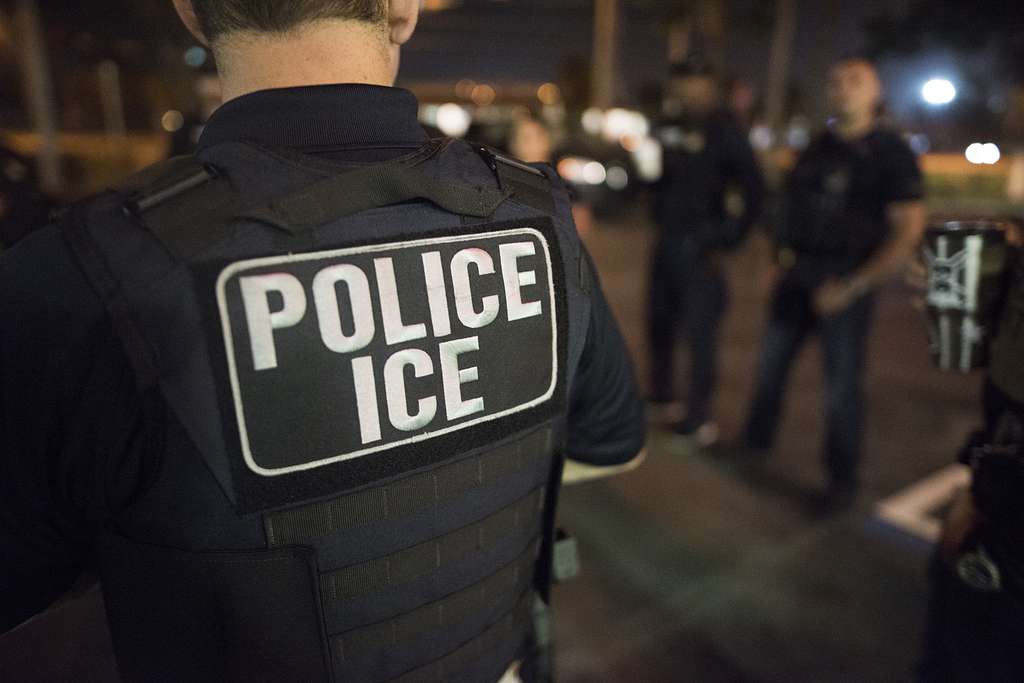
Beneath the well-publicised stipulations limiting the use of excessive force by federal immigration officers, Judge Sarah Ellis’ November 6 order quietly outlined a requirement for ICE agents in Chicago to wear bodycams. This footnote may prove one of the most consequential elements of the ruling. It positions Chicago once again at the forefront of transparency and accountability disputes, raising the question of whether anything forged in the city can take root nationwide.
So, why Chicago? The city’s long history of hard-fought transparency battles makes it uniquely situated to address concerns over the use of force by law enforcement officers. The benchmark to look at is the Laquan McDonald case. In 2014, lawyers and journalists, Jamie Kalven among them, sued for the dashcam footage of the murder of a teenage boy by police officers after a tip from a confidential whistleblower. In doing so, they did more than simply secure a single video: they established a precedent that Chicago’s law enforcement footage belongs in the public domain.
In an interview with The Gate, Kalven highlighted the importance of the judicial precedent established over a decade ago in assembling the evidence and arguments for last month’s case. Whilst there are key differences between the two, most notably the distinction between local and federal law enforcement, the overlap in the actors and legal frameworks involved is striking. The civil rights firm Loevy & Loevy and UChicago Law School’s Craig Futterman bridge these two pivotal moments, having played central roles in both efforts.
The November 5 preliminary injunction itself extends a temporary restraining order issued by Judge Ellis earlier this autumn. The case presented evidence to the court that agents were employing pepper balls, tear gas, chemical irritants, rubber projectiles, vehicles and physical takedowns outside of detention centers and across protests indiscriminately and with no regard for necessity. The ruling demands the use of crowd dispersal orders and restricts the use of riot control weapons to occasions where there is the immediate threat of harm. However, its most significant provision may be the requirement that agents wear visible identification and body-worn cameras. Coverage regarding the former of these is plentiful, but it is the latter that warrants closer attention.
In an era oversaturated with cell phone footage, livestreams and clipped videos circulated by multiple actors, including the federal government itself, the evidentiary value of bodycams is not immediately obvious. Kalven did not pretend that their use would magically solve the problem at hand, but he was decidedly unequivocal about their value. He discussed the importance of building up banks of evidence, something he has done in his work at the Invisible Institute’s Civic Police Data Project. He underscored the importance of such initiatives, noting that even evidence that is not immediately actionable may prove crucial in legal cases further down the line. For Kalven and his colleagues, this emphasis on accumulation and verification over hurried publication is central to their approach towards events currently unfolding in Chicago.
Furthermore, even though footage of ICE is plentiful, it is cut tactically by various groups in order to curate their own narratives. Kalven suggested that the value of full, undoctored and verifiable footage, especially given increasing AI editing capacity, cannot be understated. He also pointed to the deterrent effect bodycams have on officers, as evidenced by the University of Chicago’s Crime Lab and the Council on Criminal Justice’s Task Force on Policing report detailing that following the implementation of bodycam requirements, the use of force by police officers decreased by nearly 10%. This measurable deduction, when combined with the accountability bodycams provide in lawsuits, makes the case for their use stronger.
Bodycam footage can be a useful mechanism to ensure the accountability of ICE agents, but the issue of nationwide adoption of such measures remains. Given that only seven states other than Illinois have mandated the use of bodycams by local law enforcement officers, the precedent set highlights the limited scope of current implementation.
Nevertheless, efforts surrounding the issue of transparency regarding federal agents are emerging elsewhere. In California, Governor Gavin Newsom signed the No Secret Police Act in September — due to go into effect at the start of next year — which prohibits the use of masks by the majority of federal immigration officers. However, the Department of Justice has already registered a federal lawsuit challenging the constitutionality of the law, arguing that it puts federal officers at risk.
To that end, the success of these initiatives remains uncertain. In a recent 60 Minutes interview, Trump expressed that ICE raids “haven’t gone far enough.” As posited by Kalven, one must consider if the work done to unmask ICE agents and record their actions will fall short of restricting their use of excessive violence if such brutality is sanctioned both by their commander in chief and an ideologically friendly Supreme Court.
The link between the case brought before Ellis and the Laquan McDonald case is not a tidy parallel, but rather a reminder. Chicago’s past transparency battles indicate how lengthy the process can be to instigate institutional change, but also how tangible such shifts can become. It highlights the essentiality of networks of journalists, lawyers and community groups ready to hold government actors to account. The new body-camera requirement will not resolve the broader tensions surrounding federal and local transparency but if adhered to, it will represent a step towards genuine accountability. Whether that visibility remains a Chicago exception or evolves into a national expectation is the unresolved question facing not only Jamie Kalven and his colleagues at the Invisible institute, but the nation as a whole.
The image featured in this article is licensed for reuse under the Creative Commons Public Domain Mark 1.0 Universal deed. No changes were made and the original photo can be found here.
 The Gate
Leave a comment