With the 2024 election of President Donald Trump, the future of the renewable energy movement looks bleak. In his first few weeks in office, President Trump followed through on campaign promises to cut federal funding for renewable energy and expand oil and gas production. He froze the Inflation Reduction Act, withdrew from the Paris Climate Accords, and repealed former President Joe Biden’s limits on carbon emissions from coal-fired power plants. These actions all signal his commitment to halting American progress towards a clean energy transition.
President Trump’s climate policy should be deeply concerning for all Americans. The Keeling Curve, which models the atmospheric concentration of carbon dioxide (CO2) over time, has shown a continuous increase since 1958. More atmospheric CO2 means more greenhouse gases entering the atmosphere, trapping heat from the sun and causing unpredictable weather patterns, rising sea levels, and ecosystem damage, among other calamities. Scientists warn that without immediate action, there could be severe consequences such as more frequent and intense natural disasters, widespread habitat loss and increased food and water scarcity. Sadly, with President Trump back in office, the U.S. is unlikely to reduce its carbon footprint anytime soon. The negative effects of climate change will persist, and may even accelerate, as oil and gas production ramps up under the Trump Administration.
However, President Trump is not a monarch. He does not possess absolute authority over all matters within the country, and under the federalist system of government, his administration is unable to directly intervene in state or local affairs unless a federal law is breached. This means that Americans can still make meaningful progress toward reducing their carbon footprint, despite President Trump’s harmful policies. By mobilizing individual neighborhoods, towns, and cities, the American people can advocate for better climate policies at the local level. This includes reaching out to elected officials, attending town hall meetings, and organizing events to educate people about the dangers of climate change.
Change does not have to come in the form of sweeping, nationwide reform—small towns and cities can pass their own legislation aimed at reducing carbon emissions. In fact, starting climate legislation at the local level may be more effective in the long run. Although federal policies can have a broad impact, their success depends on public support, as exemplified by the failures of President Jimmy Carter’s push for renewable energy adoption in the late 1970s. Mr. Carter installed solar panels on the White House and introduced tax credits for solar and wind energy. However, widespread adoption was slow and depended on local and state governments, businesses, and individuals choosing to embrace renewable energy. Thus, the best way to ensure lasting change is to start small. In other words, to start locally. Communities that prioritize sustainability and take climate action can inspire other regions to follow suit, creating a ripple effect that gradually reshapes national policy.
The City of Chicago is a prime example of the efficacy of this local-first approach. On January 3rd, 2025, Mayor Brandon Johnson announced that the city had achieved its goal of transitioning all municipal facilities and operations to 100 percent renewable energy. Chicago’s municipal buildings require 700,000 megawatts of electricity, and all of it will now come from clean energy sources. In 2017, Chicago partnered with energy developer Swift Current to build the largest solar farm east of the Mississippi. Now that the project is complete, the city uses half of the energy produced by the solar farm, which will supply 70 percent of the power for the city’s municipal buildings. Officials plan to cover the remaining 30 percent through the purchase of renewable energy credits (RECs). These credits function as certificates proving that the energy purchased by the City of Chicago was originally generated from renewable sources, even if the actual electricity comes from the regular grid. By buying RECs, Chicago ensures that an equivalent amount of renewable energy is produced.
The City of Chicago remains unfazed by President Trump’s attempts to stop the country’s transition to net-zero emissions. Despite federal roadblocks, through the city’s longstanding commitment toward renewable energy, Chicago’s carbon emissions will be reduced by 290,000 metric tons per year—the equivalent of removing 62,000 cars from the road. Through their commitment to renewable energy, the City of Chicago has been able to create jobs for the community in addition to addressing environmental concerns. Investing in Swift Current’s solar farm has led to new jobs in the Chicago area, as workers are needed to build and maintain the facility.
Similarly, California is forging ahead with its own innovative approach to tackling climate change. On March 21, 2025, Governor Gavin Newsom announced a groundbreaking effort to monitor and reduce methane emissions using satellite technology. This project, funded by a $100 million investment from California’s Cap-and-Trade program, will deploy satellite-mounted methane sensors to track large emissions that would otherwise go undetected. Methane is one of the most potent greenhouse gases, and it is responsible for about a quarter of global carbon pollution. By identifying and mitigating methane leaks in real time, California is taking a big step in slowing climate change and protecting public health.
The data collected from this satellite initiative will be used to coordinate mitigation efforts between state agencies and industry, ensuring that emissions are addressed quickly and effectively. Governor Newsom’s website emphasizes that despite federal rollbacks on environmental protections, the state government remains committed to combating climate change with new technology. This program not only positions California as a leader in climate innovation but also sets an example for other states looking to implement similar policies.
In these next four years, the U.S. can still make strides toward net neutrality by mobilizing local governments and communities. Chicago and California’s climate actions should serve as examples for governments and individuals across the country. Americans must recognize the power of local climate activism. Whether through citywide renewable energy transitions or high-tech emissions monitoring, local governments can make substantial progress in fighting climate change. No matter how discouraging the current political environment may seem, the American people must continue to push for better climate policies. In fact, the work done at a local level may ultimately have a more lasting impact than anything President Trump does in the Oval Office.
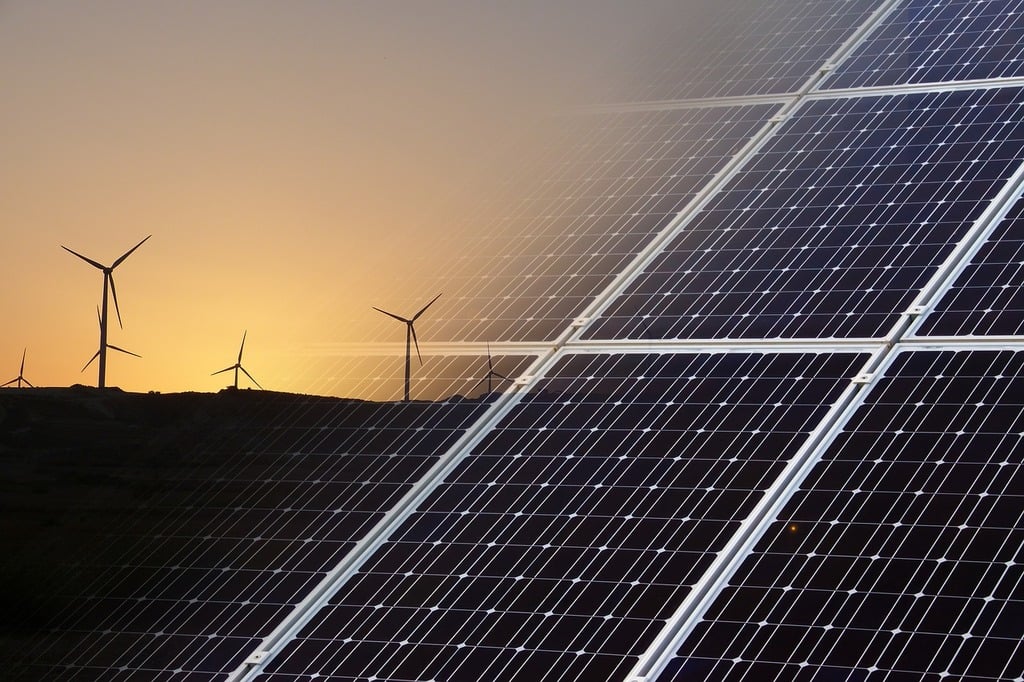
The image used in this article is licensed for reuse under the Creative Commons Public Domain Mark 1.0 Universal Deed. It has been unaltered from its original form and can be accessed here.
 The Gate
Leave a comment