How does the patent system work? “Through the marketplace,” explained Professor Jonathan Masur when we sat down to discuss the complex intersection of law, economics and innovation in today’s global technology landscape.
Jonathan S. Masur is the John P. Wilson Professor of Law at the University of Chicago Law School, where he has won the Graduating Students Award for Teaching Excellence multiple times, most recently in 2022. Professor Masur’s expertise spans patent law, administrative law, and behavioral law and economics. He is the co-author of “Patent Law: Cases, Problems, and Materials” (2023) and “Happiness and the Law” (2015), and directs the Wachtell, Lipton, Rosen & Katz Program in Behavioral Law & Economics at the University of Chicago Law School.
Professor Masur’s insights into the world of patent law are particularly relevant as the United States navigates increasingly complex international technological standards and faces new challenges in global competition, particularly from China.
I want to start with a discussion of the patent system at large: what is it and what purpose does it serve? In your 2013 paper Raising the Stakes in Patent Cases you introduce the patent system as a tool to “encourage the research and development of the most socially valuable inventions – those innovations that will produce the greatest benefits for society at large.” Can you explain in broad strokes how the patent system works and why we use the patent system in the U.S. as opposed to another system for incentivizing innovation?
The fundamental problem is that a lot of inventions are very costly to create and very cheap to copy. The typical example is prescription drugs. The process to devise a new molecule that will cure some disease and then test that molecule out and run it through all the FDA trials to get it approved can be extraordinarily costly, hundreds of millions or billions of dollars. But actually making the little pill that you put in your mouth, that’s like a fraction of a penny.
The concern is that if people couldn’t protect their inventions in any way, someone would spend all the money up front to develop the invention, and then someone else would come along and copy it at a very cheap price and undercut them. We worry that inventions won’t be developed without some kind of incentive.
We could have government grants, just have a big pot of money in the government and provide money to firms to do this kind of research. Or we could have a prize, like the government could say a billion dollars for the first person who comes up with a COVID vaccine. We do have prizes sometimes like that. But we’ve chosen the patent system because it works through the marketplace. Basically the type of invention you want to create is the one that you can then sell for a lot of money. And if you can sell it for a lot of money, that’s an indication that people will pay a lot for it, which is an indication that it’s very valuable to them.
A U.S. patent grants its recipient rights that are valid only within the territory of the U.S. Every country has its own patent law. Practically speaking, how do the different patent systems across the globe mesh together?
There are a few patent systems that are just a lot more important than others because of the size of the jurisdiction and the economic importance. The European Union patent system is important. The United States patent system, China, Japan. Almost everyone else is, to some extent, subsidiary to those others and parasitic on them.
The various patent systems largely work the same, and there are some treaties that exist to harmonize the patent rules between jurisdictions. They’ll have small differences from place to place. They operate a little bit differently. Our court system is different than court systems elsewhere, but by and large, all of these different jurisdictions try to copy one another and have patent systems that mostly work the same way.
What are Standard Essential Patents and what role do they play in the development and licensing of new technologies?
The whole goal is to have technological devices that are able to work together and talk to one another. So the idea is that your iPhone can connect to all the cell towers here, and that my iPhone can connect to all the cell towers, even if it’s an earlier generation, and that if one of us had an Android phone, that could connect to all the cell towers.
The 5G and 6G cellular data transfer standards are the big ones that everyone’s thinking about these days. But other examples were like DVDs, Bluetooth, Wi-Fi — these are all technological standards meant to ensure interoperability.
The way that they’re set is by international technological organizations, like IEEE. They convene groups of engineers and scientists who think about what the best standard would be for a particular set of devices. A standard essential patent is just a patent that governs some piece of that standard. Any given standard might have hundreds or even thousands of patents that are essential to it. Without that patent, you can’t use the standard.
What are fair, reasonable and non-discriminatory (FRAND) terms for licensing SEPs?
FRAND basically means two important things. Number one, you’re not supposed to get an injunction just to stop me from using the technology entirely. You can make me pay some money, I’m supposed to pay you some licensing fee, but no injunction that will just simply prevent someone from accessing the technology.
And, secondly, the terms on which we agree to license have to be reasonable and I can’t charge different people different rates. I can’t strike a separate side deal with this company over here and charge them a lower price than I’m charging you because now I’m playing favorites within that marketplace and the whole point of having a standard is that everyone gets to compete on equal grounds.
Can you describe some of the key legal issues that arise from a case like Microsoft v. Motorola?
One of the most important things going on is the injunction that the German court granted. If you have a standard essential patent, you really should not be granting injunctions under any circumstances. That defeats the purpose of having a standard essential patent.
Then you have the American jurisdiction granting an anti-suit injunction. The legal effect of that is a little unclear. The German injunction doesn’t reach the United States. The United States anti-injunction injunction doesn’t really reach Germany. So, a lot of this depends on which provision the various courts are willing to give effect to.
This is a typical example in which you’ve got two parties competing over standard essential patents in multiple different jurisdictions at the same time in a way that’s complex because it’s patent law, doubly complex because it’s standard essential patents and then triply complex because you have multiple jurisdictions in place.
How has jurisprudence in the US on standard-essential patents evolved over the last decade, and where do you see it going in the future?
Courts are fumbling around about what FRAND means. Years ago, they were willing in some cases to grant injunctions even with regard to standards essential patents. There was a lot of outcry about that. They’ve now backed off of that to some degree, and it’s much harder to get an injunction when it comes to FRAND. They are starting to coalesce around what a reasonable amount of damages would be and what FRAND requires.
Standard essential patents are the only patents around which you can form patent pools. A patent pool is basically just a collection of patents set up by a third-party organization. That only works with standard essential patents for antitrust reasons. Over the last decade or so, U.S. courts have become much more comfortable with allowing these patent pools to form and not striking them down for antitrust reasons.
What are some of the economic security concerns that arise from the improper regulation of standard essential patents?
The concern here is that when it comes to standard essential patents, there’s usually just one way of doing something. If there’s only one way to do Wi-Fi or cellular data, then you worry about one country or one technological firm having a hammer lock on that type of technology.
If the only firms making the chips necessary to do cellular data are in China, and then China just decides to turn off the spigot and not sell those chips to us, that could be a problem. Or, if they take their advantage and use it to implant some damaging technology that violates people’s privacy, that could be a problem also.
As of right now, the area where people talk about this is 5G and 6G. That’s where China seems to have a real technological lead. I personally do not believe that this is a big long-term problem. I think that American firms and firms in other countries can and will catch up very quickly. But I don’t think that the concern is frivolous either.
What do you make of the EU’s proposed legislation and the curtailing of patent holder’s rights more generally?
What they’re trying to get at is the problem where a standard gets created and I have a patent that governs that standard and I don’t tell anyone in advance. The EU is worried about people who have not signed FRAND agreements popping up later on and saying, “I have this essential patent and now you all must pay me multiple billions of dollars if you want to use my patent.”
They’re trying to force people to come out of the woodwork and register their patents so we know who they are and then force them to negotiate on FRAND terms or have the result of FRAND terms outside of court. I think it’s basically a sensible approach. The United States has managed to get by reasonably well without doing something like this, partly because the standard setting organizations are usually pretty careful. But I sort of like the EU approach.
The American people have just elected a new president. How will Donald Trump’s return to the White House affect the patent system, if at all? I’m thinking here of his influence on US engagement with international standards-setting bodies and hostility towards what he views as an unfair playing field for American companies on the global stage.
American firms like standard-setting organizations, they like standard essential patents, they like the way that this is all conducted currently. Most of that’s run outside of the government. So I don’t think that Trump will be able to interfere with it very much.
The place where Trump could potentially interfere is in how it interacts with national security. If some foreign company or country is gaining a very strong hold over technology, what you could imagine is Trump imposing import tariffs on that technology. He might block the importation of Chinese 6G chips and technology, thereby giving homegrown firms an advantage.
The upside is that American firms will have an advantage in selling to the American market. The downside is that it will encourage retaliatory tariffs about other things, and it will raise prices for consumers.
To finish, let’s pivot towards some possible improvements for the patent system. What is one thing you would change about the SEP system?
I think that courts should do a better job of defining what FRAND licensing is. If there were courts that were willing to sort of say in very explicit terms, here’s what FRAND licensing means, here’s what it requires, here’s what it doesn’t permit, that would be very valuable. And I think it would be good if courts would insist on FRAND licensing for anything that looks like a standard essential patent, even if the owner of that patent didn’t try to register it as a standard essential patent ahead of time.
I want to end on a bright note. What is one particularly notable recent case in which the patent system has been upheld or strengthened in a way that promoted innovation?
There was a case in the Supreme Court just about a year ago in which it upheld the disclosure rules of patents — how much information you have to provide in your patent about how your invention actually works and operates. There was some thought that the courts might weaken those requirements. But the Supreme Court said we require that you fully disclose the invention and teach others to use it or else your patent is not valid. That was a very sensible decision and a nice step forward for the patent system.
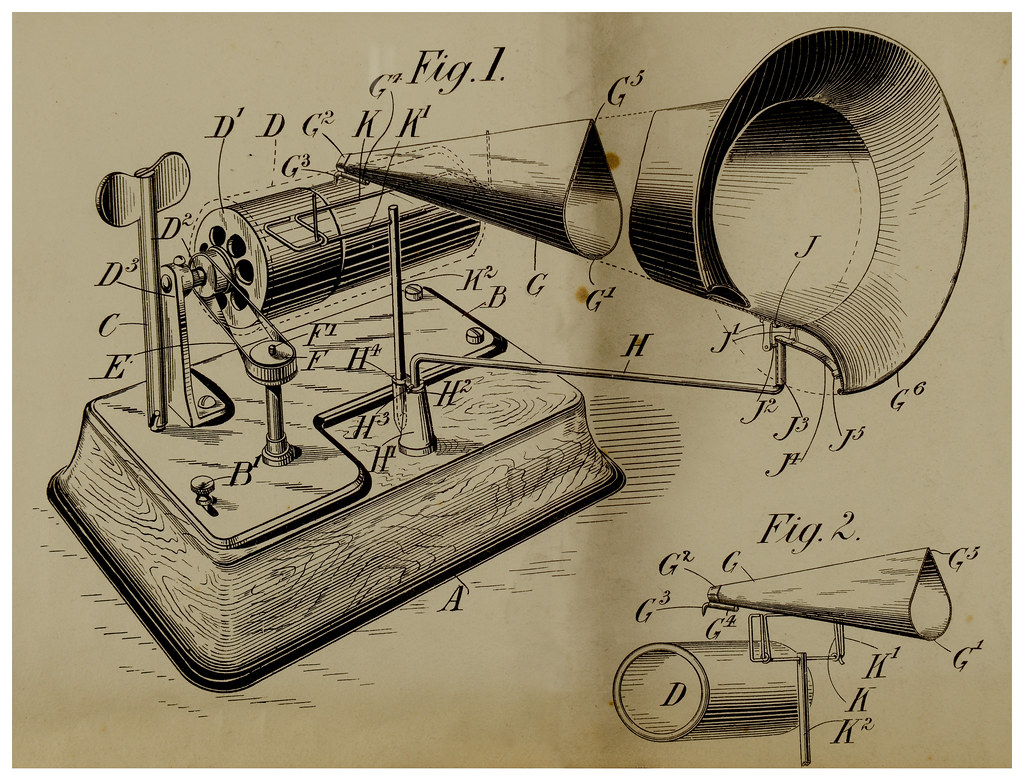
The image featured in this article is licensed for reuse under the Attribution 2.0 Generic license. No changes were made to the original image, which can be found here.
 The Gate
Leave a comment