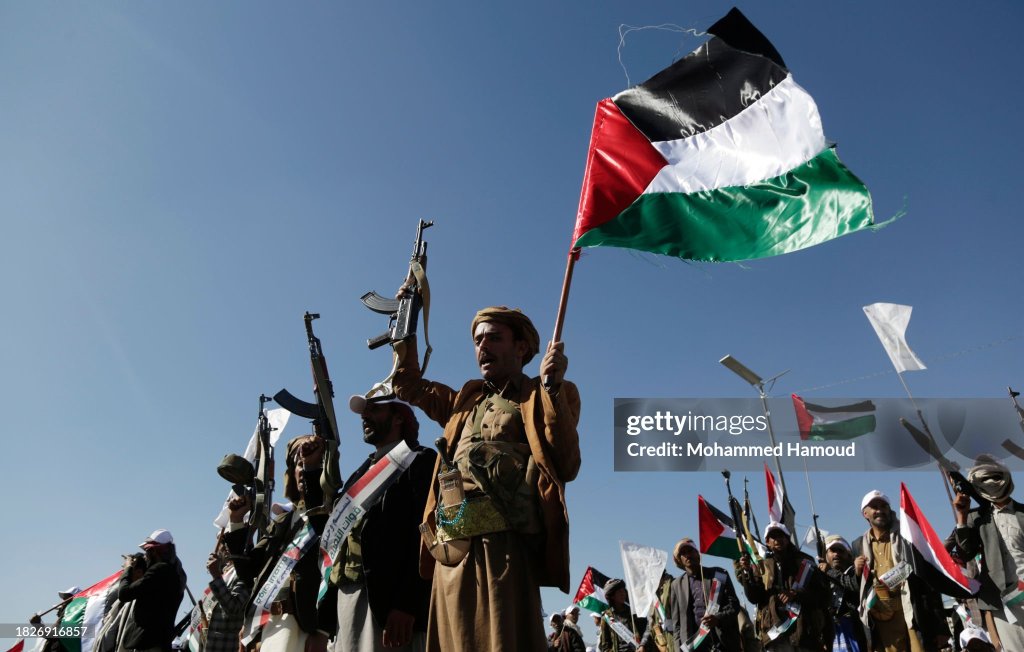
On January 13, 2025, fourteen months after the initial October 7th attacks by Hamas on Israel, Yemeni Houthi rebels launched airstrikes towards central Israel, sending civilians fleeing towards shelters and sirens ringing. This serves as the latest attack in the anti-Israel offensive, promised by Abdulmalik al-Houthi, the political and religious leader of the Houthis, aiming to disrupt global shipping and pressure Israel into a ceasefire in Gaza.
While discounted as a credible threat in the 1990s, the Houthi rebels, a Shia Islamist political and military movement, are directly and indirectly responsible for over three hundred thousand deaths in Yemen as of today. Emerging in Yemen in the 1990s as an opposition movement to former president Ali Abdullah Saleh, the Houthis have since been engaged in a prolonged conflict against Yemen’s internationally recognized, predominantly Sunni Islamist government.
In 2014, the Houthis successfully invaded Sana’a, Yemen’s capital city, in an attempt to oust the standing government, sparking a civil war between the Houthi movement and the Yemeni government. Their established slogan: “God is great, death to the U.S., death to Israel, curse the Jews, and victory for Islam” unites an estimated 100,000 Houthi soldiers around a strong opposition to the U.S. and Israel.
The group is considered a proxy (non-state actor) of Iran, forming part of the Iranian-led “Axis of Resistance” aligned with groups such as Hamas in Gaza and Hezbollah in Lebanon. In contributing 700 million U.S. dollars to the Houthis and other terrorist groups [annually?], Iran bolstered the Houthis’ arsenals with missiles, long-range drones and intelligence technology. But how much of an influence does Iran have on the Houthis, and how has this relationship impacted other parts of the world?
Most recently, the organization has made headlines due to its connection to Iran and its current involvement in the Israel-Hamas War in Gaza and the war between Russia and Ukraine. Its attacks in the Red Sea caused global economic instability. Located on the Red Sea, the Suez Canal facilitates the passage of one-third of all container traffic: more than 17,000 ships per year, comprising 12% of worldwide commerce and one trillion U.S. dollars of goods and products from crude and refined oil to electronics and sneakers. At one point, companies diverted 200 billion U.S. dollars in trade from the Red Sea to the longer route traveling around Africa, costing an average additional million U.S. dollars per round trip for each ship.
In Russia, recent reports from regional media outlets reveal that armed forces recruited hundreds of Houthis to fight in their ranks in the ongoing war with Ukraine. Promised high salaries and opportunities in Russian engineering and security jobs — with the possibility of citizenship to work them — some Yemeni soldiers have allegedly been transferred through Houthi-linked channels to support Russian efforts. For Russia, strengthening ties with the Houthis through weapons and intelligence could aid their strategic interests in the Red Sea, exerting pressure on Western shipping routes.
The Houthis’ relationships with Iran and Russia, along with their actions against Israel, raise significant geopolitical concerns. Any measures taken to stop potential Houthi attacks in the Red Sea risk upsetting regional dynamics and potentially widening the conflict between Israel and Hamas. Saudi Arabia, which already has a tense relationship with the Houthis, may take decisive action, as secure use of the Red Sea for oil trade is crucial to its economy. While claiming their motive is to end the war between Israel and Hamas, the Houthis’ actions risk involving multiple actors and exacerbating pre-existing conflicts.
This new involvement with Russia marks the Houthis’ ascent to a more prominent role within Iran’s proxy network, as well as a more offensive stance on the global stage. It also calls into question past analyses of the Houthi rebels and their intentions. As Yemen researcher Nicholas Brumfield “The Houthis don’t want a scenario where the United States will stop thinking of the Houthis as the unpleasant but tolerable rulers of northern Yemen and maybe actually get committed to ousting them.”
In the past, it has been generally thought that while the Houthis may engage in proxy conflicts on behalf of Iran, their primary goal was to maintain their existing power in Yemen, or at least not put it at risk with overly ambitious military adventures that might provoke powerful foreign military responses. Now, as the Houthis continue to gain military strength, forge alliances, and demonstrate independence in their efforts — while involving themselves with countries such as Russia — only time will tell whether they will be viewed through Iran or gain recognition independent of its “Axis of Resistance.”
The image used in this article is licensed by Getty Images. It was created by Mohammed Hamoud and can be accessed here.
 The Gate
Leave a comment