
Celebrities Don’t Always Know Best
Celebrities have always had an inextricable link to politics—more specifically, to presidential candidate endorsement. The form of these celebrity endorsements has greatly evolved over time, ranging from Babe Ruth to Barbara Streisand, from marches to Instagram posts. Whatever the form of the endorsement, however, the intrinsic message is always clear: vote for this person because I say so. And according to the data, some obsequious fans and followers of these celebrities truly listen. Given such blind adherence, the question naturally arises: should we really be listening to celebrities as voices of reason in the political arena? In short, no.
Whether or not celebrities should be listened to, their effect on election outcomes unequivocally exists. Take, for example, Oprah Winfrey’s endorsement of former president Barack Obama in 2008. Craig Garthwaite (Northwestern University) and Timothy J. Moore (University of Maryland) approximated that, through her endorsement (via primarily her own magazine), Oprah generated 1,015,559 total votes for Obama. This amounts to around 1.5% of the votes he earned in the general election—a shocking proportion when compared to the average margin of victory of 3.4% for the popular vote in 21st century elections.
Celebrity candidate endorsement has a particularly pronounced effect on voters who are disconnected from politics. Megan Duncan, a communications professor at Virginia Tech, explains, “celebrity endorsements work best on getting people who are disengaged from the political process to pay attention, effectively widening the audience.” Jessica Feezell, a University of New Mexico political science professor, describes a similar phenomenon. She draws a distinction between those who are “crystallized”—people who are politically savvy and often deeply entrenched in their current political ideologies—and those who are not. The latter, as a proximate result of their disconnection from the political arena, are more ideologically malleable, and thus more likely to be swayed by a celebrity endorsement.
Such endorsements were extremely widespread in the most recent election. For scale, just look at the list of each party’s National Convention speakers. The Republican National Convention included some of the usual suspects: two country singers (Lee Greenwood and Chris Janson), UFC CEO and recent founder of “Power Slap” Dana White, and Amber Rose, model and rapper, who stated in her speech that “Donald Trump and his supporters don’t care if you’re black, white, gay or straight—it’s all love.” (Is she referring to a different Donald Trump from the one who lamented, “I need the kind of generals that Hitler had”?) The Democratic National Convention had amongst their speakers the politically active Golden State Warriors Head Coach, Steve Kerr, and actress Kerry Washington. Beyond National Convention invitees however, two celebrities, diametrically opposed in their political views, emerged at this election’s forefront: Taylor Swift and Elon Musk.
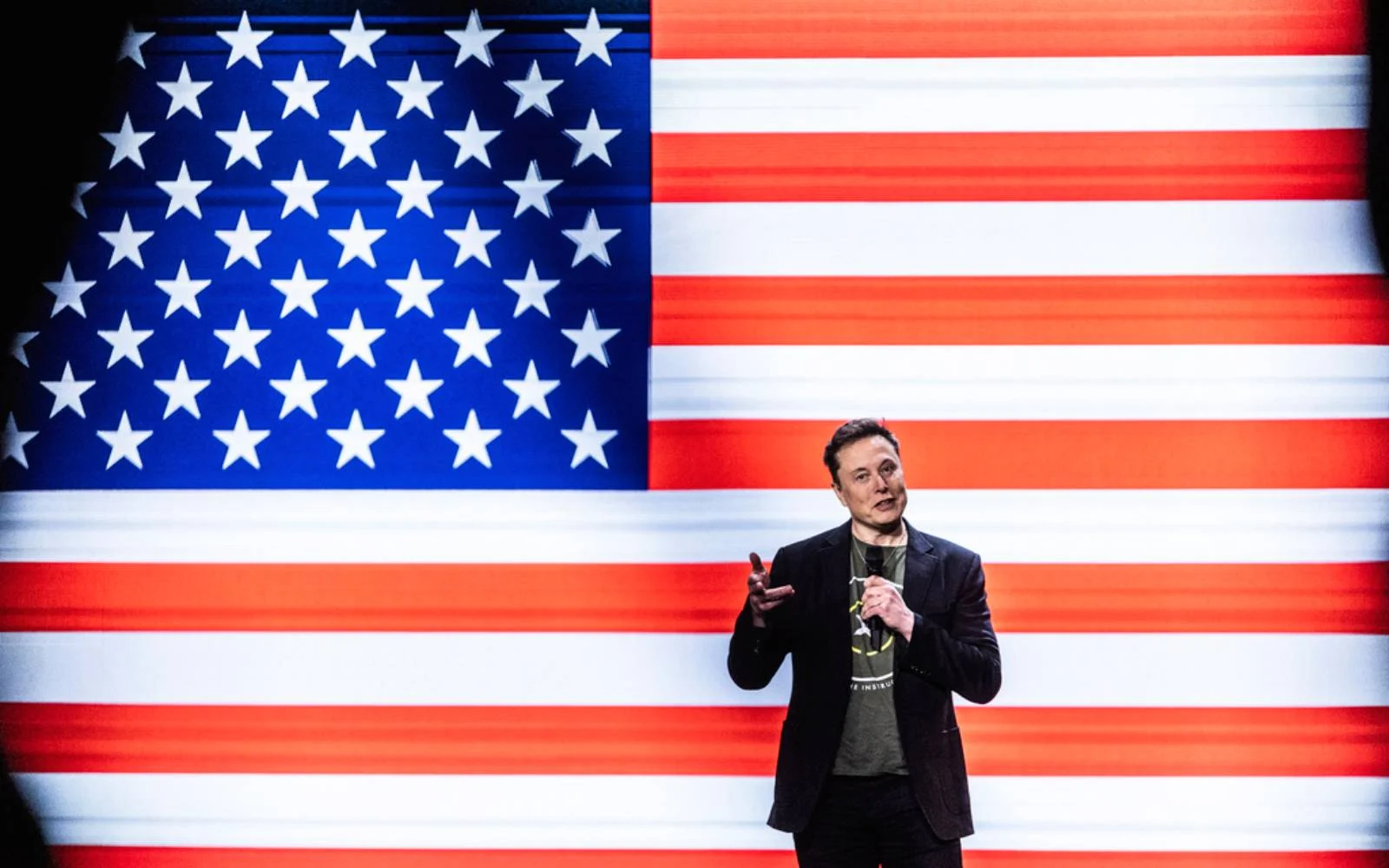
Swift and Musk have respectively established themselves as the celebrity figureheads for Kamala Harris and Donald Trump. Swift shared her unwavering support for Harris after the only presidential debate between the two. Without delving deeply into the political minutiae, Swift praised Harris in an Instagram post for championing rights that Swift believes in (those being LGBTQ+ and reproductive rights) and for selecting Tim Walz as a running mate. Musk took greater advantage of the efficacy of social media, taking to X—a platform that he purchased in 2022—to do so. On it, he fervently promoted “America PAC,” an initiative that paid people to refer “registered voter[s]” to “[sign] a petition pledging support for the First and Second Amendments.” The referees of this program, who were required to provide America PAC with contact information, were bombarded with pro-Trump messaging and propaganda. Additionally, the America PAC website advocates for six values that align with many of Trump’s priorities: “Secure Borders,” “Safe Cities,” “Free Speech,” “Sensible Spending,” “Fair Justice System,” and “Self-Protection.” Musk also appeared prancing around and speaking at multiple Trump rallies—most notably the one at Madison Square Garden in New York City.
Despite their ideological disparity, Swift and Musk do share something in common: a cult-like following (see Swift’s 280M+ Instagram followers, for example). Accordingly, there are eligible voters, most likely young ones who are un-crystallized, who likely take these celebrities’ words as gospel. Kei Kawashima-Ginsberg, from the Center for Information and Research on Civic Learning and Engagement at Tufts University, noted a key implication of this: “young voters could be decisive in key battlegrounds like Michigan, Wisconsin, Pennsylvania, and Nevada.” In essence, in the places where the election was decided, young voters who were more exposed to social media, and thereby celebrity endorsement messaging, were likely key.
Should celebrities have such an outsized influence on politics, though? I do not believe so. While Taylor Swift may write the best music and Elon Musk might manufacture the best-selling electric vehicles, their political preaching should not be heralded as undeniable truth, as it sometimes is. What if the reason for a celebrity’s endorsement is the curation of their image, financial gain or personal political standing? For example, Musk was appointed, along with Vivek Ramaswamy, as a co-head of Trump’s new “Department of Government Efficiency,” likely due to his unwavering support, both financially and vocally, of Trump during the election campaign. Additionally, these celebrities are not your average American. While an everyday person may be known in some respects, they likely do not have 283 million Instagram followers like Taylor Swift, or 307 billion dollars to spend like Elon Musk. Who really knows why these megastars are voting a certain way? People must elect the candidate who suits their interests, principles, and particular situation. Too often, celebrity endorsements cause a given voter to forgo consideration of personal circumstances that would ordinarily influence their vote. Finally, and perhaps most obviously, these celebrities are not political experts; opinions don’t suddenly gain validity just because the promoters of them are famous.
This is not to say that celebrities cannot have or should not express political views. In fact, it is imperative for them, as it is for all people, to be involved in the political process. As a general principle, however, such viewpoints should not be immediately accepted as political gospel. Perhaps a given celebrity’s thoughts prompt one to reconsider one’s stance on a certain issue or policy, though one should do more intellectual research before reaching a conclusion.
If there is one thing that celebrities should commit to, it is encouraging people to go out and vote. Instead of orienting political messaging around an individual candidate, they should focus principally on urging listeners to exercise their most foundational democratic right. Taylor Swift, outside of her fervent endorsement of Harris, did this well, including a link to vote.gov—a site that provides direct access to voter registration services—on one of her Instagram stories. While the exact number of people who registered because of this is unknown, over 337,000 people clicked on the link. Folk artist James Taylor has urged voter turnout even more prolifically, albeit doing so without nearly as many followers. In one post, he included a picture of himself at a polling venue, writing in the caption, “[voting] is the life blood of any democracy and our first duty as citizens.”
Other celebrities have become champions of nonpartisan voter advocacy initiatives. One such example is Michelle Obama’s creation of When We All Vote (WWAV), which strives to “change the culture around voting and to increase participation in each and every election.” In a recent program, WWAV partnered with the National Basketball Players Association (NBPA). NBPA president and New Orleans Pelican CJ McCollum commented on the collaboration: “regardless of political affiliation or stance on key issues, it’s our goal to encourage not only NBA players, but all eligible voters to turn out to the polls this November and make their voices heard.” What these celebrities understand is that our immediate focus should be voter turnout. While the voter participation of voting-eligible Americans reached an all-time high in 2020 (66%), a third of Americans remain disengaged from our most critical political process. Celebrities should shift away from instructing Americans to vote for a particular candidate, and instead leverage their position of great influence to urge the American populace to get out there and vote.
The image used in this article is licensed for reuse under the Creative Commons Attribution 4.0 International Deed. It was taken by the Associated Press and has been unaltered from its original form. It can be accessed here.
This dude Caleb Wade seems wicked smaht.