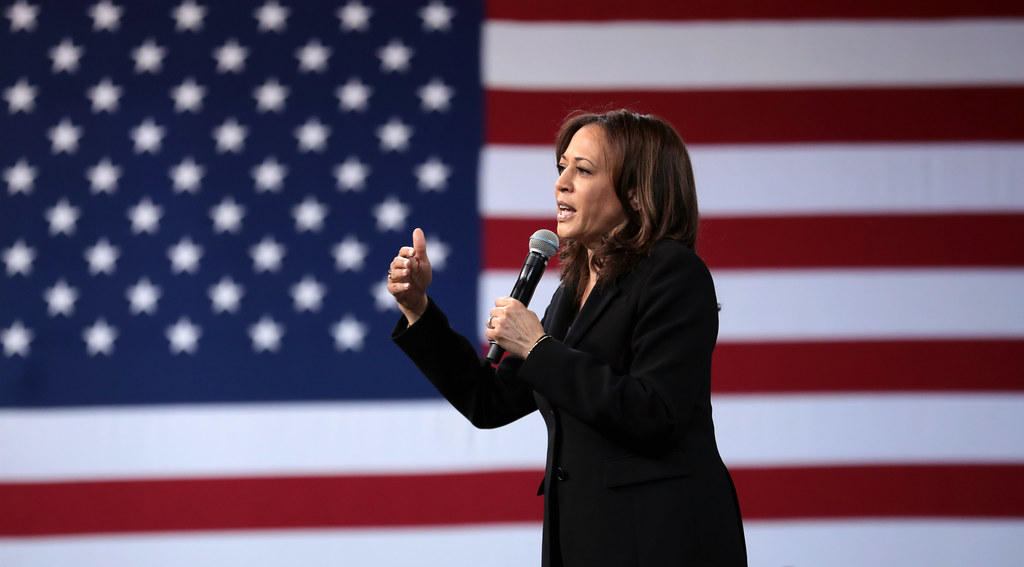
The last three months of the Kamala Harris campaign weren’t for nothing. Although she did not win, Harris stepped up to the plate in a big way. Harris fought poor odds from the start—in the last 100 years of American history, President George W. Bush is the only candidate to have been elected after a different member of their own party held office.
She also had to separate herself from the deeply unpopular Biden administration while still acting as his Vice President. When Harris began campaigning in July 2024, Biden’s approval rating hit a record low of 36%. It was paramount that she improved from Biden’s rating and convinced voters that her presidency would bring change. She had to walk a tightrope between remaining loyal to the president she served and criticizing his past four years in office.
Despite the odds stacked against her, in just three short months, Harris turned what seemed like a doomed Democratic ticket into a fairly successful one. The Harris campaign raised around $1 billion dollars over the course of the campaign, compared to the Trump campaign’s $388 million raised. Harris made electoral headway with both white women and white men, lowering Trump’s lead from 11 to five points and 23 to 20 points in each group respectively.
So, how did she achieve this increase in support? What made Trump struggle with these groups? In the past, Trump has been able to belittle his opponents through offensive monikers but against Harris he failed to come up with effective ones. Harris’overlapping identities made it difficult for Trump to box her in with a single stereotype. Her complex identity functioned like a shield against Trump’s usual insults.
Past Trump Campaign Strategy
In analyzing his past campaigns, it’s clear Trump spends a lot of time insulting his opponents. He famously branded Clinton as “Crooked Hillary,” and Biden as “Sleepy Joe.” These labels damaged each campaign and helped shape public perception about the Democratic candidate he was running against.
Against Clinton, Trump was able to use her identity as a woman against her. Trump used the “Crooked Hillary” moniker to tap into existing mistrust of women in politics. Many Americans harbor ingrained biases around women in power, and Trump exploited this by presenting Clinton as dangerous, untrustworthy, and weak. At a rally in Des Moines, Iowa, during his 2016 campaign, Trump told supporters that Hillary was, “really pretty close to unhinged… she’s like an unbalanced person.” He also claimed that she was, “a weak person. I know her. She’s a weak person”. This strategy worked, as according to a poll from October 28, 2024, 60% of Trump supporters said men are on average better emotionally suited than women to serve as president.
Trump’s attacks against Clinton were strategically gendered, intended to tap into the cultural undercurrents that doubted women’s suitability for executive roles such as the American presidency. Clinton’s identity as a woman allowed Trump to capitalize on these stereotypes with a consistency and intensity that resonated with parts of the electorate. Through insults like “Crooked Hillary,” Trump appealed to the 60% of his electorate that believed men were better suited to be president than women.
Just like 2016, in 2020, Trump used a moniker to belittle Biden: “Sleepy Joe.” Trump used Biden’s identity as an older man against him and tapped into stereotypes about age and energy, painting Biden as sluggish and weak. This nickname was part of a broader strategy to question Biden’s mental and physical fitness for office, implying he lacked the mental acuity to lead the country. Trump therefore presented himself as a more vigorous and dynamic alternative to Biden.
2024 Presidential Race
Looking back on the 2024 election race, one element of Trump’s habitual campaign strategy seemed noticeably absent: his ability to label and disparage the opposition. Unlike in 2016 or 2020, Trump struggled to reduce his opponent to a single nickname or stereotype. So, what was different about Kamala Harris?
Harris embodies Kimberlé Crenshaw’s concept of intersectionality. Crenshaw, an expert in critical race theory and women’s studies, first laid out her concept of intersectionality in 1989, in an article published in the University of Chicago Legal Forum. In the article, she explained how individuals could experience compounded discrimination or privilege based on their multiple intersecting identities. For Harris, her multiple overlapping identities as a Black and Indian woman, a former prosecutor and the wife of a Jewish man place her in an intricate social position that cannot be easily boxed in or stereotyped.
In 2016, Trump played on deeply culturally entrenched gender stereotypes to belittle Clinton, but in 2024 he could not do the same to Harris. Despite the fact that both ex-candidates are women, Harris’s intersecting identities made her a harder target to hit. She was not just Indian, just Black or just a woman. Her intertwining and compounding identities made it impossible for Trump to pin her down with a single narrative or trope.
When Trump tried to target Harris, his criticisms often appeared clumsy or incoherent, lacking the clarity and focus that characterized his attacks on Clinton and Biden. As Trump showed in an interview with the National Association of Black Journalists, he simply did not know how Harris self-identified. In the interview, Trump said, “I don’t know, is she Indian or is she Black?” He seemed incapable of understanding the fundamental idea of intersectionality — that overlapping identities exist and that they impact each other. Later in the interview, Trump said: “She was Indian all the way and then all of a sudden she made a turn and she became a Black person.”
Takeaways
Trump’s misunderstanding and possible lack of interest regarding Harris’ intersectional identity ultimately proved advantageous for the Harris campaign. Instead of being diminished by simplistic insults, Harris’s unique combination of identities deflected Trump’s usual branding tactics.
Trump’s inability to label Harris with his usual one-dimensional rhetoric may underscore a growing awareness of intersectionality’s power in politics. As Crenshaw’s concept suggests, these intersecting identities create a resilience against singular definitions, and in Harris’s case, they protect her from the level of caricature that was so damaging to Clinton in 2016 and Biden in 2020. Intersectionality offered a kind of protection for Harris’s campaign, positioning her outside the realm of simple insults and narratives.
The image used in this article is licensed for reuse under the Creative Commons Attribution-ShareAlike 2.0 Generic Deed. It was taken by Gage Skidmore and has been unaltered from its original form. It can be accessed here.
 The Gate
Leave a comment