
The Obama Presidential Center: A Beacon or a Burden for Chicago’s South Side?
In a towering 234-foot museum at the heart of the Obama Presidential Center, words from Barack Obama’s Selma address will soon be etched into stone: “America is not the project of any one person.” Yet the Obama Center itself feels like one of the most ambitious projects to emerge from a single person’s vision—seeking to honor the legacy of the first Black president while changing the face of Chicago’s South Side. As the Obama Center approaches its planned 2025 opening, it promises both opportunities and challenges for the South Side.
The Center’s journey began in 2015, when the Obama Foundation announced Jackson Park as the home of its new Center, just a stone’s throw from the University of Chicago, where Barack Obama once taught law and Michelle Obama served as an administrator. The University of Chicago was one of thirteen to petition to host the site of the Obama Center, which was seeking out “a new international destination, establishing a global network to communicate ideas and aspirations.”
Despite its intent to reflect the Obamas’ beginnings, the choice to locate the Center in Hyde Park was met with contention. Even prior to the Foundation’s announcement, community members and activists had fought to protect Jackson Park from commercial development. When the Obama Foundation leased the land from the city in 2015 for a mere $10, a non-profit organization, Protect Our Parks, decried the deal as a privatization and warned of the impacts on a historic public space. The plan faced multiple lawsuits and continues to carry a $200 million price tag for rerouted traffic and infrastructure changes—a cost passed on to the city, not the Foundation itself. These legal and financial issues ignited debates on who stands to benefit most from the Center’s presence: a revitalized Hyde Park and the University, or the residents and smaller neighborhoods that have long struggled to remain affordable and accessible to Chicago’s working class.
The Foundation has emphasized job creation, pledging that 28% of construction jobs and 86% of long-term positions will go to permanent South Side residents. Additionally, plans include a community library, an expansive public garden, and spaces for academic and civic collaboration, all intended to give back to the neighborhoods where Obama’s political identity first took shape.
Yet in neighborhoods like Woodlawn, South Shore, and even Hyde Park, residents fear that this revitalization might just be the latest chapter in a long history of gentrification. Groups like the Obama Library South Side Community Benefits Agreement (CBA) Coalition continue to press for measures to protect local residents, pushing for rent control and affordable housing to offset the influx of investors and rising property values. In response to these concerns, the city has recently committed $40 million toward comprehensive school renovations and affordable housing initiatives. This substantial investment aims to upgrade educational facilities to better serve the community’s youth and to increase the stock of affordable housing units to help maintain economic diversity. The funds are allocated for modernizing school infrastructure, enhancing educational programs, and constructing new affordable housing projects, as well as preserving existing affordable units through subsidies and incentives for landlords.
Additionally, in 2020, the city implemented the Woodlawn Preservation Housing Ordinance, which was a step toward maintaining affordable housing by mandating that 30% of units on city-owned land remain affordable. UCAD (University of Chicago Against Displacement) has been vocal in pushing the university to help curb displacement, pointing to cases like that of a Woodlawn resident whose property tax quadrupled following local development.
Although well-intentioned, these measures to protect residents from community change may not effectively prevent the inevitable. Gov. J.B. Pritzker and Mayor Brandon Johnson recently announced California-based tech company PsiQuantum will invest billions building a massive quantum computer complex at the vacant South Works site on Lake Michigan, several miles south of Hyde Park. That, alongside the recent addition of the Polsky Center for Innovation, a startup incubator in Hyde Park, led Senior Director of Essex Realty Brian Mond to conclude, “there is no doubt that this area is trending upwards as a place to both invest in and reside. Both local and out-of-state multifamily investment groups have also caught onto this hot neighborhood.” Property values in the area have already surged, and, according to the CBA Coalition, rents within a two-mile radius have climbed at rates outpacing many other areas of Chicago. It’s undeniable that Hyde Park and the South Side will likely grow more affluent and well-developed. With that change imminent, the best residents can likely expect is a guarantee of a soft landing.
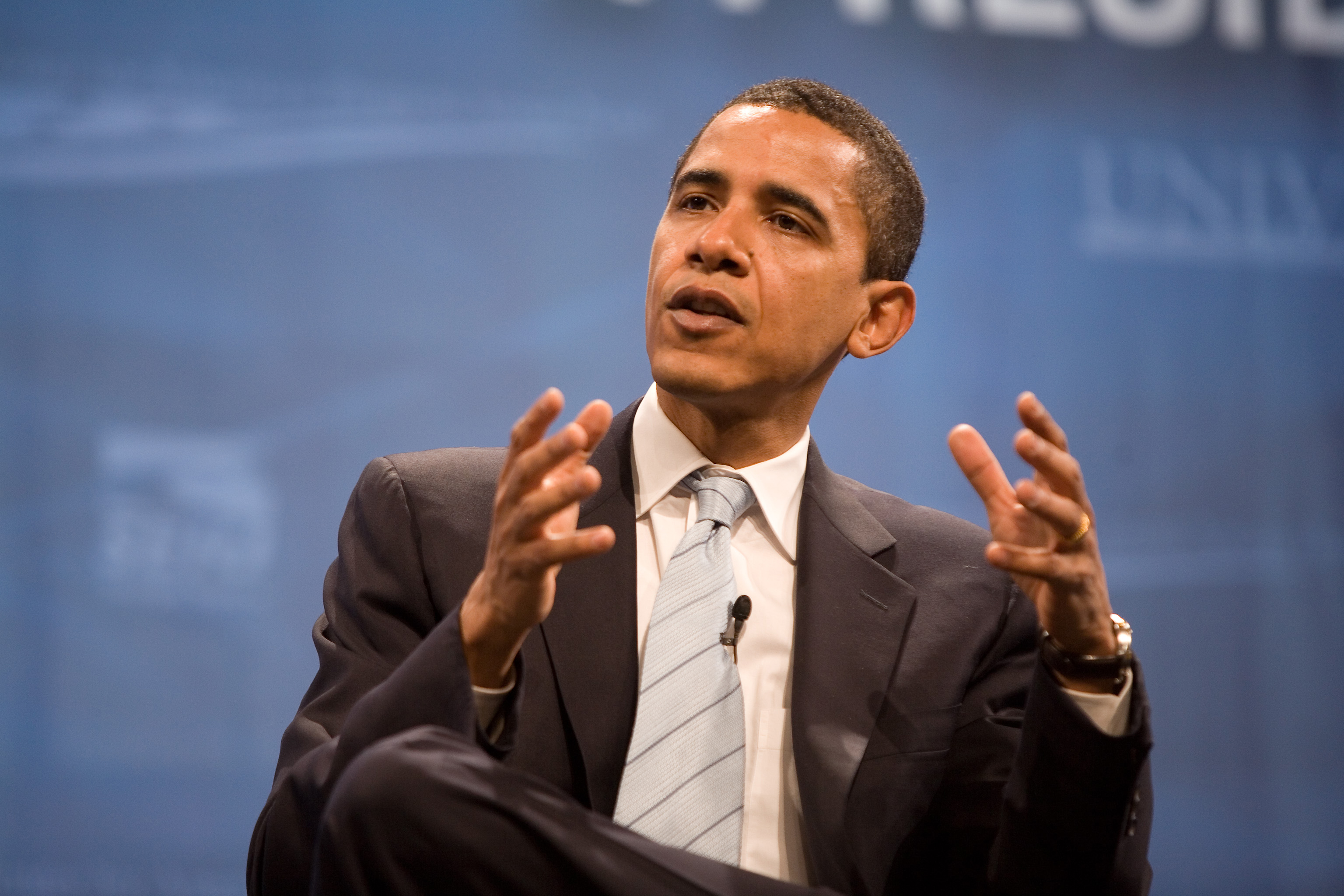
The image featured in this article is licensed for reuse under the Attribution-ShareAlike 2.0 Generic license. No changes were made to the original image, which was taken by Center for American Progress Action Fund and can be found here.
