
Hope for a Broken Community: Chicago City Council Passes Anti-Gentrification Ordinance
“When I was a baby, I got my ears pierced at the Mega Mall and now it doesn’t exist, which really hits home,” said Arely Barrera, Youth Department Manager at Palenque LSNA, a community organization serving the Northwest Side of Chicago through issue campaigns and various programs. Barrera has lived in Logan Square her whole life, which has allowed her to observe the changes her community is undergoing.
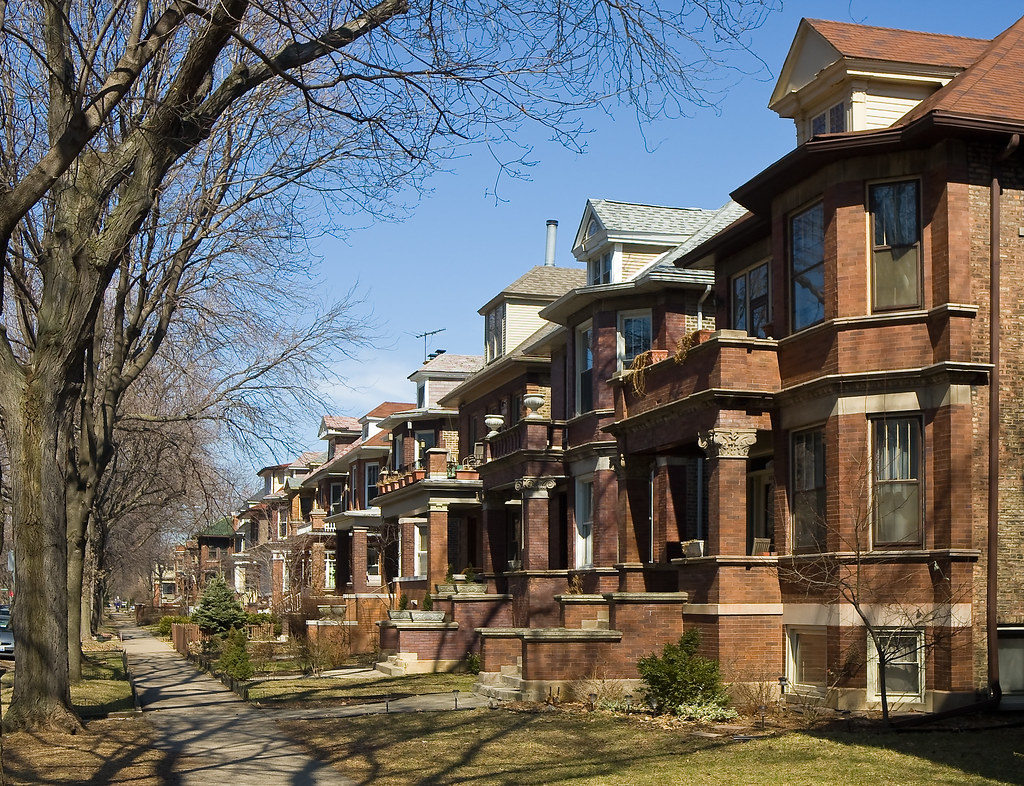
The change that Barrera is describing is a product of gentrification, which is heavily impacting the Northwest Side communities of Chicago, displacing many long-term residents. Between 2013 and 2018, the area near the 606 trail lost almost 60 of its two- to six- flat buildings, furthering the process of gentrification. To address this issue, City Council passed the Northwest Side Housing Preservation Ordinance in early October of this year.
The aim of the ordinance is to protect housing in the rapidly gentrifying parts of the Northwest Side of Chicago, namely Logan Square, Humboldt Park, Avondale, West Town and Hermosa. Specifically, the ordinance gives renters the first right of refusal to purchase the unit they are living in.
The ordinance also increases the fees for developers who tear down multi-unit buildings to build upscale homes. Under the ordinance, a developer will now be charged $20,000 per unit and $60,000 per building, which is a significant increase from the prior fees of $5,000 per unit and $15,000 per building. The hope is that the increased fees will discourage the demolition of affordable houses.
The revenue generated by the fees will go to the Chicago Housing Trust, which works to create a pathway for homeownership for low and moderate income Chicagoans at affordable prices. The Housing Trust serves as a partner in the ownership process, providing homeowners with a long-term network of support.
To prevent conversion into luxury single-family homes, the ordinance also legalizes the construction of two-flats in all areas currently zoned for single family housing within the ordinance’s boundaries.
Despite the overall success in passing the ordinance, there were three alderpeople who voted against the ordinance: Alderman Brian Hopkins of the 2nd Ward, Alderman William Conway of the 34th Ward, and Alderman Bennet Lawson of the 44th Ward. Conway criticized the ordinance, claiming that we should not constrict the housing supply if we want to encourage development and investment.
“That’s a rhetoric they often use,” Barrera said in response during an interview with The Gate. “They say that we’re going to scare away investment in our communities. The question is, investment for the benefit of who?”
In Chicago, there are stark inequalities in the level of investment across neighborhoods. The real estate community profits the most when they focus on one neighborhood at a time and flip it “from bust to boom,” Traolach O’Sullivan, Policy and Research Assistant at Palenque LSNA, told The Gate. As a result of this targeted approach to increase the profit for developers, there is not a shortage of investment in the Northwest Side of Chicago. The focus of this ordinance is on ensuring that they develop the areas that need it in a way that does not cause harm.
“This is a narrative based on misinformation that can sometimes be manipulative,” O’Sullivan said. “Our community does not always want a concert venue or fancy coffee shop to come here, because it will just raise rent and property taxes if it is not done thoughtfully.”
The process of creating the Northwest Side Housing Preservation Ordinance actually builds off of prior work with the Demolition Surcharge Pilot ordinance, which was originally passed by City Council in 2021 and has been extended twice. Between 2015 and 2021, there were 768 demolitions in the 1st, 26th, and 35th wards. Since the passing of the demolition ordinance, there have only been 204 demolitions issued in those areas, which demonstrates the efficacy of such an ordinance.
Community organizers played a significant role in the fight for the passage of this ordinance. One organization in particular has been a part of the fight from the start: Palenque LSNA.
“The work began at the kitchen table of Palenque with youth and housing organizers. It was during a discussion about solutions to gentrification with a cohort of After School Matters youth that the idea was raised about charging developers for demolishing affordable houses,” Barrera said. “From there, a group of five of us sat down with a lawyer and started talking about policy vocabulary and language, and created the first draft of the ordinance.”
From there, the housing team at Palenque, run by Housing Organizer Gary Jimenez, canvassed in support of the ordinance in all seven wards – collecting over 1,000 signatures.
Convincing the Alderpeople to support the ordinance was another crucial element of the housing team’s work. They held meetings with the Alderpeople’s Chief of Staff where the youth gave personal testimonies about why the ordinance was important based on their own experiences.
Following a youth-organized rally with over 300 people in attendance and endorsements from more than 50+ community organizations, the Northwest Side Housing Preservation Ordinance was successfully passed after extensive work on behalf of the Alderpeople.
“We believe in equitable, balanced development without displacement,” O’Sullivan said. “This ordinance is not going to solve everything, but it is a part of the larger fight to create more pathways for permanent affordability.”
The image featured in this article is licensed for reuse under the Attribution-ShareAlike 2.0 Generic license. No changes were made to the original image, which was taken by Jeremy Altherton and can be found here.