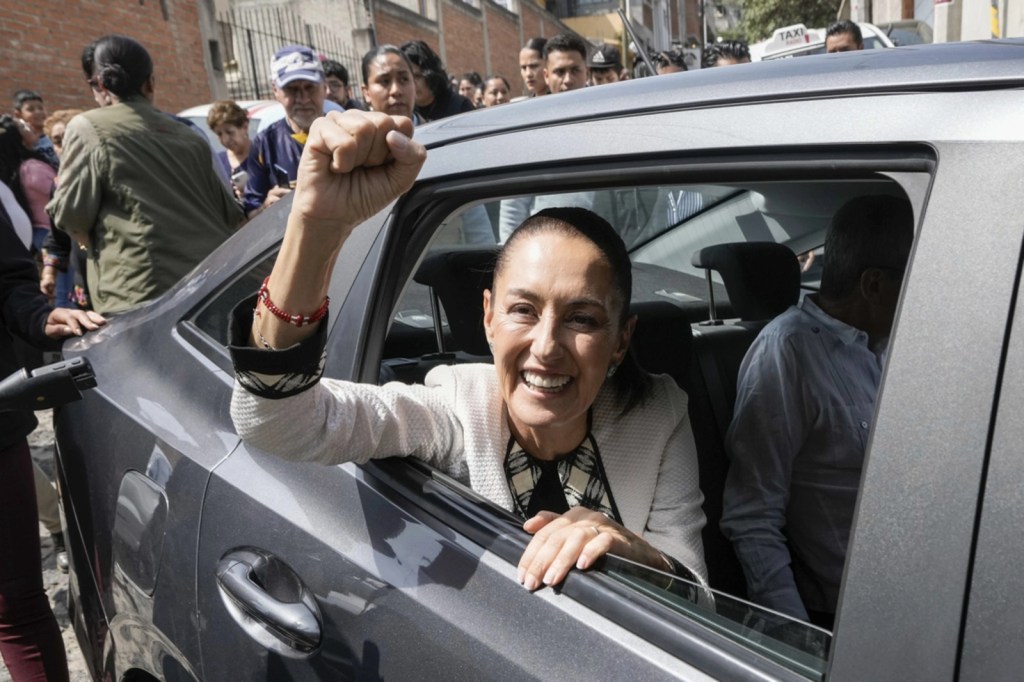
On Oct. 6, Alejandro Arcos Catalán’s body was found in Chilpancingo, Mexico after being sworn in as mayor of the capital city of the state of Guerrerro. His head was placed atop the vehicle in which his body lay, a gruesome crime that has become more common on the streets of Mexico. His murder is just one of thousands that is likely to go uninvestigated by the Mexican police force and members of the judicial system. The growing rate of disappearances and murder is only exacerbated by Mexico’s disjunct legal and policing system. As an estimated one third of Mexico’s land is controlled by cartels, it is now more urgent than ever for newly-elected President Claudia Sheinbaum to crack down on cartel violence, starting with ousting cartel control at the local level.
Days prior to Catalán’s murder, various other members of local government were killed, many being the opponents of the incumbent Morena party. Mexico’s 2024 election was the most violent in the nation’s history, with 59 candidates and nominees assassinated and 107 threatened throughout the campaign season. Violence is just one of the myriad of issues Mexico is facing, but inter-cartel violence and civilian deaths are a larger problem than in years past. Mexico saw over 42,000 murders in 2023, with an estimate that 96 percent of violent crimes go unsolved. This has become the new normal. In Mexico, there are on average close to 30,000 reported murders a year, which should raise more concerns than it has amongst those in the Mexican executive branch. Just on Nov. 14, 2024, there were a reported 78 deaths across five states, as reported by the government.
Many hope that the recent election of Mexico’s first female president, Sheinbaum, will change the nation’s current situation. However, as a member of former President Andres Manuel Lopez Obrador’s (AMLO) Morena party, she plans on pursuing his political agenda and enacting the judicial reform that he ideated, which allows anyone to run for judicial office and win based on a majority vote. For Mexico’s already ineffective judicial system, the reform will allow anyone, with or without qualifications, to become a judge through popular vote elections. The current state of Mexico’s government, policing and judicial system are deeply flawed and require Sheinbaum to implement harsher punishments for murders and oppose the democratic backsliding the judicial reform would cause.
Several major media organizations have praised the Mexican people for electing a female president in the face of the nation’s rampant machismo culture. However, they have often failed to note that Sheinbaum’s election does not mark a truly new era for Mexico. Her policy stances are similar, if not the same as AMLO’s original agenda. Continuing the “hugs not bullets” policies implemented by her predecessor, Sheinbaum will persist with this weak stance toward taking on cartels.
During his term, AMLO created a new National Guard from members of the military and civilian police, but much of this force has been sent to deal with migration issues at the Mexico-Guatemala border instead of combating the cartels. The government’s use of a civilian police force has proved ineffective for its original purpose. The National created additional problems for Mexican citizens and government expenditures, yet Sheinbaum plans on continuing the program.
Mexico desperately needs a crackdown on cartel kidnappings and local violence. Thousands of Mexicans go missing every year due to cartel violence, often without a trace and with no further investigation. Tragedies like the 2017 discovery of a 250-person mass grave are becoming more common across the nation.
After years of constant disappearances, Sheinbaum needs to prevent the cartels’ ability to kidnap and instill fear in the citizenry. In 2014, a large-scale kidnapping and murder shook Mexico to its core, revealing how disturbing acts perpetrated by the narco-influenced military and cartels themselves are often swept under the rug. The event was called “The Missing 43,” when a group of 43 students disappeared, and their bones were later found scattered surrounding a river after a long-mandated investigation by the Inter-American Human Rights Commision. Although the incident did not occur under the Morena party regime, the subsequent investigation dragged on long after AMLO’s predecessor left office. The efficiency of Mexico’s investigative team and the military’s reluctance to release information only presented further evidence of Mexico’s internal corruption.
Ultimately, AMLO never pushed for a resolution to this case, after promising that unnecessary violence would end. During his presidency, AMLO promised the military and navy involved in the murders would face punishment, but no one has been officially convicted since. This case is another example of how mass murders can receive international attention, yet remain uninvestigated locally as Mexicans continue to go missing. The deaths of these students only proves that Mexico’s judicial corruption has escalated to the national scale. Not only is the Mexican judicial system too incompetent to conduct a serious investigation into a mass murder, but it is also unable to squash corruption from within.
The question now is if Sheinbaum will actually proceed with the policy program AMLO set in motion or decide to establish her own path. Sheinbaum has promised to hire police investigators so that murders, kidnappings and disappearances no longer go unsolved. For cartel violence to effectively end, Sheinbaum needs to take on the corruption within the local police and even among high-ranking government officials.
Sheinbaum faces pressure from her own party, supporters and the U.S. Government to finally attack the cartel issue head-on. As president, she must modify her predecessor’s policies to function for Mexico’s current political moment in time. It is impossible for a country to function properly if a significant portion of their land is controlled by a cartel regime. Her promises for change within the policing system offer some hope for local mayors to bring their towns back to life after being shut down by fear.
Local officials need to stand up for their own citizens and force narcos out of local government. As a president, Sheinbaum must take executive action to begin making significant efforts toward arresting top cartel kingpins. The “hugs, not bullets” approach has proven to be ineffective in taking on the cartels and protecting the Mexican people. It is time for Sheinbaum to enact the change she promised in her campaign by enacting legislation that will allow the Mexican people and its government to face the cartels.
The image featured in this article is licensed under Creative Commons usage.
 The Gate
Leave a comment