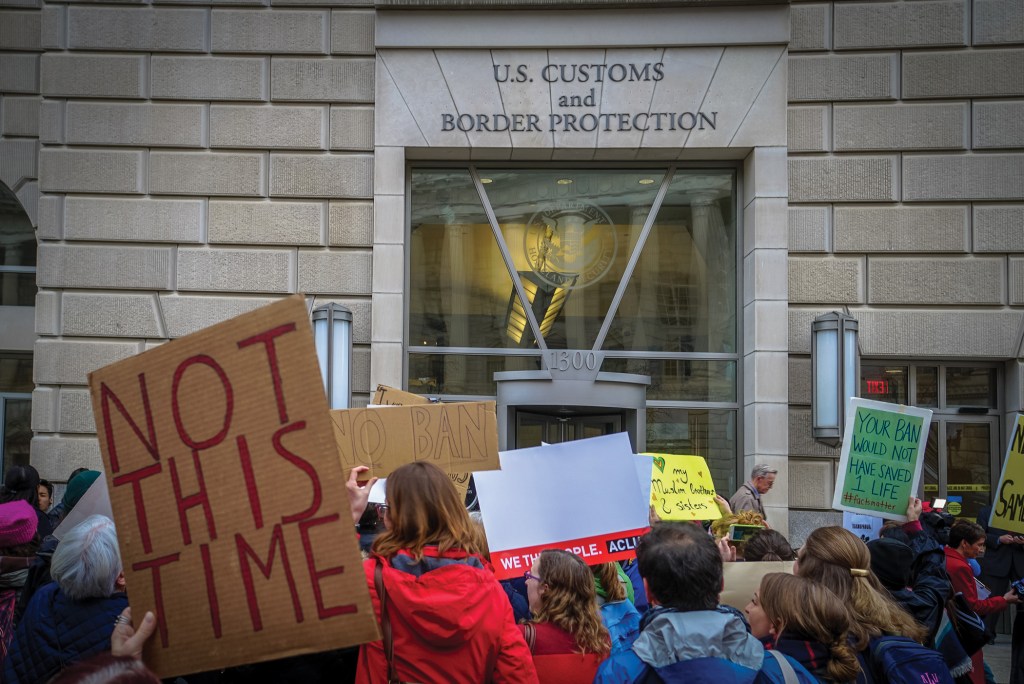
As the 2024 presidential election draws near, immigration and border policy have resurfaced as central issues in the national conversation, with 82% of Republicans and 39% of Democrats considering immigration a critical deciding point in their election choice. For both Vice President Kamala Harris and former President Donald Trump, border politics are pivotal, not only for defining their respective platforms but also for influencing voter perceptions.
In late September, Harris promised, “I will do more to secure our border to reduce illegal border crossings,” indicating her mission to change the operations at the southern border. Trump’s strategy has been consistent: with his southern border wall, he has positioned himself as a strong advocate for stricter border policies, portraying Harris as weak and ineffective. His repeated criticisms of her role as the administration’s “border czar,” stating in late September that “when Kamala speaks about the border, her credibility is less than zero,” underscores his determination to distinguish his approach from the Biden-Harris administration’s. This ongoing critique has shaped the broader narrative around what makes for a “strong” or “secure” border. The question now is how different the Democratic Party’s current approach really is from Trump’s. Recent trends indicate a surprising conservative shift by the current administration, raising questions about how the political landscape in the election has changed the importance of immigration policy, especially on the left.
Despite Harris’ shift, it is clear that this move would only increase her voter base, as Trump’s far right rhetoric would not attract voters on the far left. Instead, centrist voters would have a larger incentive to vote for Harris. For many Democratic voters, the choice between Harris and Trump is not simply a matter of immigration policy, but also encompasses broader ideological divides, including reproductive rights, healthcare, climate change, and racial justice. Consequently, the main impact of Harris’s shift may be to attract single-issue or moderate voters who prioritize immigration but have not aligned with Trump’s harsher deportation policies or overarching far-right agenda. This strategic move reflects the broader reality that the path to the White House often runs through the political center, even if it risks alienating parts of the progressive base.
The Rise of Immigration as a Deciding Factor in Elections
With little time left until election day, many voters have already cast their ballots by mail. It is evident that the actions taken by the incumbent party carry high stakes, particularly concerning immigration. The discrepancy in emphasis on border policy between Democrats and Republicans suggests that single-issue voting on immigration is potentially more prevalent among right-wing voters. This trend reflects a broader political shift where immigration, traditionally taking a backseat to economic issues, has now emerged as a top priority for many voters, as seen by its 9% overall increase in issue salience from 2020. This rise in issue salience is even great among republican voters, with a 21% increase in importance.Historically, single-issue voting has centered on topics such as the economy, healthcare, and gun rights. Immigration, however, has emerged as one of the most central issues in the current political climate, as it represents broader themes of national security, economic competition, and cultural identity. This increased importance can be attributed to both Trump’s focus on immigration during his 2016 campaign and the subsequent media coverage that followed. The publicization of immigration issues—ranging from caravans of migrants to border wall funding battles—has shaped it into a defining element of political discourse. This shift is not just about numbers; it is about the narrative that immigration tells about who belongs in America, who is considered a threat, and who deserves protection under US law.
The History of Recent Deportations: Obama, Trump, and Biden-Harris
It’s essential to consider how immigration policies have evolved over the past three administrations. Critics often targeted the Obama administration for its deportation rates, which exceeded those of previous presidents. With over 5.3 million deportations throughout his time as president, Obama earned the title “Deporter-in-Chief,” as his administration prioritized border enforcement and the immediate deportation of new arrivals. While controversial, the Obama administration’s introduction of the Deferred Action for Childhood Arrivals Program (DACA) sought to counteract the negative impact on immigrant communities by providing a legal pathway for undocumented youth brought to the United States to live, work and learn. DACA represented the first major attempt to balance enforcement with protections, signaling a commitment to both securing the border and addressing humanitarian needs. For many progressives, however, the program did not go far enough in protecting undocumented immigrants from deportation, revealing the persistent tension within Democratic ranks about how to handle immigration effectively.
During the 2016 presidential election, Trump’s campaign was largely centered on one major issue: immigration at the southern border. His campaign rhetoric, which included proposals for a “big, beautiful wall,” aimed to galvanize his base and cast the border as a critical frontline for national security. Trump’s supporters—mostly right-wing Republicans—voted under the belief that he would implement drastic measures to secure the southern border, stop illegal immigration and prevent what they perceived as threats to American safety and jobs. Trump’s initial executive orders, including the Executive Order 13767 “Border Security and Immigration Enforcement Improvements,” targeted “criminal aliens,” attempted to defund sanctuary cities and began the dismantling of DACA. A focus on mass deportations, enforcement sweeps and family separation marked his policies. Human rights advocates widely criticized this approach; however, Trump’s supporters applauded these actions, viewing them as decisive measures against unlawful entry.
By the end of his term, Trump had overseen about 1.5 million deportations, with policies that were aggressive and often punitive. The zero-tolerance policy, allowing the border patrol to separate families at the border, became one of the most controversial aspects of his immigration agenda, drawing widespread condemnation both domestically and internationally. In contrast to Obama’s attempt to balance enforcement with accessible pathways to citizenship, Trump pursued a hardline approach. His policies not only reshaped the immigration debate but also became a defining element of his presidency, setting a benchmark for future administrations.
After the Trump administration, the Biden administration was left with restrictive right-leaning policies. In attempting to remove these policies to appease the left, Biden provoked backlash from conservatives, who viewed the revocation of Trump-era policies as a presidential failing. The Biden-Harris campaign in 2020 presented a progressive alternative to Trump’s hardline policies, promising to undo the most severe measures and restore a sense of compassion to U.S. immigration policy. Harris, in particular, had a history of opposing harsh deportation tactics, aligning herself with more humanitarian-focused reform efforts. Despite these promises, the Biden-Harris administration has faced significant challenges in executing a more lenient immigration strategy.
The increase in border crossings, coupled with growing public concern about border security, have pushed the Biden-Harris administration to adopt measures that are more conservative than initially anticipated. Despite Harris’s progressive promises, recent deportation statistics from the Biden administration reveal a starkly different reality. U.S. Immigration and Customs Enforcement (ICE) projects that the Biden administration will deport more individuals than his predecessor, already having deported 1.1 million undocumented immigrants (as opposed to 1.5 million by the Trump administration). It is, however, important to note that the Biden Administration has implemented human-focused systems opening doorways for legal immigration–similarly to Obama–such as the refugee resettlement program, creating a noticeable distinction between his and Trump’s border philosophies on preserving human life. Under the Biden administration, ICE enforcement, especially at the border, has increased significantly, demonstrating a large disconnect between how the different administrations have presented one another on the campaign trail. As all of this has happened under the supervision of Harris, Biden’s appointed immigration control leader, this presents a unique challenge for Harris’s current election campaign.
Harris and the Democratic Party’s Conservative Turn on Immigration
Harris’s evolution from a vocal critic of harsh immigration policies to an advocate of conservative enforcement tactics raises questions about the Democratic Party’s shifting stance on immigration. In 2018, she attended protests against the Trump administration’s policies, calling for greater leniency and protections for undocumented immigrants. Similarly, in 2019, Harris not only participated in demonstrations but also argued for reduced punishments for border crossers, arguing for the cases to become civil rather than criminal. As vice president, however, Harris has presided over an administration that increasingly mirrors the policies she once opposed. Through the embodiment of a more positive outlook on deportation, the Harris administration appeals to moderate voters. Nevertheless, conservatives have criticized her policies in the past and continue to do so, citing what they perceive as undermining national security.
A prime example of Harris’ centric shift is seen in her support for the Bipartisan Border Security Bill–opposed by Trump– which would allocate funds for border reinforcement projects, including increased patrols and enhanced barriers. As the bill supports investing millions of dollars into border security, a historically conservative approach, this signals a shift from within the Democratic Party toward assuming a more conservative stance on immigration. While Harris has maintained that these measures are necessary for national security, they have raised concerns among progressives who feel that the administration has compromised on its commitment to more humane treatment of migrants. Meanwhile, conservatives criticize her for not going far enough to protect national security. For years, the Republican Party has tied national security to border enforcement, claiming that securing the southern border by force is necessary to protect American jobs and safety from “criminals.” In response, Harris’ campaign approach is centered around building immigration infrastructure like the southern border wall, stopping short of Trump’s current rhetoric on aggressive deportation tactics. Her strategy aims to provide a middle ground that addresses border concerns while avoiding the more violent outcomes associated with Trump’s policies. It is, however, important to note that these moderate solutions still risk the lives of immigrants crossing the border through the perpetuation of the idea of “prevention through deterrence,” long since disproved as an effective measure in reducing the number of border crossers.This conservative turn aligns with the broader shift within the Democratic Party toward the political center, as outlined by the Median Voter Theorem. The theorem suggests that political parties, in their quest to win elections, often shift toward the center to capture the largest possible share of the electorate. Harris’s policies reflect this theory in action, as the administration seeks to appeal to a broader coalition of voters, including those who may have supported Trump in 2016 but are dissatisfied with his broader agenda.
The Political Calculus Behind the Rightward Shift
The Biden-Harris administration’s pivot toward more conservative immigration policies reflect not only a change in policy and public opinion but also an evolving political strategy. Trump’s 2024 campaign has returned to familiar themes, including border security, immigration reform, and aggressive deportation tactics. As three quarters of the US population views immigration as a “crisis or a major problem,” the Biden-Harris administration’s centrist turn aligns with their goal to appeal to a larger spread of voters before the upcoming elections. Moreover, 55% of the American public wants reduced immigration levels, marking a high since 2001–all of which explains why Harris’ ideology is turning from an open borders approach to supporting a bill allowing the allocation of millions of dollars to southern border wall building projects.
For many progressives, this shift represents a compromise of core Democratic values. The tension between appealing to centrist voters and maintaining the support of the progressive base is a familiar challenge for the Democratic Party, particularly when it comes to issues like immigration, where humanitarian concerns often clash with security priorities. Harris’s strategy of focusing on border reinforcement over domestic deportations reflects an attempt to navigate this tension, offering a more moderate approach that still differs significantly from Trump’s mass deportation plan.
The Biden-Harris administration’s emphasis on border security may help Democrats attract moderate voters, but it risks alienating progressives who feel that the party has abandoned its commitment to comprehensive immigration reform. However, even among discontented progressives, there is little likelihood of a shift toward Trump, given his broader policies on issues such as climate change, reproductive rights, and civil liberties. The broader distinctions between Trump’s and Harris’s policies on these other topics remain substantial, making it improbable that disillusioned progressives would switch their vote. The challenge for the Biden-Harris campaign will be to mobilize progressive voters despite the conservative shift on immigration, using other issues to maintain enthusiasm among the Democratic base.As the election approaches, the narrowing differences between the two parties on immigration raise significant questions about voter behavior. The Biden-Harris administration’s pivot to a more conservative stance could potentially undermine Trump’s advantage among centrist voters who prioritize border security but are wary of his more aggressive measures. For these voters, Harris’s approach may offer a middle ground: a firm stance on immigration that does not include the mass deportations and family separations associated with Trump’s policies.
Conclusion: Immigration, Border Politics, and the Future of U.S. Policy
This election underscores the complexities of immigration policy and its role in shaping voter behavior: for some, the Biden-Harris administration’s more conservative approach may seem like a pragmatic response to Trump’s rhetoric, while for others, it represents a departure from core humanitarian values. Although the actual impacts of this aspect of the Harris campaign remain to be seen, it is clear that this shift has the potential to fundamentally change the national discussion of the ethics of deportation, border security and immigration policy, as both political parties move further away from the traditionally progressive mindset of DACA, and other legal avenues for assuring the security of new arrivals.
Image Credits
Photo by Anti-Defamation League, licensed under Creative Commons (CC BY-SA 4.0). Source: link to original page.
 The Gate
Leave a comment