The year 2024 stands as an opportunity to strengthen the Mexico-United States relationship, with elections in both countries that will shape their political future. Mexico anticipates the possibility of its first female president, while the United States faces the prospect of a contentious rematch between Trump and Biden, underscoring the significance of these democratic processes for both nations’ relationships.
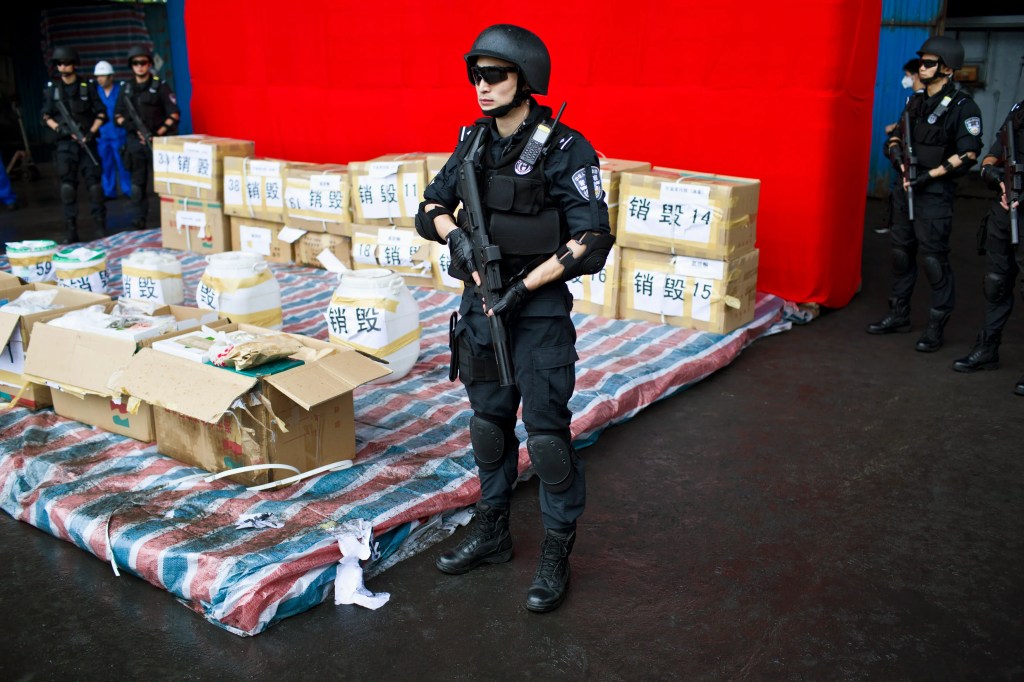
Security, especially the fight against narcotrafficking, will be a dominant topic on the bilateral agenda. Narcotrafficking not only impacts the safety and well-being of citizens on both sides of the border, but it also has far-reaching implications for economic stability, political cooperation, and regional security. By addressing narcotrafficking collaboratively, Mexico and the U.S. cannot only enhance their relationship but also work towards creating safer and more prosperous communities for their citizens.
The emergence of fentanyl as a primary threat underscores the urgency of this shared fight. This synthetic opioid, extremely potent and lethal, has triggered a public health crisis in the United States and raised concerns internationally. China’s involvement in the fentanyl supply chain as the main producer of chemical precursors also adds an additional layer of complexity.
The existing tensions between China and the U.S. further complicate efforts to combat narcotrafficking in North America. Geopolitical rivalries and trade disputes between the two world powers create barriers to effective cooperation in addressing fentanyl precursor production and distribution. Despite shared interests in combating the global drug trade, these tensions impede far-reaching solutions. However, there has been progress in recent collaboration efforts. During the latest Secretary Blinken’s visit to China on April 26th, discussions were held regarding cooperation on various issues, including combating the global drug trade. Both countries reaffirmed their commitment to addressing the fentanyl crisis and agreed to enhance information sharing and law enforcement cooperation to disrupt illicit fentanyl production and distribution networks. This signifies a step forward in overcoming geopolitical tensions to achieve shared goals in combating narcotrafficking.
Moreover, the competition for influence in Latin America between China and the U.S. adds another dimension to the challenge. China’s escalating investments and infrastructure projects in various Latin American nations could foster dependencies and influence political dynamics, potentially undermining U.S. efforts to combat narcotrafficking. Meanwhile, the U.S. seeks to maintain its traditional influence and alliances in the region, leading to a geopolitical tug-of-war that may distract from collaborative efforts to address shared security challenges.
The 2024 U.S. presidential race has elevated the fentanyl crisis to a central issue, with candidates under pressure to propose comprehensive strategies in response to the alarming death toll of 270,000 from November 2019 to October 2023. This issue resonates with voters, shaping campaign discourse and policy debates and highlighting the urgency of effective leadership in addressing this pressing public health issue.
Narcotrafficking, including fentanyl trafficking, poses a significant challenge to border security between Mexico and the U.S.. Criminal networks take advantage of the porosity of the border to smuggle drugs northward and weapons southward, fueling violence and instability in both regions.
During his previous term, Donald Trump made border security and the construction of a wall on the Mexico-U.S. border one of his main priorities. His approach focused on strengthening law enforcement and bolstering measures for immigration control, intending to reduce the flow of drugs and people across the border. In a potential second term, Trump proposed further crackdowns on immigration, including stricter enforcement of existing immigration laws, increased deportations of undocumented immigrants, and the expansion of detention facilities. Additionally, he advocated for changes to asylum policies, aiming to restrict access to asylum for individuals fleeing violence and persecution. Trump also emphasized the need to end sanctuary city policies and to impose penalties on jurisdictions that refused to cooperate with federal immigration authorities. Overall, his immigration agenda centered on tightening border security and implementing tougher measures to deter illegal immigration.
On the other hand, Biden has proposed a more holistic approach to regional cooperation and addressing the underlying causes of narcotrafficking, such as poverty and lack of opportunities in Latin America. His plan includes increasing economic assistance and security cooperation with countries in the region, as well as strengthening addiction treatment and crime prevention systems in the U.S. As a 2024 candidate, Biden has emphasized the need for continued investment in border security infrastructure while also advocating for comprehensive immigration reform, including pathways to citizenship for undocumented immigrants and enhanced border enforcement measures. Additionally, he has proposed expanding resources for drug prevention and rehabilitation programs, aiming to tackle the opioid crisis and combat narcotrafficking through a multifaceted approach.
On the Mexican front, both presidential candidates have proposed different approaches to tackle this issue if they are elected. Claudia Sheinbaum, the current mayor of Mexico City, has emphasized the need to strengthen citizen security with a comprehensive strategy that includes coordination between authorities and crime prevention. Her approach focuses on improving the responsiveness of security forces and strengthening collaboration with other levels of government and civil society. Meanwhile, Xóchitl Gálvez, a senator and political leader in Mexico, proposes specific measures to combat corruption in security forces and enhance international cooperation in the fight against narcotrafficking. Her plan includes strengthening intelligence mechanisms and information exchange with security agencies from other countries.
Overall, narcotrafficking and the fentanyl issue represent critical challenges for border security and regional stability in 2024. The proposals of key political figures, including Trump, Biden, Claudia Sheinbaum and Xóchitl Gálvez, offer different approaches to address this complex problem. However, regardless of ideological differences, political leaders must work together and adopt a comprehensive and coordinated approach to confront narcotrafficking and ensure the security and well-being of communities on both sides of the border.
Prioritizing the joint efforts to combat narcotrafficking, uphold democratic values through free and fair elections, and foster international cooperation is not merely a choice but an imperative for building a safer and more prosperous future. By actively confronting narcotrafficking, ensuring democratic processes, and fostering collaboration among nations, Mexico and the U.S. can effectively mitigate threats, strengthen governance, and lay the groundwork for enduring stability and prosperity in the region.
The image used in this article is licensed for noncommercial reuse. It was created by Brookings Institution and can be found here.
Author: Natalia Zorrilla Ramos, MPP candidate, University of Chicago, Pearson Fellow. Associated with COMEXI.
 The Gate
Leave a comment