
What Paramount’s Warner Takeover Means for the Future of Streaming
On February 26, Netflix announced its decision to back out of a hotly contested bidding war with Paramount for the ownership of Warner Bros. Discovery, ending months of negotiations—despite having struck a deal to acquire Warner last December. The dispute signifies a clash between forces aiming to consolidate their footing in the increasingly competitive streaming industry. The two corporations have different market shares, visions for the future of streaming and political agendas—all factors that drove the outcome of the negotiations.
Paramount’s hostile takeover attempt—made directly to Warner shareholders—consisted of $81 billion in equity at $31 per share for the entirety of Warner, including its cable networks. Warner repeatedly emphasized that its cable unit, which they carved out into a separate company called Discovery Global, would not be for sale. However, Paramount, given the stipulations of their offer, is now poised to control this suite of networks including TNT Sports, the Discovery Channel, the Food Network and, most notably, CNN, which Paramount will seek to revamp in the same manner in which it overhauled CBS News after merging with Skydance last August.
Netflix’s final proposal, made on January 20, amended its offer of $72 billion in equity at $27.75 per share for Warner’s streaming and studios businesses to be fully paid in cash. Netflix’s stock has dropped by nearly $20 since December 5 when it announced an agreement to acquire Warner for $23.25 in cash and $4.50 worth of Netflix stock per Warner share. Steve Kaplan, co-founder of the University of Chicago’s Polsky Center for Entrepreneurship and Innovation, told The Gate that the decline of Netflix’s share price was a byproduct of investors’ concerns that Netflix would overpay for Warner. Netflix’s final deal also removed a collar provision that would have given Warner shareholders more Netflix shares if its stock traded below $97.91 at closing. Netflix’s share price has since fallen well below this benchmark.
According to Nielsen’s The Gauge, a monthly survey of American TV consumption across broadcast, cable, and streaming, Netflix accounted for 9% of all viewing in December 2025, while Paramount comprised just 2.5%. Netflix, as the market leader, hoped to gain Warner’s wide selection of well-received titles—including Harry Potter, the Lord of the Rings, and Barbie—yet remains well-off without them. On the other hand, Paramount benefits considerably from obtaining HBO Max, Warner’s streaming platform.
Netflix and Paramount also differ in their views of the theatrical industry. Although Netflix CEO Ted Sarandos emphasized that Warner films would have been released in theaters under Netflix’s supervision, he called the theatrical business “an outmoded idea, for most people” at the TIME100 Summit last April. Sarandos’s hostility toward theatrical releases was the subject of a December 4 letter by a group of film producers to Congress expressing concern that a Netflix acquisition would significantly curtail theatrical distribution. Paramount, who, unlike Netflix, is already a supplier in the theatrical industry, has reassured members of the film business that their acquisition will entail an expansion of Warner’s theatrical output.
In addition to scrutiny from Hollywood, the anticompetitive nature of Netflix’s proposal made the bid risky from the outset. Combined with HBO Max, Netflix would’ve controlled about 30% of the U.S.’s subscription streaming market, which falls just shy of the Justice Department’s legal limit on combined market share for mergers. However, Sarandos, in an attempt to get Netflix’s proposal through the regulatory process, depicted Netflix as closer to a struggling contender than a frontrunner, arguing that consumer attention is increasingly fragmented by the likes of YouTube and TikTok. Nielsen estimates that YouTube comprised 12.7% of total viewing on TVs in the U.S. in December 2025. Sarandos and Netflix co-chief executive Greg Peters, wary of the obstacles they were up against, repeatedly called themselves “builders, not buyers.” According to Kaplan, the antitrust hazard of siding with Netflix gave Paramount a decisive advantage in swaying shareholders.
Despite the potential drawbacks, Warner’s board initially advised shareholders to accept Netflix’s offer, suggesting that its total value exceeded that of Paramount’s proposal. In addition to the $27.75 per share awarded by Netflix, Warner stockholders would’ve held onto their shares of Discovery Global, which are estimated to be worth between $1.33 and $6.86. Nevertheless, Paramount, determined not to be outdone, continually upped the ante. In response to criticisms that Paramount’s deal was too reliant on outside funding and debt financing, Larry Ellison, Oracle CEO and father of Paramount CEO David Ellison, backstopped the offer by putting up $40.4 billion in equity financing. Furthermore, Paramount’s offer covered the $2.8 billion fee that Warner was charged for abandoning Netflix.
In addition to conflicting visions and bargaining strategies, Netflix and Paramount also differ in terms of political allegiance. Paramount, owned by David Ellison, an ally of President Donald Trump, was backed in their takeover attempt by Affinity Partners, a private equity firm founded by Jared Kushner, the president’s son-in-law. President Trump, who previously suggested that he would oversee the approval process, said in a NBC News interview that he “shouldn’t be involved” in the deal and that the “Justice Department will handle it.” Resistance to a Netflix acquisition was bipartisan and widespread—the deal was scrutinized by Republican and Democratic senators alike on the Senate’s antitrust subcommittee. While Republicans accused Netflix of peddling content with a left-wing slant, Democrats were more concerned with the anticompetitiveness of the deal. These hurdles ultimately deterred Netflix from matching Paramount’s bid.
Paramount’s deal, although drawing less antitrust concern, has its own political implications, entrenching right-wing media consolidation. A handful of billionaires—including the Ellisons—own most major media outlets, causing editorial influence to be increasingly limited to the hands of a select few. Recent studies show that Americans are increasingly captivated by partisan coverage regardless of its veracity, which only further incentivizes networks to forego traditional journalistic values and choose an ideological lane. Last October, David Ellison announced that former New York Times opinion writer Bari Weiss would take over as editor-in-chief of CBS News. Weiss controversially shelved a 60 Minutes investigation depicting inhumane conditions in CECOT, a Salvadoran prison housing deported Venezuelan migrants—marking CBS’s right-wing pivot under Ellison’s supervision. Ellison also brought on several conservative podcasters and former Trump administration insiders, such as Kenneth Weinstein, the former U.S. Ambassador to Japan.
Now, CNN is expected to undergo a similar transition. Last December, President Trump called it “imperative” that CNN be sold. Dissatisfied with CNN’s coverage of the Iran War, Secretary of War Pete Hegseth said to reporters, “the sooner David Ellison takes over that network, the better.” Given the coveted influence of the network, averaging 3.1 million viewers as of October 2025, left-wing media moguls also made attempts at an acquisition. Barry Diller, a media investor and Democratic donor, reportedly approached Warner last year seeking to purchase CNN. Diller’s last major foray into media acquisitions also involved Paramount—except as the company being acquired.
As chief executive of QVC, Diller lost a closely contested bidding war to Viacom for control over Paramount Communications. Viacom was later renamed Paramount Global after merging with CBS in 2019. Kaplan suggested that Viacom’s success stemmed from overpaying, which again may have been the decisive factor. Paramount spent billions to outbid Netflix, creating a dent in their balance sheet. Furthermore, until the deal goes through, Paramount will continue to face scrutiny from Washington D.C. and Hollywood—and attempts at sabotage from Netflix, who themselves sunk significant revenue and resources into their bid. This saga only represents the start of a greater referendum on media consolidation and the political influence accrued by mergers.
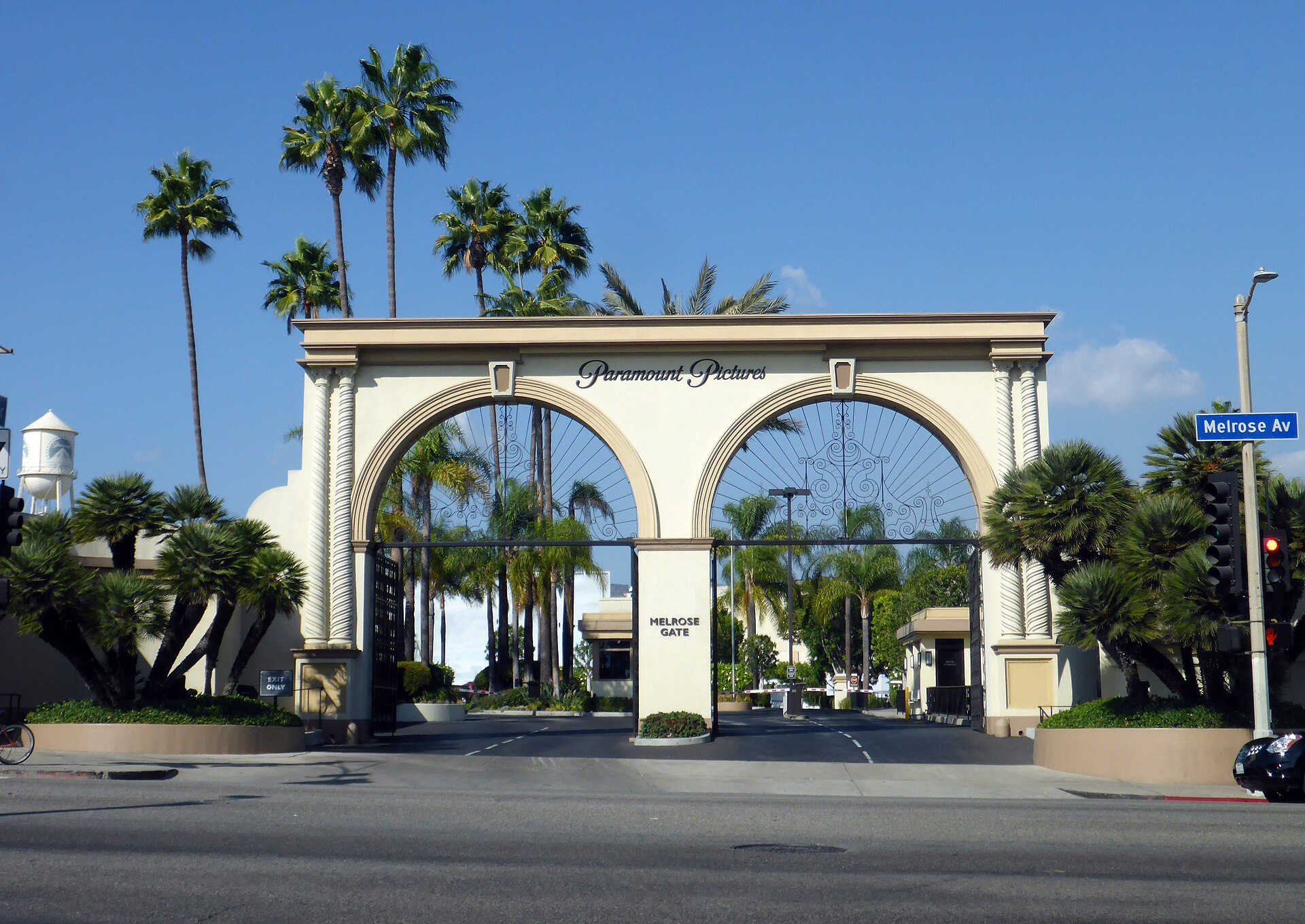
The image featured in this article is licensed under the Creative Commons Attribution-Share Alike 4.0 International license. No changes were made and the original photo can be found here.
