
UChicago Releases First Racial and Ethnic Demographic Dataset Post-Affirmative Action
Note: This article utilizes the official terminology used by UChicago’s Common Data Set, including the use of “American Indian” instead of “Native American”.
The University of Chicago has released its 2024-2025 Common Data Set (CDS), revealing for the first time the racial and ethnic demographic information for the Class of 2028. This undergraduate class was the first to be admitted following the Supreme Court’s landmark decision in Students for Fair Admissions v. President and Fellows of Harvard, in which the court ruled that affirmative action was unconstitutional.
Before the court’s decision, many colleges had considered an applicant’s race and ethnicity as one of many factors in a holistic selection process. While the intention behind affirmative action was to promote diversity and expand access for demographic groups commonly disadvantaged in college admissions, critics saw the practice as discriminatory, leading to Students for Fair Admissions (SFFA), the legal advocacy group founded by conservative activist Edward Blum, filing the lawsuit against Harvard.
During litigation, the University of Chicago lent its support to Harvard, joining an amicus brief with 15 other colleges backing the consideration of race in holistic college admissions. Following the Supreme Court’s decision, University administrators emphasized that they would keep promoting diversity by continuing to welcome diverse perspectives and backgrounds at UChicago.
Nonetheless, comparisons to the CDS data for the Class of 2027 (the final class admitted before SFFA v. Harvard) reveal notable demographic shifts. The share of Hispanic/Latino enrollment dropped from 17.9% to 14.3%. This represents a decline of 21.4%, or 67 fewer students, between the two classes. Given that Hispanic/Latino students had been a growing segment of the undergraduate population in recent years, this reversal is especially striking, suggesting that the end of affirmative action has disproportionately affected Hispanic/Latino applicants at UChicago.
Other groups saw more modest shifts. Black and African American student count fell from 6.6% to 5.6%, down 15.7%, or 18 fewer students. Meanwhile, the share of Asian students grew from 19.0% to 21.1%, an increase of 9.3%, or 31 more students. The share of international students climbed slightly from 17.3% to 18.4%, up 5.3%, or 16 more students. The number of White students ticked up modestly, while the enrollment of American Indian or Alaskan Native and Native Hawaiian or Pacific Islander students stayed about the same.

The total enrollments for the Classes of ‘27 and ‘28 are 1,749 and 1,726, respectively.
These shifts in the racial and ethnic makeup of college classes following the ban of affirmative action are already drawing federal scrutiny. The Trump administration has ordered colleges to publicly report more specific demographic data in an effort to increase federal oversight over admissions policies to ensure they follow the Supreme Court’s ruling in SFFA v. Harvard.
Colleges now need to report racial, ethnic and testing information for all applicants and admitted students in addition to enrolled students. While many education policymakers have long advocated for more public information about such data, many are concerned about how exactly the Department of Education will use and interpret it.
Changes in national education policy such as this one have further increased the pressure on universities to rethink their admissions practices. As the Department of Education cuts funding for colleges that it claims are promoting diversity, equity and inclusion (DEI) efforts, universities are facing widespread calls from current students, alumni, faculty and others to push back against the Trump administration in the name of academic independence.
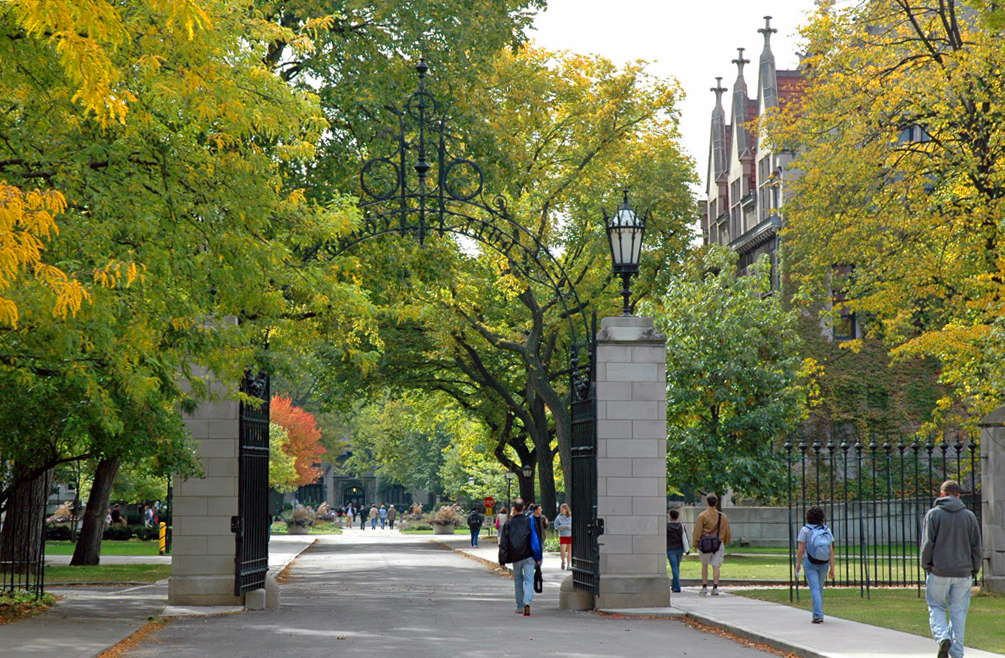
The image featured in this article is licensed for reuse under the Creative Commons Attribution-Share Alike 2.5 Generic license. No changes were made to the original image, which can be found here.
