
First Days in Office: Trump, Chicago, and the Next 4 Years of Deportations
Donald Trump’s return to the presidency marks a new era (again) for American politics, setting the stage for a transformative four years. Throughout his campaign, Trump focused on key themes such as immigration reform, economic revitalization and a reassertion of American power on the global stage. With his first months in office already underway, there is a palpable mix of anticipation and tension across the nation and around the world. Trump has passed a myriad of executive orders that will all have major consequences over the next few years. Most notably, domestic unrest surrounding immigration and birthright citizenship rights due to high profile cases like Kilmar Abrego Garcia’s deportation to a maximum-security prison in El Salvador have already felt wide sweeping physical and emotional effects on many residents and families throughout the US. These effects include fears of mass deportations, the absolution of ICE-free zones, and high media scrutiny of immigrant communities.
Alongside Trump’s broad economic, environmental and foreign policy goals is a vast agenda aimed at deporting immigrant communities and preventing new immigrants from entering the U.S.. Trump pledged to implement “the largest mass deportation program in history.” This includes plans to reinstate and expand policies from his first term, such as the “Remain in Mexico” initiative, which forced people to remain in Mexico while waiting for their US immigration cases to be approved and processed. The administration is likely to pursue increased funding for border wall construction and may seek to create a more powerful border policing operation by restructuring existing agencies. Overall, Trump’s immigration policy stance has only become more severe since his first presidency.
Many of Trump’s supporters and proponents of the new, stringent immigration policies remain incredibly supportive of his policies, arguing that this “powerful push” and display of power is a great victory. As of now, Trump officials expressed that they hope this huge crackdown will convince undocumented people arriving and within the US may “self-deport.” Since Trump seems on track to meet all expectations and campaign promises when it comes to immigration policy, his supporters’ sentiments are highly positive on immigration policy. For instance, in late January, Trump successfully used tariffs as a threat that ultimately forced Colombia to receive Colombian immigrants deported from the US by aircraft, prompting applause from his supporters. Originally, Colombian President Gustavo Petro denied US aircrafts from being able to land, stating that Colombians deserve to come back to Colombia with respect and dignity, which is not the case with US military aircraft. Yet, an hour after Trump announced that he would impose 25% tariffs if Colombia did not accommodate the US’s deportation operation, President Petro rescinded his refusal to accept US military aircrafts carrying deportees, offering to transport deportees in Colombian planes. Trump’s supporters praised his actions, calling this exchange a show of Trump’s power.Meanwhile, critics of Trump policies worry that these actions, such as imposing 25% tariffs on other countries as well as conducting Immigration and Customs Enforcement (ICE) raids on his first day in office, are a string of messages in the wrong direction and could potentially cause international disputes as well as significant human rights violations in the near future. The US has historically struggled with human rights violations. Notably, family separation claims peaked during the arrival of refugees at the Texas border and their subsequent busing to sanctuary cities through Operation Lone Star in 2021. With our tense international connection to other countries especially in light of skyrocketing tariffs, burning diplomatic bridges with historical allies like Colombia (widely considered to be one of the US’s strongest allies in Latin America) feels like a reversal of all political relations the US has historically prioritized.
Effects on Chicago
In addition to rescinding all of President Biden’s executive orders (including those about immigration), Trump also passed 10 immigration related executive orders on his first day back in office. These orders cause much worry in the Chicago community due to the sanctuary protocols and large immigrant population. One order that has been flagged as particularly concerning in the immigrant community invokes the Alien Enemies Aliens Act, last used to intern tens of thousands of foreign nationals of Japanese, German and Italian descent during World War II. Trump has sent a strong warning shot indicating that mass deportations will be carried out in the near future. Especially in Chicago, the threat of ICE raids are already incredibly pertinent. Due to mass fearmongering, multiple community members have filed reports documenting possible ICE activity. Chicago Public Schools mistook FBI agents for ICE attempting to enter a school on January 24, sparking even larger rumors and fears about possible heightened activity. Yet, despite this fear, ICE’s behavior hasn’t substantially changed since the new administration as of February 16th, averaging about 311 nationwide arrests per day, similar to the average number during the Biden administration. Although the physical impact of ICE hasn’t changed, this general paranoia in immigrant communities solidifies the direct and immediate mental impact of these orders on US communities already, as the tone of Trump’s messaging promises even harsher restrictions.
Especially in Chicago, non-profit organizations are on high alert due to the imminent threat of mass deportations and ICE raids. Mayor Brandon Johnson actively spoke out at a press conference in early January to affirm his commitment to spreading Know Your Rights (KYR) information intended to educate Chicago community members on their legal and civil rights, launching over 400 billboard ads in Chicago with KYR information. Although KYR trainings have existed in the years prior, nonprofits are dramatically expanding their outreach to workplace and educational institutions to ensure that people are informed.
Furthermore, as Trump rescinds numerous historical federal protections for immigrants, KYR trainings are changing for workplace and educational institutions. Since the Obama administration, presidents have upheld protections preventing ICE from carrying out deportation at sensitive locations, including churches and hospitals. Mayor Johnson has reaffirmed that “private or sensitive” institutions with city employees, such as clinics, daycares, schools and other essential services will not allow ICE to enter their property to ensure that undocumented residents of Chicago will have the ability to seek essential care in their daily lives. Non-profit organizations, such as the Illinois Coalition for Immigrant and Refugee Rights, have partnered with the city and “private or sensitive” institutions to ensure that leaders of these institutions have formal training (an extended version of KYR tailored to institutions) on what to do in the event that ICE asks to enter. Although these training and the sensitive institutional protections are essential to the general welfare of undocumented people in Chicago, these protections fall away after stepping onto the street, meaning that ICE officials could wait outside these institutions in order to detain people. All in all, it’s clear that these concerns are a continuation of fears, as ICE implemented these measures during Trump’s first term. However, the dissolution of the sensitive institutional protections sends a clear message that this is only the beginning of a broader attack on immigrant communities.
One area of concern about the new Trump policies has involved the actual execution of domestic deportations, especially in sanctuary cities like Chicago. During his first term, Trump attempted to utilize the national guard to support ICE in conducting deportations. Although Congresspeople like Representative Sherrill (D-NJ) have attempted to propose legislation to prevent Trump from using the National Guard, the looming threat of deportation plans involving other law enforcement bodies has put many communities on high alert. Governor JB Pritzker, in his “State of the Union” address, emphasized that state law enforcement will not be participating in the act of deporting Illinois residents, whether through the physical act of deportation or profiling people for ICE. However, these promises seem to contradict Illinois’ pledge to cooperate with federal bodies in removal proceedings for people convicted of crimes, as people in state jails are registered in the Illinois database and directly trackable. All in all, Illinois will cooperate with ICE in the event that a person is jailed, but will not actively conduct deportations of anyone outside of this. This result is generally reassuring to immigrant communities, as undocumented people are much less likely to commit crimes than citizens. However, law enforcement still has multiple ways to target undocumented individuals, often charging them with non-immigration-related crimes that put them at risk of deportation. Until recently, one such method involved profiling based on driver’s licenses. As a sanctuary city, Chicago allowed undocumented individuals to obtain Temporary Visitor Driver’s Licenses (TVDLs), enabling them to drive legally throughout the U.S. However, these licenses were distinctly marked with a large colored stripe, effectively signaling the holder’s undocumented or temporary status and making them vulnerable to profiling by law enforcement. In response to these concerns, Illinois removed the demarcation on July 1, 2024, and now issues only standard Real ID driver’s licenses. Despite this change, racial profiling and other forms of ethnic and linguistic bias continue to disproportionately impact undocumented individuals and immigrant communities, making them frequent targets of law enforcement actions under the pretext of crime prevention.
Federal
As state and local police forces continue to do the task of deportation and immigration enforcement, community trust in policing becomes highly reduced, even in blue states like Illinois and California. Laws like the Illinois TRUST Act aim to prevent law enforcement from participating in federal immigration enforcement to maintain trust within immigrant communities. Despite the fact that this act exists to prevent Chicago and Illinois police from cooperating with ICE (which is out of their jurisdiction), Trump’s policies could pressure local agencies to cooperate with federal authorities. Even without this pressure, immigrants are less likely to report crimes or cooperate with police due to the fear of these repercussions. Whether through requesting Temporary Protected Status granted to many refugees fleeing environmental or political disasters, applying for or having Deferred Action for Childhood Arrivals, or being processed by state police, any form of documentation puts people at risk of being deported. As is evident through the migrant busing system in Operation Lone Star that family separation has been labelled as a means to a desirable end in the past, it’s not a huge leap for more of the same tactics which harm undocumented people and communities to occur again.
Looking Ahead
Despite these concerns still existing in Illinois, immigrant communities face even more dire circumstances in other states. Outside of Illinois, state and local law enforcement agencies can also get involved in deportation proceedings directly through the 287(g) program, which gives local and state law enforcement the jurisdiction to do the job of ICE, making these enforcement bodies an extension of deportation enforcement. Trump’s plans for the extension of the 287(g) program gives state and local law enforcement jurisdiction to conduct deportations. This extension would include training more officers and extending the program’s 21 state-reach even further.
As an attempt to address another method in which immigrants can receive their citizenship, Trump has lobbied to end birthright citizenship to deter people from coming to the US to have a child as a means to receiving citizenship. When a child turns 21, they can vouch for their parents to receive citizenship. Viewing this process as a potential avenue for parents who are non-citizens to get citizenship, Trump’s executive order to halt birthright citizenship for children who have at least one parent who is not a lawful permanent resident or citizen has cropped us a new set of human rights questions surrounding what citizenship and general legal protection would look like for people are would be born in this system (without citizenship anywhere). Although this dispute going to court will most likely not be passed, these debates within the first week of the Trump administration are strong indicators that the Administration is looking to hold their promises about immigration crackdowns, without real regard for the human rights violations or conflicts of interest for law enforcement and community safety this may cause.
As Trump’s presidency unfolds, it is clear that the next four years will be marked by significant and controversial shifts in both domestic and foreign policy. His aggressive stance on immigration, particularly his plans for mass deportations and the expansion of border enforcement, threatens to disrupt countless lives across the nation. While his supporters view these measures as necessary steps for national security and economic stability, critics warn that they could lead to widespread human rights violations, strain international relationships, and deepen divisions within the United States. The policies put in motion during these first days in office suggest that Trump is determined to fulfill his campaign promises, no matter the cost. For immigrant communities, particularly in cities like Chicago, the consequences of these actions will be felt immediately and profoundly, reshaping the very fabric of American society. As the coming years unfold, the tension between enforcing stringent immigration policies and protecting the rights and safety of vulnerable populations will undoubtedly remain a focal point in the national debate.
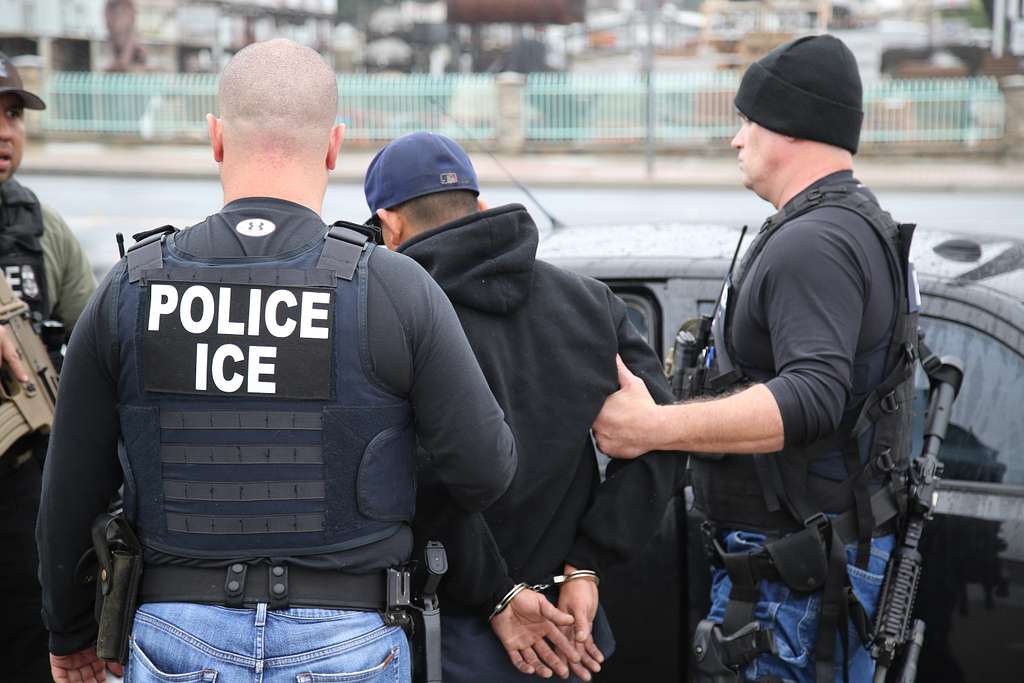
Image from United States Department of Homeland Security, licensed under Public Domain Mark 1.0 Universal (PDM 1.0)