
Maroon Pilled: A Culture of Choice
Consider Joe Rogan, the barbarian Khan of podcasting. His cultural influence is immense, his ideological commitments slippery, his posture one of insatiable curiosity—unless it comes to skepticism toward institutions, reverence for a vague ideal of masculinity, and a deep distrust of intellectual elites.
The now-famous 2020 4chan meme, depicting Rogan as a “barbarian Khan from the steppes,” captures the conservative cultural project in essence. Rogan is not a thinker but a seeker—one who craves knowledge but distrusts its stewards, for whom institutional legitimacy is itself suspect.
This is modern conservatism’s cultural posture: not an inheritance, but a choice, a rejection of complexity in favor of ideological comfort. What masquerades as inquiry is, in truth, an elaborate mechanism for evasion, an endless circumvention of the discomfort real intellectual rigor demands.
Unlike the evangelicals and populists who form the movement’s reactionary base, the University of Chicago’s Gen-Z conservatives see themselves differently—Nietzsche-reading, post-Trump-pro-Trump, intellectual insurgents who, if forced to choose between a Bible verse and a Ben Shapiro monologue, would always pick the latter.
Their conservatism is less tradition than self-stylization. A contrarian impulse, a belief that rejecting mainstream narratives makes one uniquely rational, uniquely free. Ironically, in their obsessive rejection of the “liberal consensus,” they’ve created an ideological monoculture of their own—built on podcasts, polemics, and the smirking certainty of a Twitter debater. Even when confronted with internal inconsistencies, their instinct is not reflection, but deflection.
This is not just a mere political stance, but a political identity invested in subversion while remaining predictably performative. The Maroon conservative is not defined by what they think, but by what they oppose. Their intellectual posture is reaction, rather than construction; their discourse a steady diet of confirmation bias.
Take The Chicago Thinker, a student-run outlet that prides itself on opposing the “woke mob.” At first glance, it embodies UChicago’s commitment to free inquiry—a conservative space in a liberal campus culture—but its history reveals a deeper contradiction. In 2024, its alumni founders ousted the student leadership, exposing the tension between conservative grassroots activism and top-down ideological gatekeeping. For all its self-mythologizing as a bastion of free thought, The Thinker, like much of modern conservatism, is less about inquiry than spectacle, ensuring certain narratives always reign supreme.
This is the paradox of the Maroon conservative. They imagine themselves as dissidents, yet their intellectual diet is wholly shaped by an insular ecosystem—one that trades in Fox News rather than philosophy, ideology rather than inquiry. They claim to seek the light beyond the cave but settle for its cheapest shadows: debates that distill complex political and ethical questions into algorithm-friendly, performative content.
The “free thinkers” repeat party-line dogmas, convinced their curated skepticism is something more than an aesthetic. Youth conservatism has become an intellectual posture that values performance over depth—a pseudo-intellectual circus where the ringmasters are influencers, the audience a Socratic seminar, and the goal not understanding, but provocation.
To be “red-pilled” is to wake up from the dream of liberal ideology, to see hidden manipulation behind every institution. The Maroon Pill, however, is different. It offers the illusion of intellectual transcendence and the belief that perpetual contrarianism signifies enlightenment. It is the certainty that the “real” truth lies just beyond mainstream knowledge, accessible only to those brave enough to reject consensus. Yet, to reject consensus is not the same as thinking.
Consuming an endless stream of alternative media is not the same as engaging with ideas. Sneering at institutions is not the same as building them. The Maroon conservative prides themselves on intellectual independence, yet their discourse of “owning liberals” reveals nothing but dependence—on influencers, on grievance, on the illusion that religious rebellion is an oppositional originality.
The real challenge for the Maroon conservative is not rejecting liberal dogma, but avoiding becoming a mirror image of the progressive zealots they critique. Thinking requires more than consuming the right media, reading the right contrarian books, or adopting the right aesthetic of skepticism. It demands the willingness to be unsettled, to question one’s own assumptions—or one’s presidential vote—as much as the “woke establishment’s.”
There was a time when conservatism prided itself on intellectual rigor. Thinkers like Edmund Burke and David Hume engaged with history and philosophy in a tradition of inquiry. Today’s mainstream conservatives, however, have embraced a culture of resentment—toward universities, the media, science, and literature.
This is the failure of the Maroon conservative. Conservatism was once about preserving knowledge, tradition, and institutions. Today’s youth movement, at UChicago and beyond, has abandoned that mission in favor of something else: the cultivation of doubt, not knowledge; the performance of skepticism, not its practice.
Rogan’s podcast, while it often appears apolitical, is nonetheless emblematic of this shift. His posturing—curious yet distrustful, engaged yet detached—defines the new American conservative ethos. It is not about defending culture, but about choosing which aspects to question, which institutions to dismantle, which narratives to elevate.
It is no longer about defending culture, but about choosing which aspects to attack. This is why the reactionary right does not produce culture so much as react to it, framing every book, movie, and academic debate as a battle in a larger “woke” culture war. The intellectual void is filled not with scholarship, but with spectacle—a grand performance of resistance against an imagined persecution.
If this trend continues, the world will not witness a battle for intellectual supremacy but a descent into a culture where ideas no longer matter—only their perceived transgressions. The conservative movement will have traded the pursuit of wisdom for a never-ending cycle of reactionary rage. The burden will fall on American culture itself, where critical thought is overshadowed by the theatrics of ideological warfare.
This is why today’s conservatives readily cite Carlson over Cicero, revere influencers over philosophers, and prefer the aesthetics of knowledge to its pursuit. The culture they claim to protect is one they have already abandoned. The question is not whether young conservatives will succeed in reshaping culture. It is whether, when the dust settles, there will be anything left of it at all.
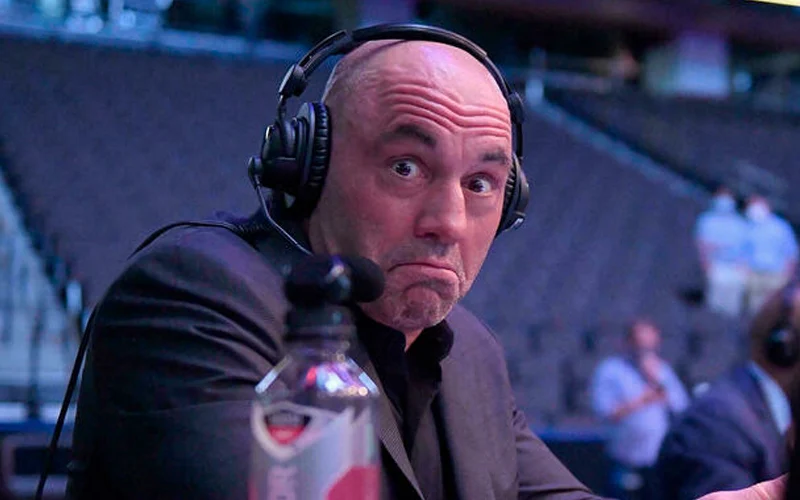
The image featured in this article is licensed for use under the Attribution 4.0 International license. No changes were made to the original image, which is by Free Malaysia Today.
Pingback: The War on “Woke” – The Gate