Recently, a new actor has emerged in the theatres of war: cobalt. Despite its initial use as a colorant, the high temperature resistance of cobalt has led to its applications in national security. However, the supply of cobalt within the United States is heavily reliant on foreign imports, which is markedly dangerous in the context of political instability and conflict with emerging players in the energy world. Just a few days ago for instance President Trump attributed his failure to get the Nobel Peace Prize to the ongoing pursuit of Greenland, part of the race with China to access rare earth elements. Even in the past, the Biden administration has stated that an absence of cobalt would be a security threat to the country. It is evident that to ensure sustainability in both sourcing cobalt and dealing with the consequences of cobalt mining, the world must turn its focus to strengthening mining regulation.
In recent years, armed forces have tapped into cobalt, often using it in jet and turbine engines for military planes. Samarium cobalt, a magnetic material, is used in airplane construction and soaks up radar emitted in electromagnetic waves. This can reduce the reflection of radar waves and prevent jets from being detected by tracking systems abroad. Beyond the military, cobalt plays a critical role in U.S. defense within the energy sector. With decarbonization efforts increasing in the United States, the country must focus on preserving renewable solar and wind power energy to use in times of undersupply, and cobalt is gaining recognition because of its role in reducing greenhouse gases. For instance, petrol for cars is only sold after being refined with cobalt catalysts that reduce the sulphur and nitrous oxide emissions that are produced.
Despite the importance of cobalt for the United States, the nation relies heavily on foreign suppliers, along with the rest of the world. American companies use 8000 tons of cobalt annually, but the only domestic source of cobalt is the Eagle Mine located in Michigan. The principal minerals sourced there are copper and nickel, with only 300 tons of cobalt being produced every year. Instead, the U.S. looks outwards for cobalt, just like the rest of the world. In an interview with The Gate, Brandon Finn, a Research Scientist at the University of Michigan, noted that around 70-76% of the world’s cobalt is sourced from one country: the Democratic Republic of Congo (DRC).
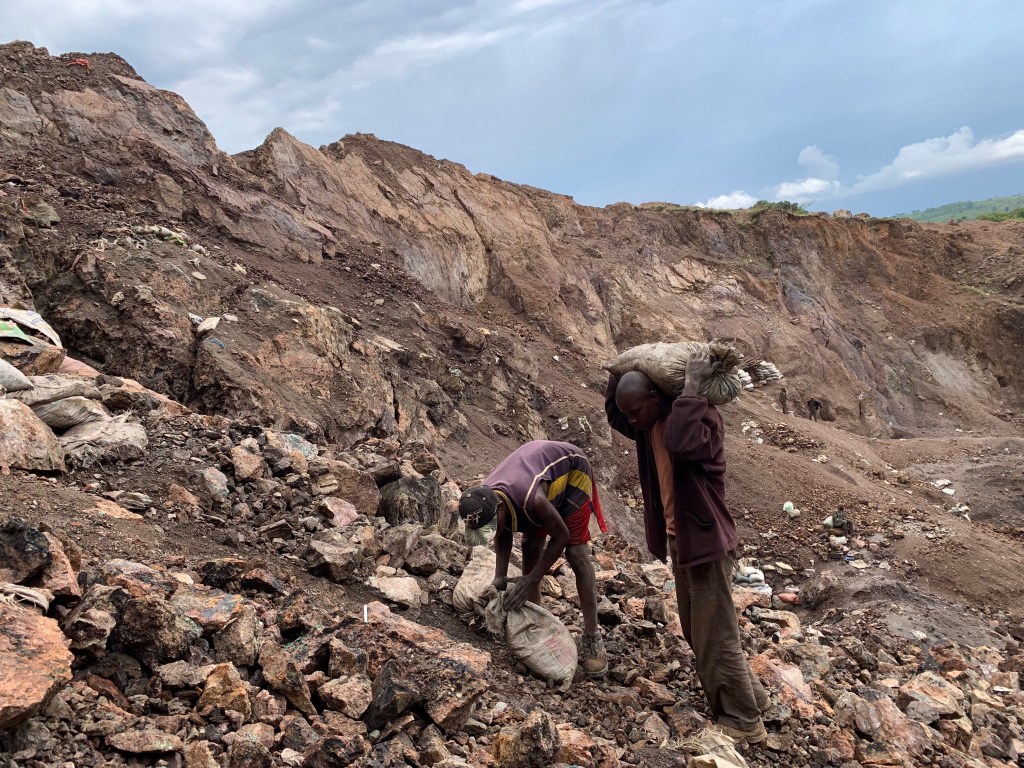
However, the DRC suffers from political instability that impacts the sustainability of its mining initiatives. The Second Congo War (1998 – 2003), a clash between the ethnic groups of the Hutus and Tutsi, was the most violent military conflict following the Second World War. Because of the governmental instability that still exists, the DRC lacks labor and environmental regulations on mining. In fact, over 40,000 children are employed in mining within the DRC, the youngest being a mere seven years old. Ironically, it is also the absence of regulatory schemes that makes the DRC the most prolific producer of cobalt, as the cheap product is sought on a global level.
Not only does the U.S. struggle to sustainably source cobalt from the Congo, but it also encounters difficulty in facing China’s domination of the mines. In the 20th century, the U.S. owned vast cobalt mines in the Congo, but many were sold to Chinese companies during the Obama administration and first Trump administrations. In 2017, the final large-scale mine owned by the U.S. company Freeport McMoRan was sold to the Chinese company Molybdenum. As a result, Beijing companies hold a monopoly over cobalt, uranium and copper mines in the DRC. With the Congolese army deployed to protect them, the U.S. struggles to find the DRC a reliable supplier.
Finn also noted that no country can mine cobalt by itself, highlighting the need for international cooperation going forward. Consequently, the U.S. looks to other emerging sources, from Indonesia to Chile. In November of 2025, the U.S. company Glencore entered a life of mine offtake agreement with Chilean Cobalt Corp. This leaves Glencore with the exclusive right to buy up to 100% of the cobalt, copper and metal byproducts from the La Cobaltera and El Cofre projects in Northern Chile in exchange for its financial endorsement of La Cobaltera’s first stage initiatives. As much as sourcing cobalt is a global activity, so is dealing with its consequences. Environmental issues are central, with the reclamation of mined land being difficult given the toxicity of mines. Not only that, but some mines displace Indigenous groups to whom its land belonged. In fact, 69% of energy transition minerals are found in proximity to or within the lands of Native people. As a result, it is of paramount importance to emphasize transparency expectations for mining corporations. As companies gain control of the under-mined land with high concentrations of cobalt in Australia, Philippines, Cuba, and Russia, it is critical to enforce transparency and regulations to make cobalt mining sustainable for future generations.
The image in this post is licensed under the Attribution 2.5 Generic Deed and was taken by The International Institute for Environment and Development. It can be found here.
 The Gate

Leave a comment