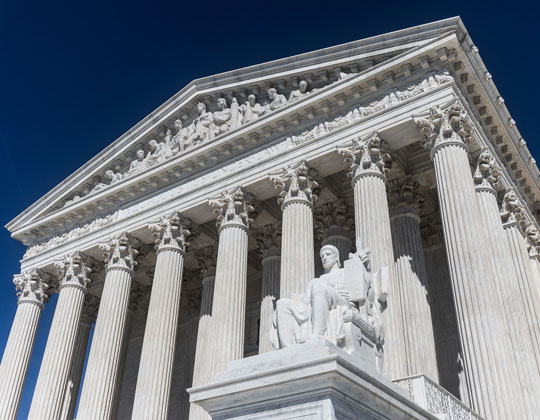
From abortion rulings to presidential immunity, the current Supreme Court has made countless monumental decisions. Among these, Loper Bright Enterprises v. Raimondo proved to be the most broadly impactful despite flying somewhat under the radar. On its surface, Loper Bright is a case about a group of fishermen protesting a regulation that hindered their daily operations. The roots and impacts of the case, however, go far deeper: it marks the culmination of a decade of conservative attacks against the so-called “regulatory state.”
At the heart of the case is a legal principle known as Chevron deference. Decided over 40 years ago, Chevron U.S.A. v. Natural Resources Defense Council gave broad authority to regulatory agencies in interpreting ambiguous laws. Loper Bright took advantage of the conservative supermajority on an increasingly politicized Supreme Court to overturn Chevron, altering the field of administrative law irrevocably. Already, Loper Bright’s impacts are making themselves known, touching on countless issues from healthcare and abortion to gun control and worker’s rights, as decision-making power is gradually transferred away from agency experts and toward the politicized judiciary.
Chevron Deference and the “Regulatory State”
Understanding the principle of Chevron deference is crucial to understanding the significance of the Loper Bright decision. Originally seen as a conservative victory, Chevron v. Natural Resources Defense Council upheld the Reagan-era Environmental Protection Agency’s (EPA) loose regulation of emissions under the Clean Air Act. In doing so, it created the standard that if Congress has not directly or ambiguously addressed a particular issue within a given statute, courts must uphold a federal agency’s interpretation of the statute so long as it is “reasonable.” This decision was based on three primary assumptions. First, that ambiguity in the law necessarily “indicates a congressional delegation of interpretative authority.” Second, that agencies have more expertise than courts in interpreting the statutes they administer. Third, that agencies, due to their responsibility to the President, are more politically accountable than courts and, consequently, have more authority over policymaking.
Although Chevron was not initially seen as particularly important, it has since become incredibly influential in administrative law. An examination of case citations reveals that Chevron has become the most cited administrative law decision, with 67,509 total citations across 13,482 cases and 11,538 secondary sources. Even more notably, the standards set by Chevron enabled regulatory agencies to expand their authority. One study found that over 80% of interviewed agency rule-drafters either “agree” or “somewhat agree” that agencies are “more aggressive in their interpretive efforts” when they know that Chevron applies. Such an expansion of regulatory authority ultimately led Chevron to be increasingly targeted by conservative judiciaries until being overturned this summer.
Conservative Judiciaries and Loper Bright
Even prior to overturning the Chevron doctrine, the Supreme Court has gradually transitioned away from Chevron. Over the years, conservative majorities have introduced more and more exceptions to the Chevron doctrine, through cases such as Food and Drug Administration v. Brown & Williamson Tobacco Corporation (2000) and King v. Burwell (2015). These cases introduced and clarified the so-called major-questions doctrine, under which “extraordinary cases” involving deep “economic and political significance” could not be decided based on Chevron’s assumption of delegated authority. The major-questions doctrine, particularly as used in King, deliberately restricted the scope of Chevron, solidifying a significant exception to the doctrine which had never yet been explicitly applied.
Despite the Supreme Court’s shifting views, however, circuit courts continued to rely on Chevron quite consistently, which may have played a role in the Court’s ultimate decision to overturn it entirely, preventing its future usage by lower courts. In particular, Justice Gorsuch, one of the staunchest detractors of Chevron, had previously argued in 2022 that although Chevron was “already effectively buried…the whole project deserves a tombstone” to protect Americans from being “caught in Chevron’s maw” on the circuit level.
Both Loper Bright v. Raimondo and its companion case, Relentless Inc. v. Department of Commerce, began with complaints against a rule set by the National Marine Fisheries Service (NMFS) under the Magnuson-Stevens Act, which required fishermen to carry observers to monitor for overfishing. From the beginning, however, the cases were always intended as a vehicle to bring down Chevron. Both cases have financial ties to Charles Koch, petrochemical billionaire and long-time anti-regulation advocate. Despite the petitioners presenting their case as a fight against burdensome regulations that threatened their livelihoods, the Secretary of Commerce determined that the fishermen involved “have not identified a single fishing trip for which they have been required to pay for monitoring services under the rule.”
Even without a personal history with the rule in question, the petitioners urged the Court to overturn both the NMFS regulation and the Chevron doctrine itself, unambiguously referring to their case as “an ideal vehicle to resolve exceptionally important issues.” The case’s role as “an ideal vehicle” is clear in the majority opinion, which was based less on the specific merits of the case and more on a debate over the authority of regulatory agencies when compared to the judiciary. In fact, outside of its brief summary of lower court decisions, the majority offers almost no consideration to interpreting the Magnuson-Stevens Act, on which the NMFS’s rule was based. Instead, they examine agency and judicial authority more broadly, relying on the Administrative Procedure Act of 1946 to conclude that courts should “exercise independent judgment in determining the meaning of statutory provisions” going forward.
This decision transfers authority from the executive to the judicial branch by targeting two of the assumptions upon which Chevron was built. First, the majority rejected the idea that ambiguities in law are an implicit delegation of authority from Congress to the agency. The majority claimed that “many or perhaps most statutory ambiguities may be unintentional,” so “an ambiguity [does not] necessarily reflect…congressional intent that an agency…resolve the resulting interpretive question.” Next, the majority denied Chevron’s assumption that agencies have greater expertise than the courts, asserting instead that statutory ambiguities call for legal expertise rather than policy expertise.
To make this argument, the majority cited NLRB v. Hearst Publications (1944) which stated that “[u]ndoubtedly questions of statutory interpretation…are for the courts to resolve, giving appropriate weight to the judgment of [regulatory agencies].” In arguing this point, however, the majority ignored the eventual conclusion of Hearst, that “the reviewing court’s function is limited” to ensuring that the agency stayed within the bounds of the law. The mischaracterization of this argument suggests that the end result achieved through Loper Bright ultimately mattered more to the majority than the methods through which it was achieved.
Future Impacts: Agencies vs. Courts
Fundamentally, overturning Chevron will place power over policy in the hands of the courts, rather than the agencies appointed by Congress to administer those policies. Though this outcome does not prevent courts from considering executive expertise, it limits this consideration to the weaker Skidmore doctrine, which declares that agencies have the “power to persuade, if lacking the power to control.” In other words, the Skidmore doctrine encourages courts to defer to decisions made based on agency expertise but does not require such deference in the way that Chevron once did. In her dissent, Justice Elena Kagan sounded alarm bells about what this result would mean for the country moving forward, referring to Chevron’s death as “a massive shock to the legal system.”
The primary concerns of dissenters boil down to issues of accountability, expertise, and the expansion of judicial power. Kagan points out that agencies are accountable to the President, who is in turn elected, while “courts have no such accountability and no proper basis for making policy.” Moreover, agencies have policy-making experience that courts obviously lack. Contrary to the majority’s assumption that laws “have a single, best meaning” at the time of their creation, the dissent suggests that laws are left ambiguous precisely because there is more than one way to reasonably implement them. Most importantly, however, the dissent is based on a deep fear of judicial overreach, making a final impassioned statement that, “[T]he majority today gives itself exclusive power over every open issue–no matter how expertise-driven or policy-laden–involving the meaning of regulatory law.”
Though it is tempting to fear the worst following this decision, one report by Georgetown’s McCourt School of Public Policy acknowledges that the functional changes caused by Loper Bright will ultimately depend on individual judges. This report speculates that Loper Bright might not lead anywhere in the long term, because judges won’t be able to find the single “best” interpretation of law heralded by Loper’s majority. Thus, most judges may rely on agencies’ interpretations by default, using agency expertise as “their life raft” in the absence of clear legal answers. This prediction, however, relies on the assumption that most judges are genuinely seeking the best solutions to the problem at hand. This assumption is not necessarily true for all judges, and even the author of this report admits that “the bad ones…will leap at the opportunity to exploit Loper Bright…in favor of their own deeply politicized ‘legal’ answer.”
Already, the potential for exploitation is becoming clear. Lower court judges have cited Loper Bright in over 100 cases, while numerous other cases have been remanded by the Supreme Court. Among the most significant of these include cases on gun control, worker’s rights, abortion referrals and immigration. Of particular note, just a week after Loper Bright was decided, three judges in different states issued orders blocking a rule by the Department of Health and Human Services to prevent healthcare discrimination based on gender identity.
This swift and synchronized reaction demonstrates the extent to which conservative efforts to stack the federal judiciary with right-wing judges will influence the implementation of Loper Bright. Such patterns will surely continue throughout Trump’s second presidency. While regulations protecting workers’ rights and access to healthcare are already challenged, the increasingly conservative judiciary will likely render liberal efforts to launch similar challenges against the Trump administration unsuccessful.
The image featured in this article is licensed for reuse under the Creative Commons 1.0 Universal license. No changes were made to the original image, which was taken by the MaxPixel’s contributors and can be found here.
 The Gate
Leave a comment